
Winter’s Early Grip: Decoding Himachal Pradesh’s Weekend Weather Shift and What It Means For You
Himachal Pradesh is experiencing a pronounced shift into winter this weekend, characterized by a stark temperature divide where lower and mid-altitude regions like Dharamshala face crisp daytime temperatures of 15-17°C that plunge to 5-6°C at night, while high-altitude areas including Manali confront severe sub-zero conditions as low as -10°C, accompanied by isolated snowfall.
This cooling is compounded by a complex air quality picture, where pollutants become trapped in valleys due to temperature inversion, leading to ‘Poor’ AQI levels near 140 in some towns, even as the higher mountains enjoy cleaner, moderate-quality air. For residents and travelers, this means adapting to significant daily temperature swings, taking health precautions against the cold and particulate matter, and understanding that the state’s serene, clear skies belie a demanding seasonal transition that requires strategic planning for both comfort and safety.
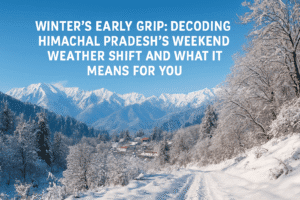
Winter’s Early Grip: Decoding Himachal Pradesh’s Weekend Weather Shift and What It Means For You
The familiar, golden autumn sun over the Himalayas is beginning to lose its warmth, yielding to the crisp, sharp chill of an advancing winter. Himachal Pradesh is currently in the midst of a significant meteorological transition, one that sees temperatures plummeting and the air turning thin and clear. For residents and travelers alike, this weekend marks a pivotal moment in the seasonal calendar. This isn’t just a routine weather update; it’s a deep dive into the implications of this shift, offering real human insight into how to navigate, appreciate, and stay safe during Himachal’s early winter embrace.
The Big Picture: A State Divided by Altitude
The most striking feature of the current weather pattern is the dramatic divide between the state’s lower regions and its high-altitude realms. The Indian Meteorological Department (IMD) has forecast a weekend of predominantly dry and stable conditions, but this stability is deceptive. Beneath the sunny daytime skies lies a considerable temperature fluctuation that characterizes this time of year.
- In the Lower and Mid-Hills (e.g., Dharamshala, Palampur, Solan): Maximum temperatures will hover in a pleasant 15-17°C range, ideal for midday strolls and outdoor activities. However, as the sun dips below the mountainous horizon, the chill sets in aggressively. Minimum temperatures are forecast to drop to a brisk 5-6°C, creating a daily temperature swing of over 10 degrees. This requires a strategic approach to clothing and daily planning.
- In the High-Altitude Realms (e.g., Manali, Keylong, Kalpa): Here, winter is not approaching; it has already arrived. The narrative shifts from “chilly” to “freezing.” Sub-zero conditions are the norm, especially during the early morning and night hours. Temperatures in areas like Manali are plunging to a biting -5°C, with the most extreme, isolated pockets in the Lahaul-Spiti valley experiencing a bone-chilling -10°C. These areas are also witnessing isolated snowfall, a stark reminder of the power of the Himalayan winter.
Beyond the Thermometer: The Air Quality Conundrum
While one might assume mountain air is invariably pristine, the reality in Himachal Pradesh during the winter onset is more complex. The current air quality data presents a tale of two altitudes.
The state-wide Air Quality Index (AQI) average sits at 126, which falls into the “Poor” category according to the System of Air Quality and Weather Forecasting and Research (SAFAR). Breaking this down:
- Particulate Matter: PM2.5 levels are recorded at 57 µg/m³ and PM10 at 75 µg/m³. These fine, inhalable particles are a health concern, particularly for vulnerable groups. They can penetrate deep into the lungs and even enter the bloodstream.
- Regional Variations: The town of Dharamshala is reporting an AQI of around 140, firmly in the “Poor” range. This can be attributed to a combination of factors: local vehicle emissions, construction dust, and the geographical phenomenon of temperature inversion.
The Insight: What is Temperature Inversion? Normally, air gets colder as you gain altitude. However, during winter nights, the opposite can occur. Cold, dense air sinks into the valleys, becoming trapped under a layer of warmer air. This acts like a lid, preventing the dispersion of pollutants emitted from homes (like smoke from heating) and vehicles. This is why valleys and towns like Dharamshala can experience poorer air quality despite their mountain location.
Conversely, the high-altitude areas, with their stronger winds and lack of pollutant-trapping topography, enjoy significantly better air. AQI readings around 53 (“Moderate”) in places like Spiti are a testament to the cleansing power of the cold, thin, high-mountain air.
City-Specific Snapshots: Shimla and Manali
Shimla (The Queen’s Chill): The state capital exemplifies the classic hill-station winter experience. With a temperature range of 17°C by day to 3°C by night, the air is crisp and invigorating. The clear skies offer spectacular stargazing opportunities, but the evening cold is palpable. The Mall Road in the evening is now a scene of bundled-up crowds savoring hot tea and corn, a ritual that defines Shimla’s winter character.
Manali (The Frozen Gateway): Manali is a different world altogether. Sub-zero temperatures, especially between midnight and sunrise, have transformed the landscape. Frost blankets the meadows of Solang Valley and the edges of the Beas River. This is the time when tourists flock to experience the thrill of the cold, but it demands serious preparation. Icy patches on roads, especially in shaded areas, are a real hazard for early morning drivers and pedestrians.
The Human Impact: More Than Just a Weather Report
This weather shift is not merely a statistic; it has tangible effects on daily life, health, and local economies.
- For Residents:
- Health: The cold, dry air can exacerbate respiratory conditions like asthma and bronchitis. The poor air quality in the lower regions adds a double burden. Doctors in the region often advise the elderly and those with pre-existing conditions to limit early morning exposure.
- Agriculture: For farmers in the mid-hills, these temperatures are a critical signal. This is the period for harvesting late apples (like the Royal Delicious) and preparing fields for winter rye and barley. A sharp, unexpected frost can still cause damage, making daily weather vigilance essential.
- Daily Routine: The rhythm of life adjusts. Markets open later and close earlier. The familiar sight of people gathering around angithis (coal braziers) in the evenings becomes commonplace.
- For Travelers and Tourists:This weekend presents a unique opportunity, but one that requires savvy planning.
- The Opportunity: The post-monsoon landscapes are stunning. The skies are clear, offering breathtaking, uninterrupted views of snow-capped peaks. The tourist crowds of the festive season have yet to arrive, offering a more serene experience.
- The Challenge: Packing is key. The concept of layering is non-negotiable. A typical day should include a thermal base layer, a fleece or wool mid-layer, and a windproof and waterproof outer shell. Accessories like a warm hat (a significant amount of body heat is lost through the head), gloves, and a scarf are essential.
Weekend Outlook and Actionable Precautions
The forecast for the weekend is one of general stability—sunny days and clear, cold nights. However, high-altitude areas (above 3,500 meters) could see isolated, light snowfall, primarily during the evening and night hours.
Here’s your actionable guide:
- If You’re in the Lower Hills (Dharamshala, Palampur):
- Wear: Medium-weight woolens during the day; heavy woolens and a jacket at night.
- Do: Enjoy outdoor activities between 10 AM and 4 PM. Be mindful of air quality if engaging in strenuous exercise like hiking.
- Health: Vulnerable individuals should avoid morning walks when pollutant concentration is highest.
- If You’re in the High Altitudes (Manali, Spiti, Keylong):
- Wear: Full thermal wear, heavy down jacket, balaclava, gloves, and sturdy, insulated footwear.
- Do: Check road conditions before traveling, especially over high passes like Rohtang (if open) and Kunzum La. Ensure your vehicle is winter-ready with antifreeze.
- Health: Stay hydrated. The cold, dry air can lead to dehydration. Be aware of the early signs of hypothermia: uncontrollable shivering, slurred speech, and drowsiness.
- For Drivers: Beware of “Black Ice.” This thin, transparent layer of ice can form on roads, especially in shadowy, high-altitude areas in the early morning. It is incredibly deceptive and dangerous. Drive slowly and avoid sudden braking.
Conclusion: Embracing the Seasonal Shift
The declining temperatures and shifting air quality in Himachal Pradesh are more than just data points; they are the pulse of a region transitioning into its most profound season. This weekend offers a chance to witness the raw beauty of the Himalayas as they begin their long winter slumber. By understanding the nuances behind the numbers—the why of the temperature drop, the how of the air quality—we can move beyond simply being informed to being prepared, resilient, and deeply appreciative of the majestic, if formidable, winter spectacle that is unfolding in Dev Bhoomi, the Land of the Gods.
You must be logged in to post a comment.