
Winter Paralysis: Dense Fog and Cold Wave Grip North India, Disrupting Travel for Millions
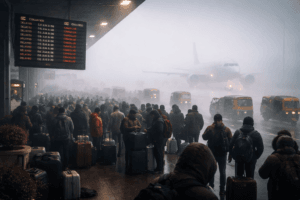
Winter Paralysis: Dense Fog and Cold Wave Grip North India, Disrupting Travel for Millions
A thick, silent blanket has descended across North India. As a severe cold wave tightens its grip, dense to very dense fog has paralyzed parts of the region, leading to massive travel disruptions, a public health advisory, and a stark reminder of winter’s formidable power. From the bustling capital of Delhi to the serene valleys of Kashmir, life has slowed to a crawl, with visibility often dropping below 50 meters and temperatures plunging several degrees below normal.
The most visible impact has been on the skies. Delhi’s Indira Gandhi International Airport (IGI), one of the world’s busiest, has become an epicenter of chaos, with over 129 flights cancelled in a single day and hundreds more delayed. The disruptions highlight a fragile intersection between modern infrastructure and ancient weather patterns, affecting hundreds of thousands of passengers during a peak travel period.
The Epicenter: Delhi’s Cold Wave and Airport Gridlock
For Delhi, Saturday, December 20, marked a significant meteorological milestone: the first official cold wave day of the season. The city’s maximum temperature plunged to 16.9°C, a sharp 5.3 degrees Celsius below the normal average for this time of year. The sun remained obscured throughout the day by a persistent grey haze—a mix of fog and pollutants—creating an eerie, monochromatic landscape.
The aviation sector bore the brunt of this weather. With visibility at key stations like Safdarjung dropping to a mere 200 meters in the morning, airport authorities were forced to implement Low Visibility Procedures (LVP). An official breakdown indicated that the cancellations included 66 arriving and 63 departing flights, rippling across the national and international network.
Table: Flight Disruption Impact at Delhi’s IGI Airport (Dec 20-21)
| Metric | Details |
| Total Flight Cancellations | At least 129 flights |
| Arrival Cancellations | 66 flights |
| Departure Cancellations | 63 flights |
| Key Advisory | Low Visibility Procedures (LVP) in progress |
| Primary Cause | Dense fog with visibility as low as 200-350 meters |
A Regional Deep Freeze: Warnings Across North India
The disruption extends far beyond Delhi’s borders. The India Meteorological Department (IMD) has issued a color-coded tapestry of alerts, painting a picture of a region in the throes of a widespread winter event.
- Uttar Pradesh faces some of the most severe conditions, under a red alert for “dense to very dense fog.” In cities like Agra, Prayagraj, and Kanpur, visibility has dropped below 50 meters, crippling road and rail traffic. The state is also experiencing widespread “cold day” conditions, where daytime temperatures remain sharply below normal.
- Punjab, Haryana & Rajasthan are shrouded in a thick blanket of fog. Faridkot in Punjab recorded a low of 4.9°C, while Fatehpur in Rajasthan’s Sikar district saw the mercury dip to 5.4°C.
- Jharkhand is under an orange alert, with expectations of very dense fog in northern and central districts until at least December 22, where visibility may fall to less than 50 meters.
- Himachal Pradesh has issued a yellow warning for dense fog specifically around the reservoir area of the Bhakra Dam and the Balh Valley in Mandi district.
Navigating the Chaos: Passenger Rights and Airline Advisories
In response to the crisis, the Union Ministry of Civil Aviation has issued clear directives to airlines, emphasizing that passenger safety and convenience must remain the top priority. The government mandates that carriers must provide:
- Timely and accurate flight information.
- Meals and refreshments for extended delays.
- The option for rebooking or a full refund in case of cancellations.
- Assistance for Persons with Disabilities (PwDs) and proper baggage handling.
Airlines have proactively communicated with passengers:
- IndiGo has advised travelers to check their flight status constantly, as its teams monitor weather “on a minute-by-minute basis.” They have offered easy rebooking or refund options for affected flights.
- Air India has highlighted its ‘FogCare’ initiative, which provides advance alerts for flights likely to be affected and allows passengers to change plans or seek refunds without penalty.
- Delhi Airport has consistently urged passengers to contact their airlines directly for the latest updates, confirming that while LVPs are active, flight operations are attempting to function normally.
Beyond Travel: Health, Agriculture, and the Onset of Chillai-Kalan
The fog and cold wave have consequences that reach deep into daily life and regional ecology.
- Public Health: In Kashmir, doctors have noted an increase in respiratory ailments like cough and common cold, attributed to the dry, cold weather that has preceded the current fog.
- Agricultural Concerns: In Himachal Pradesh, a 100% rainfall deficit for December has combined with these foggy conditions, raising serious concerns among farmers and orchardists about the impact on winter crops and fruit yields.
- Kashmir’s Harsh Winter Begins: The weather shift coincides with the onset of ‘Chillai-Kalan’, the traditional 40-day period of intense cold in Kashmir beginning December 21. The local Met department has forecast moderate to heavy snowfall in the higher reaches, which is crucial for the region’s water supply but will also intensify the chill.
Looking Ahead: A Slow Clearance
The IMD forecast offers little immediate respite. Delhi remains under an orange alert for Sunday, with dense to very dense fog likely to persist. Similar conditions are forecast for parts of Uttar Pradesh, Haryana, and Jharkhand over the next 48-72 hours. A feeble western disturbance is predicted to affect the Himalayan region around December 25, which may bring light rain or snow but is unlikely to immediately dispel the widespread fog in the plains.
This episode is a stark annual reminder of nature’s power to disrupt human schedules. It underscores the importance of heeding weather advisories, understanding passenger rights, and preparing for the unpredictable. For millions in North India, the immediate future involves navigating a world softened and obscured by fog, waiting patiently for the clear, cold light of a winter sun to break through once more.
You must be logged in to post a comment.