
When the Skies Open Up: A Traveler’s Guide to Surviving Delhi’s Chaotic Weather and Flight Disruptions
Heavy rainfall and thunderstorms in Delhi-NCR have caused significant flight disruptions, prompting airlines like IndiGo, Air India, and SpiceJet to issue advisories warning of delays, consequential flight impacts, and airport-bound traffic congestion; beyond the logistical chaos, the situation underscores the importance of proactive travel preparation—such as checking flight statuses, packing a “delay day” bag, and understanding the strain on airline staff—while also serving as a reminder that volatile weather patterns are becoming a new norm, demanding greater flexibility and empathy from travelers navigating the unpredictable intersection of nature and modern aviation.
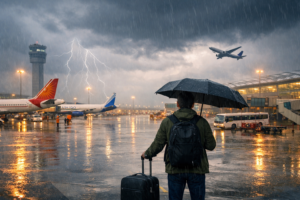
When the Skies Open Up: A Traveler’s Guide to Surviving Delhi’s Chaotic Weather and Flight Disruptions
The amber alerts on your phone flash just as you are about to leave for the airport. A glance at the window reveals a sky that has turned an ominous grey, and within minutes, the first fat drops of rain begin to pound the pavement. For travelers in Delhi-NCR, this isn’t just a weather update; it’s the opening scene of a logistical nightmare.
As reported late Wednesday, heavy rainfall and thunderstorms brought the national capital to a standstill, throwing flight operations into disarray. Airlines like IndiGo, Air India, and SpiceJet rushed to issue advisories, warning passengers of delays and disruptions. But beyond the official statements and flight status links lies a more complex human story—one of anxiety, dashed plans, and the desperate scramble for certainty in the face of nature’s unpredictability.
This isn’t just a news recap. This is your comprehensive guide to understanding, navigating, and surviving the next time Delhi’s weather decides to play spoilsport with your travel plans.
The Domino Effect: Why a Little Rain Causes Big Problems
To the uninitiated, it might seem strange that a bit of rain—even heavy rain—can cripple one of the busiest airports in the country. The reality is that a modern aviation hub like Indira Gandhi International (IGI) Airport is a finely tuned machine. Introduce a variable like a sudden, severe thunderstorm, and the delicate balance is shattered.
- The Safety Pause:The primary reason for disruptions is safety. Pilotsrequire a certain level of visibility to land and take off. Heavy rain reduces visibility drastically. Moreover, strong gusty winds, lightning, and the risk of wind shear (a sudden change in wind speed or direction) make landing one of the most dangerous phases of flight. Air traffic control (ATC) is forced to slow down the rate of landings and takeoffs, creating a bottleneck. This is the “safety pause” that starts the cascade.
- The Aircraft and Crew Puzzle:Your planedoesn’t just appear at the departure gate. It arrives on a previous flight. If that incoming flight is delayed in Delhi due to weather, your flight out of Mumbai, Bengaluru, or Kolkata is now delayed waiting for that same aircraft. Compounding this is the issue of crew duty hours. Pilots and cabin crew have legally mandated maximum working hours to prevent fatigue. A delay pushing them over this limit means the airline must find a fresh crew, causing even further delays.
- The Ground Gridlock:As Air India and IndiGo noted, the problemisn’t just in the air. Delhi’s infrastructure is notoriously susceptible to waterlogging. A heavy downpour can turn key arterial roads leading to the airport—like the NH-8 or the Dwarka Link Road—into parking lots. Passengers stuck in traffic miss their check-in windows, and airport staff struggle to get to work for their shifts. The problem compounds on itself.
Decoding the Airline Advisories: What They’re Really Telling You
When an airline posts a cryptic message on X (formerly Twitter) or issues a press release, it’s easy to skim over it. But these advisories are packed with actionable intelligence. Let’s break down what the airlines said and what it means for you.
Air India’s Message: “Allow extra time for your journey due to potential traffic congestion.”
This is perhaps the most critical piece of advice. The airline is subtly telling you that the journey to the airport is now your first hurdle. The race to catch your flight begins the moment you step out your door, not when you arrive at the terminal. That 45-minute cab ride can easily turn into a two-hour ordeal.
IndiGo’s X Thread: “We understand these conditions can affect your journey. Our teams are ready to support you.”
Amidst the frustration of a delay, it’s easy to forget the human beings on the other side of the counter. The person at the boarding gate, the ground staff handling irate passengers—they are also dealing with the same weather, the same traffic, and the same stress, but on a much larger scale. IndiGo’s message is a plea for empathy. It acknowledges that while they are working to keep operations running, the situation is fluid and challenging for everyone.
SpiceJet’s Update: “All departures/arrivals and their consequential flights may be affected.”
This is the most important phrase to understand: consequential flights. It’s the airline’s way of saying the chaos is systemic. If your flight from Delhi to Lucknow is scheduled for 8 PM and the weather hits at 7 PM, your flight might be delayed not because of the rain in Delhi at 8 PM, but because the plane assigned to you is stuck on the tarmac in another city, unable to take off due to the same weather system. It’s a chain reaction.
From Frustration to Action: A Human-Centric Survival Guide
Knowing that flights will be delayed is one thing. Knowing how to handle it with minimal stress is another. Here is a practical, human-centric guide to navigating the storm.
1. The Art of Proactive Preparation (Before You Leave Home)
- Check, Then Double-Check: Don’t just rely on a single notification. Check your airline’s app, their official website’s flight status page, and even live flight tracking websites like Flightradar24. A delay might be announced on one platform before it hits the airport screens.
- The “What If” Plan: Before you head out, think about your alternatives. Is there a later flight tonight you could be rebooked on? Are you willing to travel tomorrow morning? Having a mental outline of your acceptable options will save you from making panicked decisions at the airport.
- Pack a “Delay Day” Bag: In your carry-on, always have a few essentials for situations like this. Think of it as a comfort kit:
- Chargers: A fully charged power bank is your lifeline.
- Snacks: Airport food is expensive and queues can be long. A protein bar or a packet of biscuits can be a lifesaver.
- Entertainment: Download a movie, a podcast, or a book. Boredom amplifies frustration.
- Medication & Essentials: If you have critical medication or need specific toiletries, keep them in your hand baggage.
2. Mastering the Airport Experience (When You Arrive)
- Don’t Just Stand in Line: If your flight is delayed, your first instinct might be to rush to the airline’s help desk. The queue will be massive. Instead, while one person in your party queues, have another try to reach the airline on the phone, chat with them on social media (X is often very responsive), or use the rebooking options on the app. You might secure a solution faster.
- Know Your Rights (and Be Kind): Airlines have policies for delays due to weather, but it’s crucial to understand that “act of God” or “force majeure” clauses mean they are not always obligated to provide compensation like hotels or meals for weather-related issues. However, many will try to assist. Approaching the staff with patience and a polite request for information (“I understand this is out of your control, but could you please help me understand my options?”) will almost always yield a better result than anger.
- Stay Connected: Keep your phone charged and your notifications on. The situation can change. A flight canceled one minute might be reinstated the next if the weather clears. Listen for announcements, but also keep an eye on the digital displays.
3. The Human Element: The Stories Behind the Delays
Imagine a young couple trying to get to their destination wedding in Jaipur, their carefully planned outfits and gifts in checked-in baggage that’s now stuck on a delayed plane. Picture a father whose daughter is waiting for him at the arrival gate in another city, worried because his phone is about to die. Think of the salesperson who will miss a crucial morning meeting because their red-eye was canceled.
These are the real stories behind the news headline “Delhi weather impacts flights.” It’s not just about logistics; it’s about missed birthdays, important job interviews, and long-awaited reunions. The anxiety is palpable, a shared experience among hundreds of strangers suddenly thrown together in a liminal space, united by a common, frustrating foe: the weather.
The Airport’s Unsung Heroes
In the midst of this chaos, there’s another story often untold: the resilience of the airport and airline staff. The ground staff member who has been on their feet for 12 hours, patiently explaining the same delay to a hundred different angry passengers. The ATC officer in the tower, eyes glued to the radar, making split-second decisions to ensure safety. The cabin crew member whose layover in Delhi just got extended indefinitely, meaning they’ll miss their own child’s bedtime.
Their “thank you for your understanding” isn’t just a corporate platitude. It’s a genuine appeal for a moment of shared humanity in a system that is under immense strain. Recognizing their effort can transform a tense interaction into a moment of connection. A simple “I know this isn’t your fault, thanks for your help” can change the entire dynamic.
Looking Beyond the Runway: A Climate Reality
Incidents like the one reported are becoming more frequent and intense. The Regional Meteorological Centre’s forecast of a significant temperature drop after the storm is a classic example of the volatile weather patterns we are increasingly experiencing. This isn’t just an isolated news story; it’s a symptom of a larger, shifting climate.
For the frequent flyer, this means one thing: adaptability is no longer optional; it’s essential. The days of predictable, on-time travel are becoming less reliable. Building flexibility into your travel schedule—whenever possible—is the new normal. Choosing earlier flights to create a buffer for meetings, booking travel insurance that covers weather-related disruptions, and cultivating a mindset of patience are no longer just good ideas; they are survival strategies.
Final Boarding Call
The next time you see a news alert about “Delhi weather impacting flights,” remember it’s more than just a headline. It’s a complex tapestry of grounded aircraft, stressed passengers, overworked staff, and the raw, untamable power of nature.
As you check your flight status and plan your journey to the airport, do so with a full toolkit: one part practical preparation (charging your devices, packing snacks), one part digital savvy (using apps and social media), and one part human empathy (for the staff and fellow travelers sharing the ordeal).
The skies may be uncertain, but your response doesn’t have to be. By understanding the chaos and preparing for the human reality of it, you can navigate the storm and arrive at your destination—eventually—with your sanity intact. After all, the journey is not just about the destination, but how we weather the storms along the way.
You must be logged in to post a comment.