
When Bengaluru Chills: An American’s Viral Winter Tale and the City’s Cooling Identity
An American woman’s humorous viral reaction to Bengaluru’s unexpected temperature drop to 13°C has sparked widespread amusement and a deeper cultural conversation, resonating with locals and expats by highlighting the city’s changing climate and identity. While her dramatic bundling up seemed exaggerated to outsiders, the response unveiled a wave of nostalgia among long-time residents who remember consistently colder winters, pointing to perceived shifts in the city’s weather patterns over decades due to urbanization.
The incident underscores how Bengaluru’s architecture, designed for ventilation without heating, amplifies the cold indoors and how weather is intricately tied to the city’s cultural self-image, transforming a personal moment of humor into a communal reflection on change, adaptation, and belonging.
When Bengaluru Chills: An American’s Viral Winter Tale and the City’s Cooling Identity
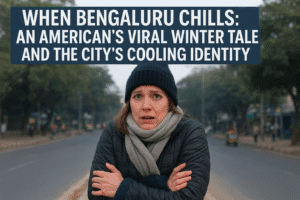
A woman from Michigan bundles up in four layers to face Bengaluru’s “bone-chilling” 13°C, sparking both laughter and serious reflection on how a city’s weather becomes part of its soul.
The Viral Shiver Heard ‘Round Bengaluru
Dana Marie, an American expatriate from Michigan, recently found herself bundled in four layers of clothing, shivering dramatically while filming an Instagram Reel about Bengaluru’s winter weather. “How did I survive a childhood in Michigan?” she wonders aloud in the now-viral video that has garnered over 350,000 views. Her humorous take—”Bangalore feels like London right now. The weather in Bengaluru is no longer Bengaluruing”—has become a cultural touchpoint, resonating with locals and expats alike.
This viral moment offers more than just entertainment; it opens a window into Bengaluru’s changing climate, cultural identity, and the universal human experience of adjusting to new environments. The 13°C temperature that prompted Dana’s dramatic reaction represents a significant departure from Bengaluru’s typical December weather, which usually features comfortable highs of 25-27°C and lows around 15-17°C.
Beyond the Laughs: What Bengaluru’s Weather Really Looks Like
To understand why Dana’s reaction struck such a chord, we need to examine Bengaluru’s typical climate patterns. Known as India’s “Garden City” with a traditionally temperate climate, Bengaluru’s weather follows a predictable seasonal rhythm:
Bengaluru’s Monthly Weather Patterns at a Glance
| Month | Temperature Range | Rainy Days | Weather Characterization |
| December | 27°C / 17°C | 2 | “Perfect” for visitors |
| January | 29°C / 17°C | 1 | “Good” |
| February | 32°C / 18°C | 1 | “Good” |
| March | 35°C / 22°C | 1 | “Ok” |
| April | 36°C / 24°C | 4 | “Ok” |
| May | 34°C / 23°C | 9 | “Bad” |
| August | 28°C / 20°C | 14 | “Good” |
| September | 28°C / 20°C | 15 | “Good” |
December typically marks the beginning of Bengaluru’s pleasant winter season, characterized by cool mornings and evenings with daytime temperatures reaching a comfortable 25-27°C. The month averages just two rainy days with about 40mm of rainfall, making it an ideal time for outdoor exploration.
The current cold snap, with temperatures dropping to 13°C, represents a notable deviation from these norms. Meteorologists attribute this unusual chill to extensive cloud cover associated with Cyclone Ditwah, which has blocked sunlight and created persistently cool conditions. The India Meteorological Department (IMD) has predicted mostly overcast skies with light showers, with temperatures hovering around 22°C during the day and dipping to 18°C at night.
Nostalgia in the Comments: Remembering Bengaluru’s Colder Past
The social media response to Dana’s video reveals more than just amusement; it uncovers a deep vein of nostalgia among long-time Bengaluru residents. “This is how it was in the 80’s n 90’s when I was growing up here!” one user commented. Another recalled, “That’s how Bangalore weather used to be every winter until the early 2000s. We had to go to school every day in that cold”.
These reflections point to a perceived shift in Bengaluru’s climate over decades. Many residents believe the city’s winters were consistently cooler in previous generations, with the current cold snap representing a return to what they consider “authentic” Bengaluru weather. This nostalgia isn’t just about temperature—it’s about identity, about reclaiming a characteristic that once distinguished Bengaluru from other Indian cities.
The comments also highlight a unique aspect of experiencing cold in Bengaluru: “No matter how cold it gets, the fan still keeps running and somehow, that’s exactly what makes it even more special,” one user noted. This observation speaks volumes about the city’s infrastructure and how its residents adapt to weather within homes designed for warmer climates.
Architecture Meets Atmosphere: Why 13°C Inside Feels Colder
Dana’s four-layer approach to Bengaluru’s 13°C weather might seem excessive to someone from Michigan, where winter temperatures regularly plunge far below freezing. However, her experience underscores a crucial point about perceived temperature versus actual temperature, heavily influenced by architectural and environmental factors.
How Bengaluru’s Traditional Architecture Responds to Weather
| Architectural Feature | Traditional Purpose | Effect in Unusual Cold |
| High Ceilings | Promote air circulation in warm weather | Trap cold air, making rooms feel chillier |
| Tiled/Marble Floors | Stay cool during hot months | Become uncomfortably cold to walk on |
| Large Windows | Maximize natural light and ventilation | Allow more heat escape during cold spells |
| Cross-Ventilation Design | Keep air moving in humidity | Creates drafts that amplify cold sensations |
| Lack of Built-in Heating | Unnecessary in typically mild winters | Leaves residents without heating options |
Most Bengaluru homes, designed for the city’s traditionally mild climate, lack central heating systems. Buildings prioritize ventilation and cooling, with features like high ceilings, tiled floors, and large windows that are perfect for Bengaluru’s typical weather but become less ideal during unusual cold snaps. As one social media user explained, “13 degrees inside a house is a different battle—you’re absolutely justified wearing four layers”.
This architectural reality creates a phenomenon where the “feels like” temperature indoors can be significantly colder than the outdoor temperature. Unlike in colder climates where buildings are sealed and heated, Bengaluru residents experience the cold more directly, leading to the dramatic reactions that Dana captured in her video.
Traveler’s Perspective: Navigating Bengaluru’s Winter Charm
For visitors planning a December trip to Bengaluru, understanding the city’s winter dynamics is essential. Despite the current cold snap, December remains one of the best times to visit, with comfortable temperatures ideal for exploring the city’s numerous attractions.
Popular December activities include experiencing Christmas cheer at historic churches like St. Mary’s Basilica and St. Mark’s Cathedral, exploring festive markets, and attending cultural events like the Bangalore Book Festival. The city’s parks and outdoor spaces—normally challenging to enjoy during hotter months—become particularly inviting during this season.
What to Pack for Bengaluru in December:
- Layering pieces: Light sweaters, jackets, and scarves for cooler mornings and evenings
- Comfortable walking shoes: For exploring the city’s numerous attractions
- Umbrella or rain jacket: Although rainfall is limited, occasional showers occur
- Sun protection: Despite cooler temperatures, Bengaluru’s elevation means UV levels remain high
- Mixed wardrobe: Include both warm-weather clothing for sunny afternoons and layers for temperature drops
The key to enjoying Bengaluru in December is flexibility. While average temperatures suggest mild conditions, unexpected cold snaps like the current one demonstrate the value of preparedness. Travelers should plan for a range of possibilities, from pleasantly warm afternoons to surprisingly chilly evenings.
The Bigger Picture: Climate Change and Urban Weather Patterns
Beyond the humor and nostalgia, Dana’s viral video inadvertently highlights important questions about climate change and urban development. The comments from residents reminiscing about colder winters in decades past align with broader concerns about how urbanization affects local climates.
Bengaluru’s rapid growth over the past 30 years has transformed its landscape, with concrete structures replacing green spaces, potentially contributing to the “urban heat island” effect. This phenomenon, where cities become significantly warmer than their surrounding rural areas due to human activities, might explain why older residents perceive winters as less cold than they remember from their youth.
At the same time, unusual weather events like the current cold snap—attributed by meteorologists to cyclonic activity—may become more frequent or intense due to changing global climate patterns. The conversation sparked by a lighthearted social media video thus touches on much larger issues of environmental change and urban resilience.
The Cultural Thermometer: How Weather Defines a City’s Identity
Perhaps the most fascinating aspect of this viral moment is what it reveals about how weather intertwines with cultural identity. Bengaluru has long prided itself on its pleasant climate, distinguishing it from other major Indian cities. The phrase “Bengaluruing” in Dana’s video—implying the city is not living up to its weather reputation—touches on this identity directly.
Weather forms an integral part of any city’s personality. Just as London is associated with drizzle or Seattle with gray skies, Bengaluru has built part of its reputation on its moderate, pleasant climate. When that climate behaves unexpectedly, it doesn’t just affect physical comfort—it touches on something deeper in the city’s self-conception.
The viral response to Dana’s video shows how residents use weather as a marker of time and change. The nostalgic comments comparing current conditions to decades past frame weather as a measuring stick for how the city has evolved, for what has been gained and lost in Bengaluru’s rapid development.
Finding Community in the Cold
In an unexpected way, the shared experience of an unusual cold snap has created moments of community connection. Dana’s video, while humorous, has sparked conversations across social media where residents compare experiences, share memories, and offer tips for staying warm. This communal aspect of weather—the way it gives people a common experience to discuss and navigate together—is perhaps the most valuable outcome of this viral moment.
New arrivals to the city, like Dana, find themselves initiated into a particular aspect of local life, while long-time residents reconnect with memories of Bengaluru’s past. The weather becomes not just a meteorological phenomenon but a social one, creating bonds and conversations that might not otherwise occur.
Embracing Bengaluru’s Weather, Whatever Form It Takes
As Bengaluru continues to experience its unexpected cold spell, Dana Marie’s viral video serves as more than just entertainment. It captures a moment where weather, memory, identity, and community intersect in a rapidly changing city. Whether bundled in four layers like Dana or reminiscing about colder winters past, residents and visitors alike are participating in an ongoing conversation about what makes Bengaluru unique.
The city’s weather, like the city itself, continues to evolve. But moments like these—whether sparked by a dramatic temperature drop or a humorous social media post—remind us that how we experience and discuss our environment remains fundamentally human. As one commenter proudly declared amidst the online chatter, “Nah nah, Bangalore is SO Bangaloring right now”, suggesting that even unexpected cold can be embraced as part of the city’s evolving character.
In the end, Bengaluru’s weather story is about adaptation—both personal and urban. It’s about how a woman from Michigan learns to layer up in a city where buildings aren’t designed for cold, how residents remember and compare climates across decades, and how a city known for its pleasant temperatures handles an unexpected chill. Through laughter, nostalgia, and shared experience, Bengaluru continues to write its weather story, one degree at a time.
You must be logged in to post a comment.