
The World’s Wealth Dynasties: Oil, Retail, and the Rise of Reliance
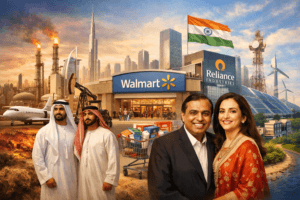
The World’s Wealth Dynasties: Oil, Retail, and the Rise of Reliance
The world’s richest families are collectively worth nearly $2.9 trillion, a staggering sum that highlights not just the concentration of global wealth but also the diverse historical and economic pathways that create it. For 2025, the minimum entry point for Bloomberg’s list of the 25 richest families has risen sharply to $46.4 billion, underscoring the accelerating growth at the very top. While American retail dynasties and Gulf royal families dominate, the inclusion of the Ambanis—the only Indian family on the list—offers a compelling story of national economic transformation and a blueprint for building a modern, diversified industrial empire.
The Top Tier: A Snapshot of Unparalleled Wealth
The landscape of extreme family wealth is led by a few titans, whose fortunes are anchored in vastly different assets.
| Family Name | Estimated Wealth (2025) | Primary Wealth Source | Key Details |
| Walton Family | $513.4 billion | Walmart retail empire | Owns ~44% of world’s largest retailer. Combined fortune exceeded half a trillion dollars for the first time. |
| Al Nahyan Family | $335.9 billion | Oil reserves & diversified investments | Ruling family of Abu Dhabi, UAE. Wealth extends into AI, crypto, and international sports (e.g., Manchester City F.C.). |
| Al Saud Family | $213.6 billion | Oil reserves via Saudi Aramco | The Saudi royal family, with wealth concentrated among an estimated 15,000 members. |
| Al Thani Family | $199.5 billion | Oil & natural gas reserves | Qatar’s ruling family. Wealth surged after developing the world’s third-largest gas reserves. |
| Ambani Family | $105.6 billion | Reliance Industries (energy, telecom, retail) | The only Indian family on the list. Built from a small textile manufacturer to a national conglomerate. |
The Foundations of Fortune: Contrasting Models of Wealth
The families at the summit represent two primary, enduring models of wealth creation and preservation.
- Resource Sovereignty: Wealth from the GroundFor the Gulf royal families—theAl Nahyan, Al Saud, and Al Thani—wealth is intrinsically linked to governance and geography. Their fortunes are built on national hydrocarbon reserves, blurring the lines between state and personal assets.
- The Al Nahyans of the UAE have moved aggressively beyond oil. Sheikh Tahnoon bin Zayed Al Nahyan, a key family strategist, oversees a complex web of holdings and has invested heavily in artificial intelligence and technology startups like SpaceX.
- The Al Thanis leveraged Qatar’s gas wealth to build a formidable global investment portfolio through the Qatar Investment Authority, acquiring iconic assets from London’s Shard skyscraper to Paris Saint-Germain F.C..
This model raises complex questions about transparency and the separation of national and private wealth, but it demonstrates how resource wealth can be leveraged into global financial and political influence.
- The Enterprise Dynasty: Building a Consumer EmpireIn contrast, theWalton and Mars families represent the classic entrepreneurial model. Their wealth is not tied to geography or state control, but to scaling a single, dominant consumer business.
- The Walton fortune, derived from their 44% stake in Walmart, underscores the power of mass retail. Walmart’s revenue of $681 billion comes from serving an estimated 270 million customers weekly.
- Similarly, the Mars family’s control of the iconic confectionery and pet care giant demonstrates how a focused, privately held business can generate multi-generational wealth, recently expanded by the acquisition of snack-maker Kellanova.
These dynasties show that relentless focus on a core business, coupled with strategic ownership control, can create fortunes that rival those of resource-rich nations.
The Ambani Blueprint: A Uniquely Indian Ascent
The story of the Ambani family stands apart, representing a third model: the diversified national conglomerate. Their journey from a small textile trader to an industrial powerhouse mirrors India’s own economic liberalization and digital leap.
- The Founder’s Legacy:Dhirubhai Ambani founded Reliance in the 1960s on a powerful belief in democratizing capital and serving the Indian market. This foundational vision was key to the company’s growth.
- The Digital Pivot:Under Mukesh Ambani’s leadership, Reliance executed one of the most consequential business pivots of the 21st century. The launch ofJio in 2016 disrupted India’s telecom sector, offering affordable 4G data and bringing hundreds of millions of Indians online. This wasn’t just a new revenue stream; it was the creation of a massive digital ecosystem for future retail, financial, and tech services.
- Strategic Succession and Expansion:The family is now orchestrating a high-profile transition to the third generation. Mukesh Ambani’s three children—Akash, Isha, and Anant—have been placed in leadership roles across Jio, Retail, and New Energy, respectively. This comes as Reliance invests$80 billion over the next decade into renewable energy and continues to expand its consumer and digital platforms. The scale of their operations is staggering: Jio alone has over 500 million subscribers.
The Ambanis’ path shows that in a large, complex, and rapidly developing economy, immense wealth can be built by vertically integrating critical national infrastructure—from energy and petrochemicals to telecommunications and digital life.
The Common Threads: Control, Transition, and Scrutiny
Despite their different origins, these ultra-wealthy dynasties share crucial strategies for preserving their status.
- Maintaining Control: Whether through dual-class shares (for corporate families) or overlapping roles in government and business (for royal families), maintaining tight control over the core assets is paramount. The Hermès family’s successful defense against a takeover by LVMH is a legendary example of this priority.
- Managing the Generational Hand-Off: Succession is the ultimate test. The transitions can be smooth, as with the Walton family’s distribution of wealth among siblings and the next generation, or they can be fraught, as seen in the Koch family feud or the historic split of the Reliance empire between Mukesh and Anil Ambani.
- Navigating Public Scrutiny: All face questions about their influence and the sources of their wealth. For corporate dynasties, it’s about market power and labor practices; for royals, it’s about the opacity of state-linked assets; and for conglomerates like Reliance, it’s about their vast influence over a nation’s economy.
Ultimately, the 2025 list of the world’s richest families is more than a ranking of bank accounts. It is a map of economic power centers, a study in contrasting capitalisms, and a testament to the enduring—and sometimes controversial—force of family enterprise. The Ambani family’s singular presence on this global stage signals not just their commercial success, but the rising economic confidence of the nation they helped transform.
You must be logged in to post a comment.