
The West Bank’s Shifting Map: How 19 Settlements Signal a New Reality
The recent Israeli security cabinet approval of 19 new settlements in the West Bank, driven by far-right Finance Minister Bezalel Smotrich, marks a decisive shift from gradual land appropriation to an accelerated, formalized annexation push, directly challenging international law which deems settlements illegal.
This move, embedded within a government that has transferred administrative powers from military to civilian authorities, deepens a system described by Palestinians as a “de facto colonial authority,” exacerbating daily violence, displacing over 1,000 Palestinians this year alone, and systematically eroding the possibility of a contiguous Palestinian state. The action starkly contradicts recent diplomatic moves by several Western nations to recognize Palestinian statehood, setting the stage for a direct clash between the irreversible “facts on the ground” and the fading framework for a two-state solution.
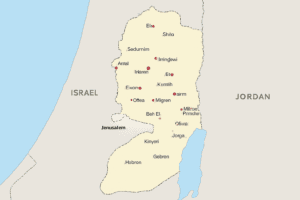
The West Bank’s Shifting Map: How 19 Settlements Signal a New Reality
The approval of 19 new settlements in the West Bank is more than just another headline in the long-running Israeli-Palestinian conflict. It represents a decisive acceleration of a multi-decade project, moving from creeping annexation to a near-sprint, fundamentally reshaping the political and physical landscape in a way many fear is irreversible.
For years, the international community has warned against the “facts on the ground” created by settlements. Today, with the Israeli security cabinet’s recent move and the systematic empowerment of annexationist politicians within the government, those facts are hardening into a new, formalized reality that challenges the very foundation of a future Palestinian state.
From “Creeping” to Racing: The Smotrich Doctrine
The most critical context for understanding this latest expansion is the profound institutional shift within Israel’s governance of the West Bank. Historically, the territory was administered under military law, a structure that maintained at least a theoretical veneer of temporariness for the occupation. This changed significantly with the rise of Finance Minister Bezalel Smotrich, a settler himself and a key figure in Israel’s most right-wing government in history.
Smotrich holds a unique dual role: as Finance Minister and as a minister within the Defense Ministry with sweeping authority over civilian affairs in the West Bank. From this position, he has engineered a quiet revolution. He has overseen the transfer of governing powers from military to civilian Israeli agencies, effectively dismantling the separation between the occupation’s administration and the Israeli state itself.
This bureaucratic maneuver is not merely procedural. Its goal, as articulated by Smotrich and his allies, is to apply Israeli sovereignty—a term synonymous with annexation—over the West Bank. The approval of these 19 settlements, reportedly a plan led by Smotrich and allegedly coordinated in advance with the U.S., is a direct application of this doctrine. It treats the territory not as occupied land subject to international law, but as a natural extension of Israel open for development and Jewish settlement.
Life Under a “De Facto Colonial Authority”
For Palestinians living in the West Bank, these policy shifts translate into daily insecurity, violence, and displacement. Palestinian officials have condemned the latest settlement plan as a dramatic escalation that accelerates annexation and deepens what they describe as a decades-long project of “land theft and demographic engineering”. The Palestinian National Council has called it the expansion of a “de facto colonial authority”.
The human cost is documented in stark numbers. According to the UN Office for the Coordination of Humanitarian Affairs (OCHA), 2025 has seen a severe escalation in violence:
| Indicator | 2023 Figures (Approx.) | 2025 Figures (as of Dec 2025) | Trend |
| Palestinian fatalities (by Israeli forces/settlers) | ~150 | At least 232 | ↗ Sharp Increase |
| Child fatalities (within above total) | N/A | 52 children | — |
| Settler attacks (causing casualties/property damage) | ~1,200 | Over 1,700 | ↗ Significant Increase |
| Forcibly displaced Palestinians (in Area C) | N/A | More than 1,000 | — |
This violence is not random but geographically strategic. Most attacks are clustered around major Palestinian population centers like Ramallah, Nablus, and Hebron—areas also targeted for settlement expansion. The result is the steady shrinking of Palestinian space.
Cities like Jenin, theoretically under Palestinian Authority control per the Oslo Accords, now find roughly 40% of their area declared a closed military zone by the Israeli army. For residents like Abdel Aziz Majarmeh, who saw his 13-year-old son shot dead by Israeli forces, the feeling is one of absolute powerlessness. “There is no-one for me to complain to,” he told the BBC. “They control everything.”
The Unambiguous Verdict of International Law
Against this backdrop, Israel’s settlement project collides head-on with international law. The global consensus is overwhelming and has been repeatedly affirmed.
- The Fourth Geneva Convention (Article 49) explicitly prohibits an occupying power from transferring parts of its own civilian population into the territory it occupies. This is the core legal principle rendering settlements illegal.
- UN Security Council Resolutions, including Resolution 2334 (2016), have condemned settlements as having “no legal validity” and constituting a “flagrant violation” of international law.
- The International Court of Justice (ICJ), in a landmark 2024 advisory opinion, reaffirmed this illegality. Crucially, the court went further, stating that Israel’s policies and practices—including settlements and the separation barrier—“amount to annexation of large parts of the Occupied Palestinian Territory”. The court called for Israel to end its occupation and evacuate settlers.
Israel disputes this framework, arguing the territories are “disputed” rather than occupied and claiming a historical Jewish right to the land. However, these arguments are rejected by the international community, the UN, and the ICJ. Notably, even Israel’s own legal counsel warned the government in a secret 1967 memo that civilian settlement “contravenes the explicit provisions of the Fourth Geneva Convention”.
Geopolitical Crossroads: Recognition vs. Annexation
This latest push comes at a moment of international tension. In a countermove, several Western powers, including the UK, France, Canada, and Australia, have recently moved to formally recognize a Palestinian state. This is largely a symbolic political act, meant to preserve the diplomatic concept of a two-state solution against its rapid erosion on the ground.
For Palestinians, this recognition is a double-edged sword. Jenin’s mayor, Mohammed Jarrar, acknowledged to the BBC that such recognition might provoke Israel to occupy more land. Yet, he supports it because it “confirms the fact that the Palestinian people possess a state, even if it is under occupation… it will shape the future”.
The stage is thus set for a direct clash. On one side, Israel, led by ministers like Smotrich, is actively working to annex territory. Prime Minister Benjamin Netanyahu has been unequivocal, telling settlers, “There will be no Palestinian state… This place is ours”. On the other, a coalition of states is using diplomatic recognition in a bid to salvage statehood as a political reality.
The role of the United States remains critical and uncertain. The Trump administration has opposed Palestinian statehood recognition but has also reportedly been coordinated with on this latest settlement plan. Past U.S. administrations have criticized annexation proposals, but the current level of restraint on Israel’s West Bank policies is perceived as low.
The Point of No Return?
The approval of 19 settlements is not an isolated event but a milestone in a clear trajectory. The “creeping annexation” analyzed for years has become a concerted drive. The institutional architecture for Israeli civilian rule is being laid. The settler population, now around 700,000, continues to grow. The space for a contiguous, viable Palestinian state shrinks by the day.
The international community now faces a painful dilemma articulated by the International Crisis Group: whether to continue waiting for a formal declaration of annexation that may never come, or to finally confront the reality that annexation is already “in effect” and act to halt and reverse it. This would require moving beyond statements to tangible measures, such as leveraging trade agreements or arms sales.
The tragedy is that on the ground, for Palestinians like Ayman Soufan, who watches settlers encroach on his hilltop home near Nablus, the reality is already settled. “Who is supposed to protect me?” he asks. “The Palestinian police? They can’t… Here, my security is in the hands of the people who occupy me”. The new map of the West Bank is being drawn not in diplomatic chambers, but on the hills where he lives, one settlement at a time.
You must be logged in to post a comment.