
The Unseasonal Warmth: How a Mild Winter is Reshaping North India’s Apparel Economy
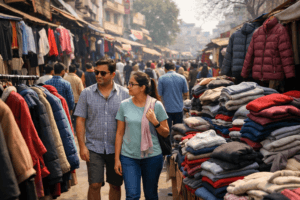
The Unseasonal Warmth: How a Mild Winter is Reshaping North India’s Apparel Economy
A peculiar quiet has settled over the clothing racks of North India. Shelves typically emptied of woolens by December remain stocked, and store managers watch thermometers more closely than sales figures. The anticipated seasonal boom—a critical financial pillar for the region’s apparel industry—has failed to materialize, not for lack of winter’s arrival, but for its surprising gentleness. This isn’t merely a story of slow sales; it’s a case study in how climate variability directly intertwines with consumer behavior, inventory logistics, and the very rhythm of retail business cycles.
The Forecast That Chilled Profits, Not People
Winter did, as the India Meteorological Department (IMD) noted, arrive early in North India. By the end of October, a familiar crispness hinted at the coming cold. Retailers, operating on decades of seasonal wisdom, responded as they always have: they stocked up. Factories had been producing since summer, building inventories of jackets, sweaters, sweatshirts, thermals, and shawls—items that carry significantly higher price points and margins than lightweight summer wear.
However, the critical follow-through—a sustained, sharp drop in temperature—never came. The IMD’s subsequent forecast for the last week of December, predicting no significant cold wave, confirmed retailers’ fears. As Lalit Aggarwal, Managing Director of V-Mart, observed, winter arrived but “did not gain momentum.” The result was a consumer base that felt no urgent compulsion to purchase. Why invest in a heavy woolen jacket when a light sweater suffices? Why buy thermal layers when the daytime sun remains surprisingly warm?
Devarajan Iyer of Lifestyle India pinpointed the precise meteorological-commerce disconnect: while night temperatures dipped, daytime highs stayed stubbornly moderate. Indian winter wear consumption is heavily driven by daytime use—for commutes, outdoor work, and school—making the mild afternoons a major deterrent to sales.
The High Stakes of a Cold Season
To understand the gravity of this slump, one must appreciate winter’s disproportionate role in the apparel calendar. For many retailers, especially in North India, the October-February period can contribute up to 40% of annual revenue and an even higher percentage of annual profit. This is due to the Average Unit Price (AUP) effect. A winter jacket can sell for three to five times the price of a summer t-shirt. The season is not just about volume; it’s about premium value realization.
Furthermore, the winter cycle dictates cash flow. Retailers often rely on the liquidity from strong winter sales to clear dues to manufacturers, invest in spring/summer inventory, and maintain operational health through the slower monsoon months. A subdued season, therefore, creates a ripple effect that can stress the entire supply chain, from the large brand showroom to the small-scale knitting unit in Ludhiana.
The Immediate Fallout: Mounting Stock and Strategic Pivots
The most immediate symptom is elevated inventory. Reports indicate sales declines of up to 25%, leaving warehouses and stockrooms packed with unsold winter wear. This presents a dual financial burden: the locked-up capital in the unsold goods and the ongoing cost of storing it.
In response, retailers are engaging in a multi-pronged strategy:
- Aggressive Promotions: Discounts, previously reserved for end-of-season clearances in January, have been rolled out earlier and more aggressively to stimulate demand and free up cash.
- Inter-Regional Redistribution: As Iyer noted, other parts of the country have performed better. Companies with national networks are attempting to redirect surplus stock from the North to markets experiencing more typical winter conditions.
- Extending the Season Window: Hopes are now pinned on a potential cold spell in January. Marketing efforts are being adjusted to promote winter wear as essential for the entire “cool period” rather than just peak winter.
Beyond a Single Season: Long-Term Implications and Adaptations
This event is not an isolated anomaly but part of a broader pattern of climatic unpredictability. The industry is being forced to consider structural adaptations:
- Data-Driven Inventory Planning: Reliance on historical sales data alone is becoming riskier. Forward-looking retailers are integrating long-range meteorological forecasts into their procurement algorithms, albeit with acknowledged uncertainty.
- The “Layering” Marketing Shift: Marketing narratives may increasingly focus on versatile, layered clothing that serves across a wider temperature range, moving away from marketing solely “heavy winter wear.”
- Smaller, More Frequent Production Batches: To enhance resilience, brands might move towards producing initial inventory based on conservative estimates and then relying on faster, responsive manufacturing for replenishment if a cold wave hits.
- Blurring Seasonal Lines: Collections may become less starkly seasonal, with a greater emphasis on year-round categories like denim, lightweight knits, and fashion-led outerwear that isn’t purely functional for extreme cold.
The Human Element: From Artisans to Sales Staff
The impact travels far beyond balance sheets. In craft clusters like Srinagar (for pashmina and woolens) and Panipat (for blankets), subdued demand affects artisan livelihoods. Sales staff in retail stores, who often work on incentives linked to high-margin winter sales, face diminished earnings. The entire ecosystem feels the pinch of the unseasonable warmth.
A Crucial Lesson in Resilience
The mild winter of 2025 serves as a stark reminder that the apparel industry is deeply vulnerable to environmental factors. It underscores that climate change is not just a macro-environmental issue but a micro-economic one with direct boardroom implications. The retailers who will thrive are those who view this not as a one-off bad season, but as a signal to build more agile, informed, and resilient business models.
The true test will come next year. Will the industry over-correct and under-stock, potentially missing out if a harsh winter returns? Or will it develop a sophisticated, adaptable middle path? As North India’s retailers pack away unsold sweaters, they are undoubtedly pondering a future where the weather forecast is just as critical as the fashion forecast.
You must be logged in to post a comment.