
The Two Faces of Justice: Lynchings, Politics, and the Question of India’s Social Fabric
The recent remarks by Iltija Mufti and her mother, PDP leader Mehbooba Mufti, criticize India’s rising intolerance and alleged institutional bias, as Iltija labeled the country “Lynchistaan” following the lynching of a Bengali Muslim laborer in Odisha, contrasting it with vocal condemnations of similar violence in Bangladesh. Mehbooba extended this critique, claiming the judiciary has become “thoroughly politicized” after a high court dismissed her PIL seeking the transfer of Kashmiri undertrials, accusing her of political motives, while she also highlighted recent harassment of Kashmiri shawl sellers in northern states as evidence of growing majoritarian aggression. Together, their comments underscore deepening concerns about selective outrage, the erosion of pluralism, and the perceived weaponization of legal and social frameworks against minority communities in contemporary India.
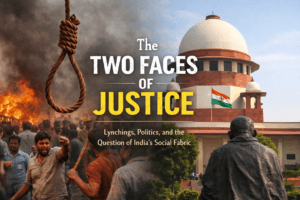
The Two Faces of Justice: Lynchings, Politics, and the Question of India’s Social Fabric
The recent comments by Iltija Mufti and her mother, former Jammu and Kashmir Chief Minister Mehbooba Mufti, have ignited a fresh, uncomfortable conversation about intolerance, justice, and political discourse in contemporary India. At the heart of their critique lies a provocative accusation: that the nation is displaying “two faces”—one of outward moral condemnation and another of inward complicity or silence.
A Harsh Label: From Hindustan to Lynchistaan?
Iltija Mufti’s social media post, replacing the traditional names for India with “Lynchistaan,” was a stark rhetorical device meant to shock and provoke introspection. It was anchored in the tragic case of Juyel Sheikh, a 19-year-old Bengali Muslim labourer allegedly lynched in Odisha after being branded a “Bangladeshi.” This incident, she implies, is not an isolated anomaly but part of a pattern that contradicts the country’s self-image of tolerance and rule of law.
Her mother, Mehbooba Mufti, expanded on this theme, drawing a direct parallel to international events. “What is happening in Bangladesh hurts us,” she stated, referring to global condemnation of vigilante violence there, “but those who are criticising it keep their mouths shut when such lynchings are happening in front of them.” This charge of selective outrage cuts to the core of their argument: that moral and political stands are increasingly dictated by identity and allegiance rather than universal principles of human dignity.
Beyond the Headline: The Tangled Web of Law and Politics
The Muftis’ comments did not occur in a vacuum. They emerged during Mehbooba Mufti’s press conference addressing a Jammu & Kashmir and Ladakh High Court verdict. The court had dismissed her Public Interest Litigation (PIL) seeking the repatriation of Kashmiri undertrials to jails within the Union Territory. In its order, the court accused her of using the judiciary for “partisan” political agendas and “garnering political advantage.”
Mehbooba’s furious response—that the judiciary is becoming “thoroughly politicised”—highlights a deepening tension. Her central question is profound: Can a politician, by virtue of being a politician, be disqualified from raising matters of public suffering? “The high court forgets that politicians are connected with the ground,” she argued, emphasizing the practical hardships faced by poor families unable to travel across India to visit incarcerated relatives.
This clash raises critical questions about the space for political dissent and the role of courts. Is a PIL by a political figure inherently suspect? Or does their grassroots connection make them vital conduits for highlighting systemic injustices? The court’s sharp language and Mehbooba’s allegations of politicisation reflect a worrisome erosion of trust in neutral institutions.
The Ground Reality: A Pattern of Harassment and Fear
Supporting their broader theme of rising intolerance, Mehbooba cited three recent incidents of Kashmiri shawl sellers being harassed and beaten in Himachal Pradesh, Uttarakhand, and Haryana for refusing to chant certain slogans. These videos, circulating on social media, present a visceral counter-narrative to ideals of national integration and free movement. They paint a picture of vulnerable citizens facing coercion and violence based on their regional and religious identity, transforming economic activity into a perilous undertaking.
This pattern, whether classified as isolated crimes or symptomatic of a larger social malaise, fuels the perception of a nation where majoritarian impunity is on the rise. The silence or muted response to such events from certain quarters, contrasted with loud condemnations of similar violence elsewhere, feeds the “two faces” narrative.
Seeking a Path Forward: Justice, Consistency, and Dialogue
The Muftis’ polemics, while politically charged, point to issues that demand a non-partisan response:
- The Imperative of Consistent Condemnation: A society’s moral integrity is measured by its commitment to justice for all, regardless of the victim’s identity. Uniform and unequivocal condemnation of mob violence from all political and social leadership is essential to break the cycle of impunity. Justice must be blind, and so must our outrage.
- Depoliticising the Judiciary and Public Interest: The uncomfortable intersection of politics and law needs careful navigation. While courts must guard against being manipulated for political theatre, they must also remain accessible to all citizens, including elected representatives, as champions of constitutional rights. The remedy to a politically motivated petition is a dismissal on legal merits, not necessarily character aspersions.
- Addressing the Economic Undercurrents: Incidents like the lynching of a migrant labourer often have roots in economic anxiety and scapegoating. Strengthening legal protections for migrant workers, ensuring robust law enforcement responses to hate crimes, and fostering inter-community economic dependencies can help address these toxic undercurrents.
- From Rhetoric to Solutions: Terms like “Lynchistaan,” though impactful, can entrench divisions. The challenge for the national discourse is to move beyond labels and focus on actionable solutions: faster trials in hate crime cases, witness protection programs, and community policing initiatives that build trust.
Conclusion: A Mirror Held Up to the Nation
The comments from the Mufti family are more than just political rhetoric; they are a mirror held up to Indian society. They reflect deep-seated anxieties about the erosion of pluralism, the perceived politicisation of institutions, and the dangerous normalisation of identity-based violence.
Whether one agrees with their politics or their provocations, the issues they highlight are undeniably real. The test for India’s democracy is not whether such criticisms are made, but how the state and civil society respond to them. Will there be a consistent, rigorous application of the law to protect every citizen? Can institutions demonstrate their neutrality so powerfully that accusations of politicisation lose their sting? And ultimately, can the nation forge a shared identity where justice is not a matter of political face, but a fundamental, non-negotiable promise to all?
The answer to these questions will determine whether the country lives up to the best meanings of Bharat, Hindustan, and India—or allows its darkest moments to define its name.
You must be logged in to post a comment.