
The Trump Administration’s AI Blueprint: A Wake-Up Call for India’s Tech Ambitions
The Trump administration’s new national AI framework signals a strategic pivot that pressures India to move beyond its traditional role as a talent supplier and back‑office partner. By prioritizing an “AI‑ready” domestic workforce, streamlining data‑center energy rules, establishing a unified federal standard, and balancing intellectual property with permissive training data, the policy aims to cement US leadership while creating higher compliance and investment barriers for foreign players. For India, this means its IT services model faces disruption, its energy infrastructure must keep pace with AI’s demands, and its professionals must ascend to high‑value, strategic roles. Crucially, the push for regulatory certainty in Washington sets a new benchmark, forcing New Delhi to decide whether to align closely with US standards or forge a distinct, sovereignty‑focused path—making the AI race a defining test of India’s technological independence.
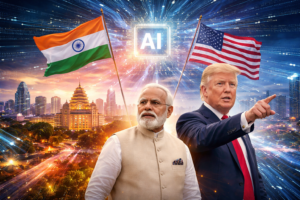
The Trump Administration’s AI Blueprint: A Wake-Up Call for India’s Tech Ambitions
When the White House unveils a “national framework” on artificial intelligence, it rarely stays within the borders of the United States. In a globalized tech economy, policy decisions made in Washington D.C. create shockwaves that are felt most acutely in Bengaluru, Hyderabad, and Pune. The recent six-point plan announced by the Trump administration is more than just a domestic policy memo; it is a strategic document that signals a fundamental shift in how the world’s largest economy intends to control the AI narrative—and for India, it represents a crossroads.
For decades, the Indian technology ecosystem has thrived on a specific model: a steady pipeline of STEM-educated talent feeding into American innovation, coupled with Indian IT giants acting as the back-office engine for global enterprises. The new US AI policy, with its aggressive focus on infrastructure, intellectual property, and a singular national standard, threatens to rewrite that contract. It forces India to move from being a passive participant in the AI supply chain to a strategic player who must decide whether to align, compete, or carve out a distinct path.
The “AI-Ready” Workforce and the Indian Professional
The policy’s emphasis on an “AI-ready workforce” is the most immediate touchpoint for India. The White House’s goal to ensure American workers “participate in and reap the rewards of AI-driven growth” sounds benign, but it carries a subtle undercurrent of economic nationalism. For the Indian-origin professional in the US on H-1B visas or awaiting green cards, this language signals a tightening of the labor market.
The US is no longer just looking for coders; it is looking to upskill its domestic workforce to handle the high-value aspects of AI development—architecture, ethics, and strategic deployment. While Indian talent has always been lauded for its technical prowess, the policy suggests a future where the US prioritizes its own citizens for the highest tiers of AI innovation. For Indian professionals, the path forward will require a pivot from simply being implementers to becoming indispensable thought leaders and specialists in niche areas like AI governance and sector-specific applications, areas where expertise transcends nationality.
Moreover, the administration’s desire to remove “outdated barriers to innovation” often translates into deregulation that benefits large American tech monopolies. While this spurs growth, it could also lead to a concentration of AI power in the hands of a few US-based corporations. Indian professionals working within these ecosystems may find themselves with less leverage, as the focus shifts from global talent acquisition to domestic retention and reskilling.
Reshaping the Indian IT Services Model
Perhaps the most profound impact will be on India’s $250 billion IT services industry. Firms like Tata Consultancy Services (TCS), Infosys, and Wipro have built empires on maintaining legacy systems, managing data centers, and providing cost-arbitrage labor. The new US AI policy attacks the very foundation of this model.
First, there is the issue of infrastructure. The White House’s directive to speed up approvals for data centers and encourage on-site power generation signals a desire for energy sovereignty. AI consumes vast amounts of electricity. By controlling the energy grid and data center infrastructure, the US aims to keep the physical means of AI production within its borders. This could reduce the demand for Indian-managed data centers or remote infrastructure management services.
Second, the policy’s call for a uniform national standard is a double-edged sword. On one hand, it simplifies compliance for Indian firms operating across multiple US states, reducing the legal friction that often complicates contracts. On the other hand, a unified US framework creates a high barrier to entry. If the US establishes strict, federally mandated rules for data provenance, algorithmic transparency, and safety standards, Indian firms will have to invest heavily to meet these benchmarks. The era of simply providing “manpower” is ending; the new era demands that Indian firms become trusted partners in compliance, security, and ethical AI deployment.
The Energy Conundrum and Global Supply Chains
The White House’s pointed remark that “ratepayers should not foot the bill for data centres” is a critical insight into the political economy of AI. In the US, the construction of massive AI infrastructure is often met with local resistance due to strain on power grids. By shifting the onus onto companies to generate their own power—likely through natural gas, small modular reactors, or renewables—the US is ensuring that the expansion of AI is not slowed by local populism.
For India, this highlights a looming bottleneck. If India wants to compete in the AI race, it must solve its own energy crisis for tech hubs. Indian data center capacity is growing rapidly, but it remains vulnerable to grid instability and high power costs. The US model of forcing tech giants to internalize energy costs could be a blueprint for India. If Indian states fail to offer reliable, green power for AI compute clusters, the global supply chain—which currently routes data processing through Indian facilities—may begin to bypass the country in favor of more energy-secure locations.
Intellectual Property: Walking a Tightrope
The policy’s stance on intellectual property is a masterclass in balancing competing interests. The administration states that “creative works… must be respected” while simultaneously insisting that AI systems must be able to “learn from available data.” This is the central tension of the AI age.
For India, this creates a strategic dilemma. India is currently a net consumer of AI models built in the US and China. The US policy suggests a future where American models are trained on vast swathes of public data but are shielded from copyright liability by federal law. If the US Congress passes a law granting AI companies broad fair use exemptions, American models will become even more powerful and harder to compete with.
Indian startups and developers who rely on open-source models or wish to build indigenous foundational models must watch this closely. If the US establishes a precedent of permissive training data rules, India may need to adopt a similar stance to allow its own AI ecosystem to flourish. However, India also has a vibrant creative industry—Bollywood, music, and publishing—that would fiercely resist such moves. The policy signals that India cannot afford to lag in defining its own IP rules for AI without risking either a loss of cultural sovereignty or a stifling of innovation.
Free Speech and the Geopolitics of Ideology
One of the more ideologically charged aspects of the framework is its defense of free speech, warning that “AI cannot become a vehicle for government to dictate right and wrong-think.” This is a direct rebuke to the more regulatory-heavy approaches seen in the European Union (with the AI Act) and, implicitly, to the state-managed internet ecosystems of other nations.
For India, this introduces a layer of geopolitical complexity. India’s approach to internet governance has often been characterized as a “middle path”—aiming for openness while retaining the ability to regulate content for sovereignty and social harmony. As the US pushes for AI models that are constitutionally protected against government censorship, Indian policymakers will face pressure to adopt similar standards. If India insists on localized content moderation or algorithmic transparency that conflicts with the US framework, it could lead to friction in tech trade and data flows. Indian IT firms acting as intermediaries may find themselves caught between US constitutional protections and Indian statutory requirements, creating a compliance minefield.
A Single Rule vs. The Patchwork
The administration’s warning against a “patchwork of conflicting state laws” is a lesson in efficiency that India would do well to heed. In the US, states like California and New York have attempted to pass their own strict AI regulations, creating confusion for businesses. The push for a singular federal law is an attempt to create a stable, predictable environment.
India currently faces a similar fragmentation. Different states are experimenting with their own electronics and IT policies, while the central government’s Digital India Act remains in flux. If India wants to attract the massive capital investments needed to build its own AI infrastructure—including semiconductor fabrication plants and hyperscale data centers—it must offer the same level of regulatory certainty that the US is now promising its domestic players. The US policy inadvertently sets a new benchmark for regulatory stability; India’s ability to match this will determine whether the next generation of AI factories is built in Tamil Nadu or Texas.
Conclusion: India’s Strategic Pivot
The Trump administration’s AI framework is not merely a policy document; it is a declaration of technological sovereignty. It signals that the United States intends to win the AI race by controlling the three pillars of the industry: energy (data centers), talent (workforce development), and law (a unified federal standard).
For India, the moment demands more than just observation. The era of passive dependence is over. India must now craft a response that is equally bold. This means accelerating the development of indigenous foundational models that reflect Indian languages and cultural contexts. It means overhauling energy policy to ensure that India’s grid can support the compute demands of the future. Most importantly, it means making a decisive choice: will India attempt to align its standards with the US to maintain integration in the global supply chain, or will it forge a distinct regulatory path that prioritizes data sovereignty and local innovation?
The decisions made in Washington will set the default settings for the global AI industry. For India, the challenge is no longer about adapting to those settings; it is about developing the agency to write its own source code. The White House has laid down its marker. The clock is now ticking for New Delhi to show the world what an Indian AI framework looks like.
You must be logged in to post a comment.