
The Strait of Hormuz’s New Rules: How Iran Is Turning the World’s Oil Lifeline into a Geopolitical Filter
Based on the original news report, Iran has shifted its strategy in the Strait of Hormuz from a total blockade to a selective, permission-based system, allowing passage to at least eight non-Iranian ships—including Indian vessels—by having them hug Iranian territorial waters to avoid mined international lanes. This approach, confirmed by maritime data, enables Tehran to weaponize the waterway by blocking 97% of traffic (primarily Western and Israeli ships) to inflict global economic pain, while rewarding “friendly” nations like India and China with passage, thereby exposing geopolitical fractures and reinforcing that the world’s most critical oil chokepoint now operates under Iranian veto power.
The Strait of Hormuz’s New Rules: How Iran Is Turning the World’s Oil Lifeline into a Geopolitical Filter
For nearly three weeks, the Strait of Hormuz was a geopolitical fortress under siege. After the US-Israeli strikes on February 28, Iran slammed the gate shut on the world’s most important energy artery, transforming a 21-mile-wide stretch of water into a high-stakes chessboard. But as new maritime data emerges, a more nuanced and strategically chilling picture is coming into focus: Iran isn’t just blockading; it is curating.
On March 16, maritime intelligence firm Windward tracked at least eight non-Iranian ships—including Indian vessels—transiting through the strait. While this number is a fraction of the normal traffic that sees about 20 million barrels of oil pass through daily, it represents a significant shift in Tehran’s tactics. The blanket “no entry” sign has been replaced with a velvet rope. Iran is now operating a permission-based transit system, selectively allowing “friendly” nations to pass while holding the global economy hostage.
To understand what is happening in the azure waters between Iran and Oman, one must look beyond the tanker tracking data and examine the high-wire diplomacy, the human cost of energy inflation, and the quiet desperation of ship captains navigating mine-infested waters for a shot at safe passage.
The Data Speaks: A Trickle, Not a Torrent
The numbers provided by Windraw and analyzed by shipping experts like Michelle Wiese Bockmann tell a story of a carefully managed crisis. The eight ships spotted moving through the strait represent a lifeline for specific countries, but they also highlight the scale of the chokehold.
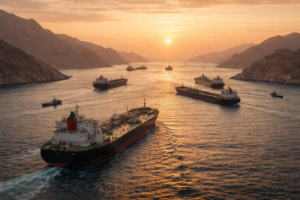
These vessels—a mix of bulk carriers and liquefied petroleum gas (LPG) tankers—aren’t blazing a trail through the center of the strait. Instead, they are engaging in a precarious maneuver that maritime insiders are calling “the Iranian hug.” They are hugging the Iranian coastline, skirting through Iran’s territorial waters to avoid the main shipping lanes, which are now suspected to be heavily mined or under direct threat of seizure.
Imagine being the captain of an Indian bulk carrier. You have just received a coded message from your company that diplomatic clearance has been granted. You must now steer your vessel, laden with thousands of tons of cargo, through waters that just weeks ago were a war zone, relying on the goodwill of a nation that is actively at war with the West. There is no room for error. One degree off course into international waters, and you could be a target. This is the new reality of shipping in the Gulf.
The Geopolitical Filter: Who Gets In and Who Gets Left Out?
Iran’s strategy is a masterclass in asymmetric warfare. Unable to match the US Navy’s firepower, Tehran is weaponizing geography. By allowing 97% of traffic to remain blocked, they inflict maximum economic pain on the West. But by letting a trickle through for select nations, they expose deep fractures in the international coalition that might otherwise oppose them.
India’s Delicate Dance The inclusion of Indian vessels is the most telling detail. India imports a massive portion of its energy needs from the Gulf. For years, New Delhi has walked a tightrope, maintaining strong defense ties with Russia and economic ties with the West, all while engaging deeply with Iran. The Chabahar Port project—a strategic counter to China’s Gwadar port in Pakistan—is central to this relationship.
Iran granting passage to Indian ships is likely a direct result of intense backchannel negotiations. It serves as a signal to Washington that isolating Iran completely is impossible without alienating major Asian economies. For India, accepting this passage is a pragmatic necessity to keep its economy running, but it comes with the diplomatic cost of implicitly acknowledging Iran’s authority to police the strait. It validates Tehran’s claim that the waterway is not entirely international in practice, but subject to Iranian veto power.
China’s Silent Approval While not explicitly mentioned in the immediate transit list regarding March 16, the report alludes to an understanding with countries like China. Beijing is Iran’s largest customer and primary source of diplomatic cover. It is highly likely that Chinese tankers are also being quietly waved through. This creates a two-tiered global economy: Asian powers that engage with Tehran get fuel; Western powers that attack Tehran get scarcity.
The West and Israel: Left Adrift For US, UK, and Israeli-flagged vessels, or those owned by Western entities, the strait remains a no-go zone. This is the “Leaver” side of the “Takers and Leavers” dynamic. Western nations are left scrambling for alternative supplies, paying exorbitant spot prices for oil that must take longer, safer routes, or rely on a dwindling pool of non-sanctioned tankers willing to risk the journey.
The $119 Barrel and the Human Cost
The article notes that Brent crude surged to $119.50 a barrel. But behind that number lies a human reality. In developing nations, a $100+ barrel of oil doesn’t just mean expensive gas at the pump; it means skyrocketing costs for fertilizer, transportation of food, and plastic goods.
In Cairo, a father of three can no longer afford to take the microbus to work because the driver has doubled the fare to cover diesel costs. In a small town in Sri Lanka, a bakery owner watches his profits vanish as the price of palm oil and fuel for his oven climb in tandem. In Europe, a factory worker faces the grim prospect of layoffs as heavy industries power down due to energy costs.
This is the weapon Iran is wielding. It is not just about destroying Israeli infrastructure or sinking US warships; it is about creating a global cost for the actions of its enemies. By turning the tap to a dribble, they ensure that the pain is felt not just in the boardrooms of Texas oil companies, but in the daily lives of voters in democratic nations. The goal is to create political pressure from those voters on their leaders to de-escalate.
The Mechanics of a Permission-Based Blockade
How does this actually work on the water? According to Windward and other analysts, the process is a mix of high-tech tracking and old-school naval intimidation.
Ships seeking passage must likely submit their details to Iranian authorities—either directly or through their embassy—well in advance. This includes the ship’s ownership, flag, cargo, destination, and crew nationality. Once approved, they are given a specific window and a route to follow.
As they approach the Strait, they are likely escorted or monitored closely by Iran’s Islamic Revolutionary Guard Corps Navy (IRGCN)—the same force known for high-speed intercepts of Western vessels in recent years. These small, fast attack craft swarm the commercial ships, ensuring compliance. The ships are not just passing through Iranian waters; they are passing through under Iranian guard.
This creates a psychological dynamic of dependency. The crews of these vessels, relieved to have permission, find themselves looking to their former adversaries for protection. It is a profound shift in the balance of power in the region.
The Fragile Workaround: Why It’s Not a Solution
While the passage of these eight ships is a headline, it is not a solution to the global energy crisis. The volume is minuscule. The world’s logistics networks rely on predictability and scale. A permission-based system is the antithesis of that.
Insurance Nightmares: Even if a ship gets Iranian permission, the insurance implications are staggering. War risk premiums for entering the Gulf have exploded. Insurers are hesitant to cover vessels that rely on the goodwill of a belligerent nation for safe passage. One wrong move, one misunderstood signal, and a ship could be seized, its crew held hostage.
The Crew Factor: Mariners are a tight-lipped, professional community. Word travels fast. Seafarers are now refusing to sign contracts that take them into the Strait of Hormuz. The mental toll of sailing through mined waters, knowing you are a pawn in a geopolitical game, is immense. We may soon see a labor shortage in the tanker industry, further constricting supply.
The “Shadow Fleet” Risk: To get oil out, we may see a resurgence of the “shadow fleet”—aging, poorly maintained tankers with opaque ownership that are willing to turn off their transponders and take risks. This is an environmental disaster waiting to happen. A major oil spill in the narrow, ecologically sensitive Strait of Hormuz would poison desalination plants that provide drinking water for the entire region, creating a humanitarian catastrophe that dwarfs the current conflict.
The Global Response: Bypassing the Bottleneck
The article briefly touches on the question: Can the world get its supply of oil by bypassing the Strait of Hormuz?
The short answer is no—not in the short term. The Strait is a chokepoint for a reason. Pipelines exist, like the Abu Dhabi Crude Oil Pipeline that bypasses the Strait to the Fujairah port on the Gulf of Oman. But these have limited capacity. Saudi Arabia and the UAE have invested in such bypass routes, but they cannot handle the full volume of Gulf exports.
In the long term, this crisis will accelerate the search for alternatives. It will bolster the case for expanded pipeline networks, it will push China to fast-track overland routes from Central Asia, and it will ironically strengthen the hand of those in Europe and Asia who argue for energy diversification away from fossil fuels entirely. The Strait of Hormuz crisis is the single greatest argument for renewable energy the world has ever seen. Why risk your entire economy on a waterway that one country can close overnight?
Conclusion: The New Normal?
As the data showing Indian ships passing through the Strait emerges, we are witnessing the crystallization of a dangerous new normal. Iran has demonstrated that a physical blockade is less effective than a smart, diplomatic one. By allowing passage to friends, they are buying political capital and legitimacy. They are proving to the world that they are not the reckless aggressor the West portrays them to be, but rather a gatekeeper—perhaps an unpredictable and vengeful one, but a gatekeeper nonetheless with whom one must negotiate.
For the global community, this presents a stark choice. Do they accept Iran’s right to filter global commerce, effectively legitimizing the seizure of the strait? Or do they mount a costly and dangerous military operation to force the strait open, risking a wider war?
For now, the tankers inch along the Iranian coast, their flags—Indian, Chinese, perhaps Russian—acting as passports in a world where the old rules of the sea have been rewritten by the force of geopolitics. The Strait of Hormuz is no longer just a body of water; it is a mirror reflecting the shifting alliances and brutal realpolitik of a multipolar world. The ships are moving, but the world is holding its breath.
You must be logged in to post a comment.