
The Killing of Ammar Sabbah: A Symptom of Escalating Conflict in the Occupied West Bank
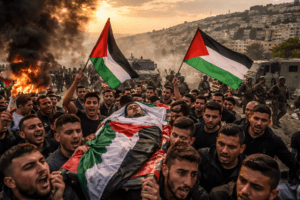
The Killing of Ammar Sabbah: A Symptom of Escalating Conflict in the Occupied West Bank
The killing of a 17-year-old Palestinian boy in the town of Tuqu’ is not an isolated tragedy. It is the latest entry in a grim, expanding ledger of death that defines daily life for millions in the Israeli-occupied West Bank. While the Israeli military and Palestinian accounts of the incident differ sharply, the broader context is one of unprecedented violence, systemic displacement, and a rapidly deteriorating humanitarian situation that has transformed the territory into a tinderbox.
This deep dive moves beyond the headline to explore the complex layers of a conflict where a single death illuminates deepening military raids, surging settler violence backed by state support, and an international legal framework that is systematically ignored.
The Incident in Tuqu’: Conflicting Narratives, Unchanging Outcome
In the evening of December 15, 2025, Israeli forces raided Tuqu’, a town southeast of Bethlehem. The outcome was the death of a teenager, but the accounts of how it happened stand in direct contradiction.
According to the head of the Tuqu’ Village Council, Tayseer Abu Mifreh, Israeli soldiers took up positions in the center of town and opened “indiscriminate fire.” A 17-year-old, identified in reports as Ammar Yaser Sabbah (or Taamrah), was struck in the chest by a live round. He was rushed to a local clinic but succumbed to his wounds.
The Israeli military provided a different version to Reuters. They stated that rocks were thrown at soldiers, who initially used riot dispersal means before responding with live fire. The military said the incident was under review. This familiar pattern of conflicting narratives—one alleging indiscriminate force, the other citing response to a threat—leaves little clarity for outsiders but a profound certainty for the bereaved family and a community that has grown accustomed to loss.
A Pattern, Not an Exception: The Systemic Landscape of Violence
Ammar Sabbah’s death is a single data point in a catastrophic trend. The United Nations reports that over 1,000 Palestinians have been killed in the West Bank between October 7, 2023, and mid-November 2025. Palestinian statistics note that 53 of those killed by Israeli forces in 2025 alone were minors.
The violence is not evenly distributed but is intensely concentrated. As the table below shows, nearly half of all Palestinian fatalities in 2025 occurred in just two governorates, highlighting areas of focused military operations.
| West Bank Governorate | Key Characteristics & Impact |
| Jenin Governorate | Epicenter of recurrent large-scale raids; high fatality rate; prolonged military presence; widespread displacement. |
| Nablus Governorate | Similar pattern of intensified operations; significant settler presence; frequent clashes. |
| Tubas Governorate | Site of recent massive 4-day operations involving drones and bulldozers; extensive infrastructure damage and mass injuries. |
| Hebron Governorate | Location of severe movement restrictions and checkpoints; site of recent lethal incidents. |
These operations are not fleeting incursions. The UN documents that Israeli forces have maintained their longest continuous presence in some West Bank cities in decades, converting homes into military posts, imposing open-ended curfews, and severing access to essential services like water, healthcare, and education. In the northern West Bank, a single week of expanded operations directly affected over 95,000 Palestinians, forcing groups like Save the Children to halt education and mental health programs for hundreds of children.
The Settler Dimension: Violence with a Sense of Impunity
Parallel to military actions, violence by Israeli settlers has reached record levels, creating an atmosphere of pervasive fear for Palestinian communities. The UN recorded more than 260 settler attacks in October 2025 alone—the highest monthly count since monitoring began in 2006.
This violence is particularly acute around the olive harvest, a critical economic and cultural season. In 2025, 178 attacks were documented in just two months, involving assaults on farmers, theft of crops, and vandalism of ancient groves. Victims like 55-year-old Afaf Abu Alia, who was brutally beaten with a club as she lay on the ground, or Reuters journalist Raneen Sawafta, who was struck in the head while reporting, testify to its severity.
Critically, this violence is viewed by Palestinians and Israeli activists as enabled by state support. Since October 2023, far-right National Security Minister Itamar Ben-Gvir has handed out tens of thousands of weapons to civilian security squads in settlements. The government has also authorized settlement expansion and retroactively legalized outposts considered illegal even under Israeli law. Perhaps most tellingly, the Israeli human rights group Yesh Din found that over the past two decades, over 93% of police investigations into settler offenses against Palestinians were closed without indictment.
This has created a dangerous rift within Israel. Senior military commanders, including the head of the Central Command, Maj. Gen. Avi Bluth, have condemned settler violence as the work of an “anarchist fringe” and a “red line,” promising decisive action. Meanwhile, hardline settlers accuse the army of being “anti-Israel,” exposing a growing divide between the country’s military and political leadership.
The Legal and Humanitarian Quagmire
At the heart of the conflict lies the issue of settlements. Most of the world, citing the Fourth Geneva Convention, considers them illegal. The International Court of Justice has declared Israel’s occupation illegal and called for the evacuation of settlements. The UN reports that over 700,000 Israeli settlers now live illegally in 279 settlements across the West Bank, a number that has grown steadily from 520,000 just a decade prior.
Israel disputes this legal interpretation. The government cites historical and biblical ties to the land, and in 2012, a state-appointed panel (the Levy Report) argued that Israel is not an occupying power and that settlements do not violate international law—a conclusion Human Rights Watch called a bid to “eliminate Israel’s obligations under international law with the stroke of a pen”.
On the ground, this legal dispute translates into a relentless erosion of Palestinian space. Israel uses declarations of “state land,” military zones, and the permit regime to control territory and resources. The demolition of Palestinian homes and structures for lacking permits—which are nearly impossible to obtain—continues apace, displacing families and destroying livelihoods.
The Human Cost: A Generation in the Crossfire
The most devastating impact is on children. A 2024 UN Secretary-General’s report covering 2023 verified 8,009 grave violations against 4,360 children in the conflict. It attributed the overwhelming majority (5,698 violations) to Israeli forces. These violations include killing, maiming, detention, and the use of children as human shields or informants.
The report states that many child deaths in the West Bank occurred “in circumstances raising concerns of unwarranted or excessive use of force” during law enforcement operations. With nearly 32,000 Palestinians, including over 12,000 children, displaced from refugee camps in the northern West Bank alone, an entire generation is growing up amidst trauma, instability, and shattered institutions.
Conclusion: Beyond the Breaking Point
The killing of Ammar Yaser Sabbah in Tuqu’ is a microcosm of a systemic crisis. It is a crisis of accountability, where lethal force and violent attacks are met with inadequate investigations and overwhelming impunity. It is a crisis of law, where the architecture of occupation and settlement expansion continues despite near-universal condemnation. And it is a profound humanitarian crisis, where millions live under the constant threat of displacement, injury, or death.
As a civil engineer from the frequently attacked village of Turmus Aya told the BBC, the relentless pressure is pushing communities to the brink: “We are not in a fight with the Israelis… And they [settlers] are pushing us towards the corner. You know, if the cat is pushed to the corner, he might become a tiger”. The events in Tuqu’ and across the West Bank are not merely sporadic clashes but the signposts of a territory, and a peace process, nearing a point of no return. The international community’s repeated calls for restraint and adherence to law ring hollow against the daily reality of a conflict that grows deeper, more violent, and more entrenched with each passing raid.
You must be logged in to post a comment.