
The Invisible Prison: How Delhi’s Looming Cold Wave Threatens to Lock Toxic Air in Place
The Invisible Prison: How Delhi’s Looming Cold Wave Threatens to Lock Toxic Air in Place
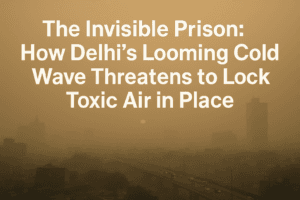
A familiar, gritty taste hangs in the morning air. A sun, bleached and pale, struggles to pierce the ochre haze that smothers India’s capital. For Delhi’s residents, the scene is a grim seasonal rerun, but this week’s script contains a dangerous new twist. As the city’s Air Quality Index (AQI) once again teeters on the brink of the ‘severe’ category, a meteorological double-bind is setting in: a cold wave is imminent. This isn’t just a story of two separate crises—bad air and cold weather—colliding. It’s the story of how one will actively imprison the other, transforming Delhi’s atmosphere into a stagnant, toxic dome with profound consequences for public health and daily life.
The Precarious Numbers: A City on the Brink
As of Wednesday morning, Delhi’s overall AQI stood at 337, firmly in the ‘very poor’ zone. But these aggregate figures mask a more alarming reality. Across the city, individual monitoring stations are flashing red. Nehru Nagar (436), Chandni Chowk (431), RK Puram (420), Rohini (417), and Vivek Vihar (415) are among over a dozen localities where the AQI has already crossed 400, entering the ‘severe’ territory. This means the concentration of fine particulate matter (PM2.5)—particles so small they can enter the bloodstream—is over seven times the World Health Organization’s annual safety limit.
The trajectory is telling. From 279 on Sunday, to 304 on Monday, to 372 on Tuesday evening, the curve is sharply rising. Of 39 monitoring stations, 16 have already recorded severe levels. This isn’t a sporadic spike; it’s a systemic failure reasserting itself, even before the peak of winter.
The Cold Wave Cometh: Not a Cleansing Breeze, But a Lockdown
Amid this toxic reality, the India Meteorological Department (IMD) has forecast a cold wave to grip the capital from Friday. Temperatures are expected to drop by 2-3 degrees Celsius over the next three days, with both maximum and minimum temperatures falling below seasonal norms. The instinct might be to hope that the cold, crisp air will “clear” the pollution. The opposite is true.
Here’s the critical human and scientific insight: cold waves in the Indo-Gangetic plain, particularly in winter, are typically accompanied by atmospheric conditions that are a perfect recipe for trapping pollution.
- Temperature Inversion: Normally, air temperature decreases with altitude, allowing warmer, polluted air near the ground to rise and disperse. During a cold wave, a layer of dense, cold air settles near the surface. Above it, a layer of warmer air acts like a lid—a phenomenon called a temperature inversion. This lid seals the city, preventing the vertical dispersion of pollutants. The emissions from vehicles, industry, construction, and seasonal sources like biomass burning have nowhere to go.
- Calm Winds and Fog: The IMD forecasts “mainly clear skies” but with “mist or haze during the night and shallow fog in the morning.” Calm or very light winds mean there’s no horizontal wind to blow the accumulated pollution away. The fog and mist, meanwhile, provide moisture for the particulate matter to adhere to, forming a denser, more hazardous smog. This combination of low winds, low temperatures, and moisture creates a stagnant air mass.
In essence, the coming cold wave won’t sweep Delhi clean; it will build walls around its polluted air. The drop in mercury signifies not relief, but the locking of the city into an invisible, poisonous chamber.
The Human Cost: Beyond Discomfort to Disease
This convergence has dire implications that move far beyond the inconvenience of a chilly morning or a blurred skyline.
- Compounded Respiratory Assault: Cold air is itself a bronchoconstrictor—it causes airways to narrow. When this cold air is laden with severe levels of PM2.5, nitrogen dioxide, and other toxins, the assault on the respiratory system is compounded. For asthmatics, COPD patients, the elderly, and children, this period poses a severe health risk, leading to increased emergency room visits, exacerbation of chronic conditions, and reduced lung function.
- Cardiovascular Strain: The body works harder to keep itself warm in a cold wave, increasing heart rate and blood pressure. Pollution, particularly PM2.5, causes systemic inflammation and stresses the cardiovascular system. This dual burden significantly raises the risk of heart attacks and strokes among vulnerable populations.
- The Psychological Toll: The unrelenting grey haze, the inability to breathe freely, the advice to stay indoors, and the piercing cold create a collective sense of claustrophobia and anxiety. The “great indoors” becomes not a sanctuary but a necessary prison, impacting mental well-being and daily routines—from canceled school sports to abandoned morning walks.
Navigating the Toxic Trap: Insight Beyond the Headlines
While systemic, policy-level action remains the non-negotiable long-term solution, the immediate reality demands informed personal and community navigation. Here is where genuine value can be added for readers seeking more than just a news report:
- Understand the Micro-Environment: While city-wide AQI is important, hyperlocal monitoring is key. Check readings from stations near your home and workplace. An area like IGI Airport (303) currently has a significantly different risk profile than Nehru Nagar (436). Plan your day accordingly.
- The Right Mask, Worn Rightly: As cold air increases the instinct to cover the face, ensure it’s with an N95, KN95, or FFP2 mask. A cloth scarf or surgical mask offers negligible protection against PM2.5. The mask must fit snugly.
- Indoor Air is Not Safe Air: The cold wave will drive people indoors, but indoor PM2.5 levels can be 60-80% of outdoor levels. This is the time to seriously consider air purifiers with HEPA filters, especially in bedrooms and living rooms. Keep windows sealed during peak pollution hours but ventilate briefly when AQI dips slightly.
- Timing is Everything: If outdoor exercise is essential, the afternoon (when the sun might slightly weaken the inversion layer and temperatures are marginally higher) is less hazardous than early morning or late evening, when pollution and cold are at their peak confluence.
- Community Vigilance: This is a moment to report local pollution sources—illegal construction waste burning, visibly polluting vehicles, or industrial emissions—to authorities. Collective local pressure can mitigate some hyperlocal contributions to the city-wide crisis.
A Call for Reframed Action
The narrative must shift. The cold wave forecast should not be just a weather bulletin; it must trigger a “Pollution Lockdown” alert. It exposes the inadequacy of short-term, reactive measures. The need for year-round, systemic action—decisive transitions to clean public transport, stringent enforcement on industrial and vehicular emissions, sustainable alternatives to stubble burning, and massive green infrastructure projects—has never been more starkly illustrated.
Delhi stands at the precipice of a familiar yet intensifying nightmare. The falling temperature is not a cleansing force but the lock on a door, trapping millions with the toxic consequences of inaction. To see the cold wave only as a weather event is to misunderstand the profound environmental and public health trap that is being set. The coming days will be a stark test of resilience, a lived experience of atmospheric science, and a reminder that in the battle for breathable air, nature’s patterns can become our most formidable jailers.
You must be logged in to post a comment.