
The Hidden Cost of Cheap Grain: How a U.S.-India Trade Deal Could Reshape Farms, Food, and Sovereignty
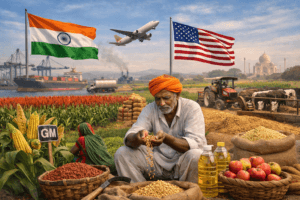
The Hidden Cost of Cheap Grain: How a U.S.-India Trade Deal Could Reshape Farms, Food, and Sovereignty
In a move hailed by diplomats as a “new chapter” in bilateral relations, the United States and India recently announced a framework for an interim trade agreement. For policymakers, the February 6th announcement represents a strategic alignment, reducing tariffs on everything from American machinery and nuts to Indian textiles and apparel. But beyond the diplomatic fanfare and joint statements lies a simmering anxiety in the heart of India’s agricultural belt. This isn’t just a story about tariffs and quotas; it’s a potential pivot point for India’s food systems, farmer livelihoods, and its very control over what seeds are sown and what food reaches its tables.
Beyond the Headlines: Decoding the Agricultural Concessions
The joint statement is clear: India has agreed to “eliminate or reduce tariffs on a wide range of U.S. food and agricultural products.” The list is specific and telling: dried distillers’ grains (DDGs), red sorghum for animal feed, tree nuts, fresh and processed fruit, soybean oil, wine and spirits.
To the untrained eye, these are mere commodities. To an Indian farmer or an agricultural economist, each represents a front in a battle for market stability.
- DDGs and Red Sorghum: These are animal feed ingredients. DDGs are a byproduct of ethanol production, primarily from maize. Their cheap import could directly undercut Indian farmers growing maize, jowar (sorghum), and other coarse cereals for the booming dairy and poultry feed industry. It’s a classic case of industrial byproduct versus primary crop.
- Soybean Oil: This concession arrives amidst documented farmer distress in key soybean-growing states like Maharashtra and Madhya Pradesh. An influx of cheaper, possibly subsidized, U.S. soybean oil could crash domestic oilseed prices, rendering already vulnerable cultivation even less viable.
- Tree Nuts & Fruits: While catering to India’s growing urban demand, increased imports of almonds, walnuts, and apples could pressure domestic horticulturists in Himachal Pradesh, Jammu & Kashmir, and other regions who have invested years in building these value chains.
The core fear, as expressed by networks like ASHA-Kisan Swaraj, is a depression of domestic prices. Indian agriculture is marked by millions of smallholders with thin profit margins. Even a slight dip in wholesale prices can push them into debt, a trigger for the prolonged protests seen in recent years.
The Unseen Ingredient: The GM Question Looms Large
Perhaps the most contentious and less-discussed aspect is the specter of genetically modified (GM) food and feed. The U.S. agricultural system is dominated by GM crops; over 90% of its corn and soybean acreage is genetically engineered. The two key products on India’s concession list—soybean oil and DDGs—will almost certainly originate from these GM varieties.
India’s stance on GM food crops has been cautious and complex. While Bt cotton is widely cultivated, the commercial cultivation of GM food crops like Bt brinjal remains halted. The regulatory gateway is the Food Safety and Standards Authority of India (FSSAI), which mandates that imported food products derived from 24 notified crops (including soybean and maize) must carry a non-GM origin and GM-free certificate.
Herein lies the tension. Will this interim agreement lead to a silent dilution of these safeguards? Could “addressing long-standing non-tariff barriers,” as mentioned in the statement, become a euphemism for easing these certification requirements to facilitate bulk imports? For food sovereignty activists, this is a red line. They argue that allowing GM feed into the food chain indirectly introduces GM into the ecosystem—through animal products and environmental spillover—without rigorous, independent assessment of its long-term impacts on health, biodiversity, and seed sovereignty.
A Deal of Dependencies: Energy for Agriculture?
The reciprocity in the deal is starkly illuminating. While India opens its agricultural market, the U.S. offers tariff concessions on textiles, apparel, and other manufactured goods. But the most revealing clause is India’s stated intention to purchase $500 billion worth of U.S. energy products, aircraft, and technology over five years.
This creates a framework of intertwined dependencies: India potentially becomes a massive market for U.S. energy (like liquefied natural gas) and high-value goods, while the U.S. gains significant entry into the world’s largest consumer market for food. Critics argue this could strategically bind India, making it harder to backtrack on agricultural concessions in the future without jeopardizing energy and tech imports deemed vital for development.
Historical Echoes and the Fear of Distortion
The anxiety is rooted in recent history. Past surges in imports of palm oil or pulses have repeatedly destabilized domestic prices, creating cycles of farmer protests followed by sudden import restrictions—a policy whiplash that helps no one in the long run. The fear is that this deal institutionalizes such import flows, making them permanent and harder to regulate in times of domestic surplus.
Furthermore, the influx of DDGs and feed grains could distort India’s own livestock sector. It may favor large, industrial-scale dairy and poultry operations that can utilize cheap imported feed over smaller, pastoralist models that rely on local crop residues and grazing. This shifts the agricultural landscape not just in crop fields but in animal husbandry, potentially marginalizing traditional practices.
The Road Ahead: Protests, Policy, and Precarious Balance
The call for nationwide protests on February 12 by farmer groups is a clear signal that this will not be a quiet implementation. The debate will hinge on several key questions:
- Safeguards or Hollow Promises? Will the government institute robust mechanisms like tariff-rate quotas (allowing limited zero-duty imports before tariffs kick in) or seasonal restrictions to protect farmers during harvest periods? Or will the market be opened floodgate-style?
- GM Regulation Under Pressure? How will FSSAI navigate the pressure? Will it hold the line on GM-free certification, potentially becoming the next “non-tariff barrier” to be negotiated away?
- Who Really Benefits? Is this deal primarily benefiting Indian consumers with slightly cheaper cooking oil and animal protein, or U.S. agribusiness and Indian industrial importers? Where does the income of the smallholder farmer, the backbone of rural India, figure in this calculus?
The interim India-U.S. trade deal is more than an economic document. It is a fork in the road for Indian agriculture. One path leads toward deeper integration into global commodity chains, with potential efficiencies but also heightened vulnerability to global price shocks and corporate-controlled supply chains. The other path prioritizes reinforcing domestic production, diversifying crops, and strengthening support systems for farmers, even if it means forgoing some “cheap” imports.
The coming months will reveal whether this framework becomes a tool for balanced growth or a catalyst for the very agrarian distress it promises, in the eyes of its critics, to ignore. The true cost of this deal won’t be measured in dollars or rupees alone, but in the resilience of rural landscapes, the diversity of seeds, and the sovereignty of a nation’s dinner plate.
You must be logged in to post a comment.