
The Great Unlocking: How China’s 30-Day Visa Waiver for Canadians and Brits Rewrites the Rules of Travel
As of February 17, 2026, China has implemented a landmark 30-day visa-free entry trial for Canadian and British passport holders, eliminating the significant cost and bureaucratic hurdles of the traditional visa process for tourism and short-term business trips until December 31, 2026. This strategic move, signaling a diplomatic reset and economic pragmatism, allows for spontaneous travel and gives corporations a major competitive advantage through agile market access, though businesses must remain vigilant about compliance by distinguishing between permitted business activities and prohibited local employment. This major policy shift is part of a dynamic global mobility landscape that also sees the UK tightening entry rules for its dual nationals, the US exhausting seasonal work visas, and other nations like Brazil and India fostering easier long-term travel between them.
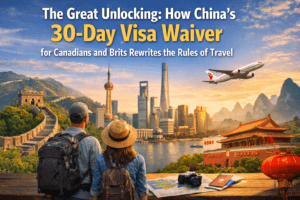
The Great Unlocking: How China’s 30-Day Visa Waiver for Canadians and Brits Rewrites the Rules of Travel
Forget the visa runs, the costly courier fees, and the anxiety of handing over your passport for two weeks. As of February 17, 2026, a significant barrier between Canada, the UK, and China has crumbled.
In a landmark move that signals a potential thaw in diplomatic relations and a clear post-pandemic pivot towards economic revival, China has officially added the United Kingdom and Canada to its expanding visa-free entry list. For citizens of these two nations, this isn’t just a minor administrative tweak; it’s a fundamental shift in how they will interact with the world’s second-largest economy.
This trial program, running until December 31, 2026, allows ordinary passport holders from the UK and Canada to enter mainland China for stays of up to 30 days for tourism, business, and short-term family visits. The move is a powerful olive branch from Beijing, extending a privilege previously enjoyed by a select group of countries, and now expanding China’s visa-free roster to an impressive 79 nations.
But what does this actually mean for the millions of Canadians and Brits considering a trip? It’s more than just saving the visa fee. It’s a complete recalibration of the travel experience, laden with opportunity, nuance, and a few critical details that every traveler needs to understand.
The End of the “Great Wall” of Paperwork
For decades, the Chinese visa application process was a rite of passage known for its bureaucracy. It demanded detailed itineraries, confirmed hotel bookings, flight reservations, and often, a formal invitation letter. The process could take weeks, required the physical submission of a passport, and cost upwards of $100-$200 CAD or £100-£150, depending on the service and processing speed. For families, a trip to China meant a hefty upfront investment before a single plane ticket was booked.
This psychological barrier cannot be overstated. It made spontaneous travel impossible. A missed flight or a change in business plans wasn’t just an inconvenience; it could be a logistical nightmare involving visa validity and port of entry issues.
The new 30-day waiver dismantles this wall. It transforms travel to China from a “planned expedition” into a “viable getaway.” Imagine a tech consultant in Vancouver getting a last-minute request to meet a supplier in Shenzhen. Previously, this was a non-starter. Now, it’s a flight booking away. A family in Manchester wanting to visit relatives in Beijing for the Easter holidays can now make that decision on a whim, unburdened by the six-week lead time required for visa processing.
This is the “human insight” of the policy. It restores a sense of normalcy and freedom to international travel. It acknowledges that in the 21st century, movement should be fluid, and that trust between nations can be reflected in the ease with which their citizens cross borders.
For Business: Speed, Agility, and Cost Savings
The corporate world is perhaps the biggest immediate winner. The news, which broke just yesterday, has sent a ripple of relief through global mobility teams and corporate travel departments.
- The Bottom Line Impact:The most tangible benefit is financial. The direct cost savings on visa fees for a single traveler are significant. But the real economic impact is in the indirect savings: the administrative hours spent filling out forms, the courier costs for sending passports, and the lost productivity of employees whose travel plans were tethered to a visa processing timeline. For companies with frequent flyers between London, Toronto, and Shanghai, these savings will accumulate rapidly.
- Agile Market Access:In the high-stakes world of international trade, speed is currency. The ability to deploy a sales team, a troubleshooter, or a negotiator within 48 hours is a massive competitive advantage. The 30-day waiver allows for this kind of agility. A British engineering firm can now send a specialist to oversee a sudden production issue in Guangzhou without the friction of pre-trip planning. A Canadian clean-tech company can send a representative to a last-minute trade expo in Beijing to gauge the market.
- A Note of Caution for Compliance:However, this new freedom doesn’t mean a free-for-all. The article rightly points out that corporations “should review compliance and data-transfer policies.” Why? Because while theentry process is simplified, the activities you undertake are still subject to Chinese law.
- Business vs. Work: The 30-day waiver is for short-term business activities—meetings, negotiations, site visits, contract signing. It is not a work visa. You cannot be paid by a Chinese entity or perform productive labour for a Chinese company under this waiver. Companies must ensure their employees understand this distinction to avoid a serious breach of immigration law.
- Data Transfer: With increased business travel comes increased data flow. Executives carrying laptops with sensitive corporate information or prototypes must remain vigilant. China’s data security laws are robust. Companies should reinforce policies on what data can be taken into the country and ensure devices are wiped of unnecessary sensitive information before travel.
A Sign of Diplomatic Thaw and Economic Pragmatism
Why now? The timing is deliberate. Following “high-level talks between Ottawa and Beijing,” this move signals a mutual desire to reset relations that have been strained in recent years. For the UK, it’s a post-Brexit opportunity to forge stronger trade ties independent of the EU.
For China, this is pure economic pragmatism. By rolling out the welcome mat for Canadian and British tourists and businesspeople, Beijing is aiming to stimulate its economy. It’s an invitation to spend, to invest, and to reconnect. The tourism and hospitality sectors, which were decimated during the pandemic, stand to benefit enormously from a surge in high-spending Western visitors. It’s a strategic move to boost consumption and inject foreign currency into the economy.
What This Means for the Traveler: A Practical Guide
So, you’re a Canadian or British passport holder, and you’re ready to pack your bags. Here’s what you need to know before you go:
- It’s a Trial, Not a Guarantee: The waiver is valid until December 31, 2026. While it’s expected to be popular, its permanence depends on its success and the state of diplomatic relations. Travelers should be aware that the rules could change next year.
- Duration is Key: You get 30 days. Not 29, not 31. Overstaying, even by a day, can result in fines, detention, and future entry bans. Mark your calendar meticulously.
- Purpose of Visit: Be prepared to answer questions at immigration about the purpose of your visit. Even without a visa application, border officers have the right to ask. A clear explanation (“tourism,” “visiting friends,” “business meetings with Company X”) with supporting documents (hotel bookings, return flight tickets, invitation letters) will ensure a smooth entry. Using vague terms like “exploring opportunities” can raise red flags.
- Passport Validity: Ensure your passport is valid for at least six months beyond your intended date of entry into China. This is a standard requirement for most countries.
- What About Hong Kong and Macau? This is a common point of confusion. The visa waiver is for mainland China only. Hong Kong and Macau are Special Administrative Regions with their own visa policies. If you plan to visit Hong Kong, you will still need to adhere to its entry requirements, which for UK and Canadian passport holders is typically visa-free for short stays.
The Ripple Effect: A World in Motion
This policy shift isn’t happening in a vacuum. As the news digest shows, the world of global mobility is in constant flux. While China opens its doors, the UK is simultaneously tightening its own borders for dual nationals, requiring them to enter on a British passport from February 25th. The US is ramping up scrutiny of Canadian visitors at land borders. Australia is debating a controversial visa ban.
This contrast highlights a central truth of modern travel: ease of movement is a strategic asset. China has just armed itself with a powerful one. By lowering the barrier to entry, it is making a statement that it is open for business, open for connection, and ready to reclaim its position as a top-tier global destination.
For the Canadian entrepreneur eyeing the Shanghai market, the British backpacker dreaming of the Zhangjiajie mountains, or the family yearning to reconnect with roots in Guangdong, the message is clear: The door is now wide open. The only thing left to do is walk through it.
Global Mobility News in Brief: Key Updates from February 18, 2026
While China’s visa waiver dominates the headlines, several other critical updates are shaping the global mobility landscape today. Here’s what else you need to know:
- UK Tightens Entry for Its Own Dual NationalsFrom February 25, 2026, British dual nationals must present a valid British passport to enter the UK. Using a foreign passport, even if it grants visa-free access to the UK for other nationalities, will result in denial of boarding. Affected individuals without a British passport must apply for a costly and time-consuming “certificate of entitlement.”Action Point: Employers with British dual-national staff should immediately verify their passport validity to prevent travel disruption.
- US H-2B Visa Cap Reached in Record TimeThe supplemental allocation of 18,490 H-2B visas for returning workers with start dates between January and March 2026 is already exhausted after just five days, triggering a lottery. This underscores the intense demand for seasonal labor in the US. Employers must prepare for the next allocation windows immediately, as they are expected to close just as quickly.
- India-UK Young Professionals Scheme Ballot OpensA three-day ballot (Feb 17-19) for the India Young Professionals Scheme is now open, offering 3,000 Indian graduates a two-year unsponsored work visa to the UK. This is a golden opportunity for UK employers to access top STEM talent without the usual sponsorship hurdles and costs.
- Brazil and India Sign 10-Year Visa DealIn a move mirroring China’s spirit of facilitation, Brazil and India have agreed to issue 10-year multiple-entry visitor and business visas to each other’s citizens. This slashes long-term compliance costs and is a major boost for executive travel between the two G20 powerhouses.
- Schengen Border Controls ExtendedItaly has joined eight other Schengen countries in extending temporary internal border checks until at least June 2026. Travelers should expect passport controls on major road and air routes within Europe, leading to potential delays for both commuters and freight.
You must be logged in to post a comment.