
The Great Truck Pause: When Prabowo’s Grand Vision Hit Indonesia’s Economic Roadblock
President Prabowo Subianto’s ambitious plan to import 105,000 trucks from India’s Tata Motors and Mahindra & Mahindra for his signature village cooperative programme has been abruptly halted following intense political and economic pushback, forcing a high-stakes pause that pits his vision of rapid rural transformation against Indonesia’s entrenched domestic industrial interests and economic nationalist sentiment. The temporary suspension, announced by Cooperatives Minister Ferry Juliantono, sets the stage for a contentious negotiation between the president’s office and lawmakers, with domestic manufacturers and policymakers demanding local production partnerships and technology transfers rather than fully-built imports, threatening to delay the entire cooperative initiative while testing Prabowo’s ability to navigate the complex terrain of Indonesian consensus politics.
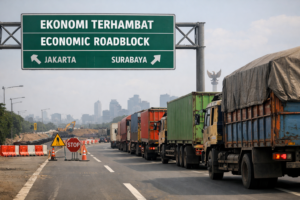
The Great Truck Pause: When Prabowo’s Grand Vision Hit Indonesia’s Economic Roadblock
The wheels of President Prabowo Subianto’s ambitious economic engine have ground to an unexpected halt. Just days after the world learned of a monumental deal to import 105,000 trucks from Indian giants Tata Motors and Mahindra & Mahindra, the Indonesian government has slammed on the brakes. The news, which broke late Thursday, sent ripples through financial markets in Mumbai and Jakarta, but more importantly, it has ignited a fierce debate in Indonesia about the very soul of its development strategy.
At first glance, it’s a story about a massive procurement contract gone sideways. But look closer, and you’ll see a classic and dramatic collision between a president’s visionary—some would say impulsive—ambition and the gritty, pragmatic realities of economic nationalism, bureaucratic process, and the fears of a domestic industry fighting for its survival.
The Dream of 80,000 Cooperatives
To understand the significance of this “truck pause,” one must first understand the scale of President Prabowo’s dream. Since taking office, his administration has championed a return to a populist, self-sufficient economic model. Central to this vision is the establishment of over 80,000 village cooperatives across the sprawling Indonesian archipelago. These are not meant to be simple savings and loan offices. In Prabowo’s blueprint, they are to become the logistical beating heart of rural Indonesia—centers for aggregating agricultural produce, distributing subsidized goods, and connecting remote farmers to markets.
For this grand plan to work, you need a fleet. A gargantuan fleet. The 105,000 trucks—a mix of rugged 4x4s for navigating muddy, unpaved village roads and larger six-wheeler trucks for hauling goods to regional hubs—were meant to be the arteries of this new economic body. The order, split between Tata Motors and Mahindra & Mahindra, two of India’s most experienced manufacturers of tough, cost-effective vehicles, was seen as a quick and efficient way to kickstart the programme. It was pragmatism born of urgency: buy the best tool for the job, and get it now.
The “Buy Local” Backlash
But in Jakarta, the corridors of power don’t just echo with the sound of marching orders. They hum with the persistent noise of lobbying, vested interests, and ideological conviction. And the sound of 105,000 foreign trucks rolling off a ship was deafening to the ears of Indonesia’s domestic automotive industry and its political allies.
The backlash was swift and fierce. It wasn’t just about losing a contract; it was about the message it sent. For decades, Indonesia has pursued a policy of industrial deepening, particularly in the automotive sector. It’s home to massive manufacturing plants for Japanese giants like Toyota, Daihatsu, and Mitsubishi, which have nurtured a vast ecosystem of local parts suppliers. To see the government, the country’s single largest potential customer, bypass this entire ecosystem for a fully imported product was seen as a profound betrayal.
“This isn’t just about trucks,” argued a senior official from the Ministry of Industry, who spoke on condition of anonymity to discuss internal deliberations. “It’s about the signal we send to every investor who has built factories here, trained Indonesian workers, and integrated our companies into their global supply chains. It says, ‘Your investment in our country doesn’t matter when it comes to our own government’s spending.'”
Policymasters and economists pointed out a fundamental flaw in the plan: the balance of payments. Importing over 100,000 fully built units would represent a massive outflow of foreign currency at a time when the Indonesian rupiah is under pressure. It would create jobs in Pune and Mumbai, but not in Jakarta, Karawang, or Surabaya. For an administration that campaigned on a platform of *Indonesian* prosperity, it was a politically toxic look.
The Minister’s Pause: A Tactical Retreat
It was into this firestorm that Cooperatives Minister Ferry Juliantono stepped late Thursday. His announcement to a local TV station that the order would be “put on hold” pending a meeting between the government and lawmakers was a classic political move: a tactical retreat to regroup.
The “meeting” he refers to is not a simple formality. It will be a high-stakes negotiation. On one side will be the president’s inner circle, arguing for speed and operational efficiency. They will likely point out that no domestic manufacturer can produce 105,000 specialized trucks of this kind in the time frame Prabowo envisions for his cooperative roll-out. Delaying the trucks, they will argue, means delaying the entire programme, leaving millions of villagers waiting for the economic revolution they were promised.
On the other side will be a powerful coalition of MPs from various parties—not just the opposition—along with representatives from the Ministry of Industry and domestic business chambers. Their argument will be one of sovereignty and sustainability. They will demand a counter-proposal: perhaps a reduced initial import order to meet the most urgent needs, coupled with a massive, state-guaranteed investment to retool or expand local manufacturing capacity. Could Tata or Mahindra be convinced to build the trucks in Indonesia, transferring technology and creating local jobs? That’s the kind of deal the nationalists are likely to demand.
What Tata and Mahindra Are Thinking
In boardrooms in Mumbai, the pause is a source of intense frustration but not yet panic. For both Tata Motors and Mahindra, Indonesia is a tantalizingly difficult market. It’s dominated by the Japanese, who have decades of trust and a deeply entrenched service network. Winning a government tender of this magnitude was a crowning achievement for their international sales teams—a foot in the door of a massive ASEAN economy.
They are now caught in a geopolitical and economic bind. They’ve already committed resources and begun preliminary logistics for fulfilling the order. A complete cancellation would be a major blow. But the companies are sophisticated enough to read the tea leaves. They know that in Southeast Asia, “nation-building” contracts are as much about politics as they are about price and performance. Their negotiators will now pivot, likely offering a new proposition: a phased delivery that includes a commitment to significant local assembly or parts sourcing in Indonesia, potentially in partnership with a local conglomerate. They will try to transform themselves from a symbol of foreign encroachment into a partner for local industrial development.
The View from a Village in Flores
While the debate rages in Jakarta, it’s crucial to remember who this is all for. In a village in East Nusa Tenggara, a farmer like Petrus Kanisius has heard the promises of cheaper fertilizer and better prices for his coffee beans if the new cooperatives get off the ground.
He doesn’t care if the truck that eventually comes to pick up his harvest is a Tata, a Mahindra, or a Mitsubishi assembled in Jakarta. He cares that it comes at all.
“When they say ‘cooperative,’ we remember past failures,” Petrus might say in a hypothetical interview, speaking to the skepticism many rural Indonesians feel. “We remember buildings that were put up and then stood empty. We remember promises of help that never arrived. If the trucks will help, then we need them. But we also need the roads to be better, and we need the price to be fair. A truck is just a truck if there’s no plan.”
His words highlight the ultimate risk of the pause. While politicians and industrialists fight over who will build the trucks, the larger mission of uplifting rural economies could stall. The debate over procurement, however important, cannot be allowed to overshadow the urgent need for a coherent, fully-funded plan for the cooperatives themselves. Trucks without a robust system of management, fair trade practices, and infrastructure are just expensive yard ornaments.
The Bigger Picture: A Test for Prabowo
Ultimately, the “Great Truck Pause” of 2026 is a defining test for President Prabowo. It reveals the central tension of his presidency: the desire for strong, decisive, top-down action versus the messy, consensus-driven reality of Indonesian politics and economics. Can he bend the bureaucracy and powerful industrial interests to his will? Or will his grand vision be chipped away by the very system he now leads?
The coming weeks will reveal his choice. He can dig in his heels, force the import deal through, and risk a protracted battle with the legislature and domestic industry, potentially alienating key allies. Or he can embrace the pause, use it as an opportunity to forge a new, more complex compromise—one that might delay his timeline but could ultimately build a more sustainable and politically stable foundation for his cooperatives.
The idled trucks, for now, exist only on a purchase order. Whether they ever hit the rugged roads of Sumatra, Sulawesi, and Papua depends not on their engines, but on the ability of Indonesia’s new leader to navigate the most challenging terrain of all: the landscape of his own nation’s complex ambitions and interests. The world is watching, not just at the fate of 105,000 vehicles, but at the direction of the world’s third-largest democracy.
You must be logged in to post a comment.