
The Great Pivot: How a U.S.-India Trade Deal is Reshaping Global Alliances and Energy Maps
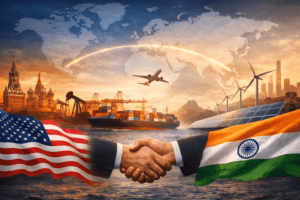
The Great Pivot: How a U.S.-India Trade Deal is Reshaping Global Alliances and Energy Maps
In a move that signals a profound recalibration of global trade and diplomacy, the recent executive order from Washington revoking punitive tariffs on India is far more than a bureaucratic footnote. It is the linchpin of a strategic bargain, one that sees New Delhi stepping back from Russian oil and Washington opening its markets wider. This isn’t just a policy shift; it’s a narrative of pragmatic realignment in an era of fragmented alliances, where national interest is meticulously weighed against geopolitical loyalty.
The Tangled Web of Trade and Principle
For nearly two years, a significant tension simmered beneath the surface of the U.S.-India strategic partnership. As Western nations enacted severe sanctions on Moscow following the invasion of Ukraine, India, a historical non-aligned power with deep-rooted defense ties to Russia, emerged as a leading buyer of discounted Russian crude. From the U.S. perspective, this was a vexing contradiction: a major democratic partner, central to the Indo-Pacific strategy to counter Chinese influence, was simultaneously providing a financial lifeline to the Kremlin.
Former President Trump’s accusations that India was indirectly bankrolling the conflict in Ukraine underscored this moral and strategic dilemma. The imposition of an additional 25% tariff—a “punitive” layer on top of existing “reciprocal” duties—was the tangible weaponization of this discontent. It was a clear signal: strategic friendship has its economic limits when core principles are perceived to be violated.
Decoding the Grand Bargain: What Each Nation Gains
The recently finalized trade deal, culminating in the tariff revocation, is a masterpiece of hard-nosed diplomacy where both sides secured critical wins.
For the United States:
- Geopolitical Cohesion: The primary victory is strategic. Securing India’s commitment to “halt purchases of Russian oil” aligns New Delhi more closely with Western efforts to constrict Moscow’s war revenue. It mends a visible rift in the democratic front against aggression.
- Market Access: In return for tariff reductions, India agreed to lower several trade barriers. This opens avenues for American agricultural exports, medical devices, and technology products into a massive consumer market of 1.4 billion people—a long-standing objective of U.S. trade negotiators.
- Strategic Clarity: The deal simplifies a complex relationship. It allows the U.S. to engage with India more confidently as a consistent partner in the Indo-Pacific, without the constant friction of the Russia oil issue clouding every dialogue.
For India:
- Economic Relief and Predictability: The reduction of U.S. tariffs on Indian goods from a staggering 50% to 18% is a monumental win for exporters, particularly in sectors like textiles, engineering goods, and jewelry. The removal of the punitive 25% overlay provides crucial stability and restores faith in the trade relationship.
- Sovereign Agency: While agreeing to halt Russian oil imports, India has navigated the crisis to its advantage for over two years. Its bulk purchases of discounted crude provided an enormous buffer against global inflation, saving billions in import costs and stabilizing domestic fuel prices. The shift away now is managed from a position of calculated choice, not immediate desperation.
- Diversification on Its Own Terms: The Reuters data reveals a telling trajectory—imports falling from 1.2 million barrels per day in January to a projected 800,000 in March. This indicates a planned, gradual wind-down, allowing India time to secure alternative supplies from the Middle East, Africa, and perhaps even the Americas, without causing market shock or domestic shortage.
The Deeper Insight: The Unspoken Pressures and Calculated Shifts
The real story lies beneath the headlines. India’s pivot isn’t solely due to U.S. pressure. Several converging factors made this the opportune moment for a shift:
- The Changing Calculus of Discounts: The steep discounts on Russian Urals crude that made the trade so lucrative have narrowed significantly. As global oil prices find a new equilibrium and Moscow’s logistics become more entrenched, the financial imperative for India has softened.
- The “Shadow Fleet” & Sanctions Risk: The ecosystem of transporting Russian oil—involving older tankers, opaque insurance, and complex trans-shipments—carries growing reputational and secondary sanctions risks. For a major economy integrated into the Western financial system, this became an increasingly precarious game.
- The Long-Term Energy Vision: India has colossal renewable energy ambitions. Reducing dependency on any single volatile source, be it Russia or the Middle East, aligns with its broader goals of energy security and transition. This deal accelerates that diversification under a favorable trade framework.
The Global Ripple Effects
This bilateral deal sends tremors beyond Washington and New Delhi:
- Russia: It represents a tangible erosion of a key economic partnership. Losing one of its largest customers will force Moscow to seek even more opaque and distant markets, likely at steeper discounts, further straining its energy-dependent economy.
- China: Beijing will watch closely. A strengthened U.S.-India economic bond, solidified by resolving a major irritant, fortifies the strategic counterbalance in Asia that China has long sought to prevent.
- The Global South: Many nations watching from the sidelines will see a blueprint: a demonstration that while sovereign interests (like buying cheap oil) are paramount, they can be leveraged to secure broader, long-term economic gains within the Western-led system, if managed with strategic patience.
Conclusion: A New Chapter of Pragmatic Interdependence
The revocation of tariffs is not a return to the status quo ante. It marks the beginning of a new, more complex chapter in U.S.-India relations. The partnership has graduated from one of mere strategic convenience to one of pragmatic interdependence—where difficult compromises are negotiated openly, and mutual interests are precisely quantified.
This episode reveals a fundamental truth of 21st-century geopolitics: alliances are no longer rigid blocs but dynamic networks. Nations will make sovereign choices based on immediate economic needs, but they remain tethered to a web of longer-term strategic and economic partnerships that they cannot afford to sever. India masterfully navigated this tightrope, using its position to secure vital breathing room during an energy crisis, then trading that position for concrete economic advantages and a more stable strategic footing.
The final insight is one of mature statecraft. In a fragmented world, the most resilient nations are those that retain the agency to pivot, the diplomatic skill to negotiate their pivots into tangible gains, and the foresight to know when the winds are changing. The U.S.-India trade deal is a textbook case of that exact principle in action.
You must be logged in to post a comment.