
The Great Madhya Pradesh Climate Paradox: 33°C Days and 4°C Nights
Madhya Pradesh is currently gripped by a severe meteorological whiplash, with daytime temperatures soaring past 33°C in cities like Narmadapuram while nights remain bitterly cold, plunging to 4.5°C in Kalyanpur—a dramatic 28.5-degree daily swing caused by clear skies and competing weather systems that allow intense solar heating by day but rapid heat loss after sunset. While 15 cities have joined the “30-degree club,” creating a false sense of summer that is disrupting farming cycles, straining public health, and confusing daily routines, meteorologists warn this is merely the calm before another cold blast; a fresh Western Disturbance approaching February 13 will pull freezing northerly winds into the state, dropping temperatures by another 3 to 4 degrees and plunging residents back into harsh winter conditions just as they had begun packing away their sweaters.
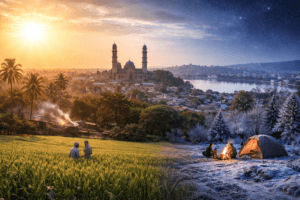
The Great Madhya Pradesh Climate Paradox: 33°C Days and 4°C Nights
As the clock strikes noon in Narmadapuram, the sun beats down with an intensity that tricks the skin into believing summer has arrived early. But step outside just twelve hours later, and the biting chill of a North Indian winter reminds residents that February is still very much a fickle month.
Madhya Pradesh is currently locked in a meteorological tug-of-war. While the state’s temperature charts this week look like a bad case of whiplash—with 15 cities crossing the 30-degree Celsius mark by day—the nights remain stubbornly, and sometimes dangerously, cold.
This isn’t just a statistical anomaly. It’s a lived reality that is reshaping daily routines, straining health, and keeping farmers on edge. As the state braces for a predicted temperature drop post-February 13, here is a deep dive into what is happening on the ground, why it matters, and how the people of the heart of India are navigating this season of extremes.
The Tale of Two Seasons in 24 Hours
In Bhopal, the state capital, Tuesday afternoon felt like a dress rehearsal for May. Office-goers switching on air conditioners found themselves wiping sweat from their brows. Street vendors selling hot samosas noticed a sudden demand for cold drinks.
Yet, by 5:00 AM on the same day, residents of Shahdol district—specifically the small town of Kalyanpur—were huddled around bonfires, scraping frost off their windshields. The mercury here had plunged to a bitter 4.5 degrees Celsius.
This is the Madhya Pradesh weather paradox of 2026.
While Narmadapuram sweltered as the state’s hottest spot at 33°C, towns like Karundi (5.9°C) and Amarkantak (8.2°C) refused to let go of winter. The difference in temperature between the hottest and coldest locations in the state on Tuesday alone was a staggering 28.5 degrees.
For meteorologists, this isn’t just a cold day or a warm day; it is a symptom of a transitional atmosphere caught between two opposing weather systems.
Why Is This Happening? The Science Behind the Swing
To understand why Madhya Pradesh is experiencing “Summer Simmer” by day and “Winter Shiver” by night, we have to look up—specifically, at the upper atmospheric circulation.
According to the Meteorological Department, two players are currently active in the region:
- A Cyclonic Circulation: This system is pulling warm, humid air up from the southeast, contributing to the intense daytime heating.
- A Western Disturbance: Currently positioned weakly over the region, it isn’t strong enough to cause rain, but it is altering wind patterns.
Because the skies remain clear (no cloud cover), the sun’s radiation heats the earth rapidly during the day. However, once the sun sets, that same lack of cloud cover acts like a blanket that has been kicked off in the night. The heat escapes quickly back into the atmosphere, causing a rapid and drastic drop in temperature.
It is the perfect recipe for a climate sandwich: warm bread on top, cold bread on the bottom, and very little filling in between.
The Human Toll of the Temperature Tango
While the numbers are striking, the human stories behind them reveal the true weight of this weather pattern.
The Night Guard’s Battle
In the forested buffer zones of Pachmarhi and Mandla, night temperatures dipped to 8.4°C. For Ramesh Yadav, a security guard at a small timber depot, this means burning through three times his usual firewood supply. “The days are easy now. I can sit in the sun and warm my bones. But the night shift is punishing. The cold enters your ears and doesn’t leave until sunrise,” he says.
The Farmer’s Dilemma
In the wheat-growing belts of Ujjain and Datia, the warmth is initially welcome. Wheat crops love sunshine. But they don’t love extreme volatility. Farmers report that the unusually warm days are accelerating crop maturity, while the freezing nights are slowing root development. This mismatch could lead to lower yields.
“I have never seen a February like this,” says Santosh Patil, a farmer from Shivpuri. “Usually, winter fades gently. This year, it is fighting like a wounded tiger before it leaves.”
The Urban Health Crisis
Cities like Indore and Gwalior, which breached the 30-degree mark, are seeing a rise in viral infections. Doctors report that the body struggles to regulate its internal thermostat when external temperatures swing violently within a single day. Children and the elderly are particularly vulnerable, suffering from heat rash in the afternoons and chest congestion in the mornings.
The 30-Degree Club Expands
Tuesday’s data revealed a significant expansion of the “30-Degree Club.” It wasn’t just the usual urban heat islands like Bhopal joining the ranks. Smaller towns known for their cool climes also entered the fray.
Damoh, Khajuraho, Tikamgarh, Betul, Dhar, Khandwa, Khargone, Raisen, and Ratlam all recorded maximum temperatures above 30°C.
Khargone, usually in the news for its scorching summers, is getting an early taste of heat. Betul, often one of the cooler districts in the state due to its elevation, saw residents discarding sweaters by noon. This widespread nature of the heat suggests that the weather systems affecting MP are broad and deeply entrenched.
The Countdown to the Chill: What Happens After Feb 13?
Here is where the story takes another sharp turn.
The Meteorological Department has issued a clear warning: Enjoy the sunshine while it lasts, because the pendulum is about to swing back.
A new, more potent Western Disturbance is set to affect the Western Himalayan Region starting February 13. While this system is expected to bring snow and rain to Jammu, Kashmir, and Ladakh, its secondary effect will be felt acutely in Madhya Pradesh.
The Mechanism: When the snow melts in the Himalayas and rain falls in the plains of North India, it cools the air mass. This dense, cold air then travels southwards into Madhya Pradesh.
The Forecast:
- February 12: The peak of the heat. Expect day temperatures to rise another 3-4 degrees. This will likely be the hottest day of the season so far.
- February 13-15: The “switch.” As the Western Disturbance passes, cold northerly winds will rush into the state.
- The Impact: Day temperatures are expected to drop by 3 to 4 degrees. Night temperatures will plummet even further. While the state just saw lows of 4.5°C, the upcoming cold wave could bring similar, if not lower, temperatures back to central MP.
Preparing for the “False Spring”
Meteorologists often refer to this period as the “False Spring.” It is a cruel trick of nature where the weather warms up just enough to make people pack away their winter clothes, only for winter to roar back with a vengeance.
This is a critical time for public health. When temperatures rise suddenly, people stop taking precautions. They sleep without adequate blankets, they switch off heaters, and they wear lighter clothing. If the predicted 3-4 degree drop hits immediately after this warm spell, the shock to the human body will be severe.
The State Health Department would be wise to issue advisories for the homeless population in cities like Bhopal and Indore. During the warm days, many destitute individuals move away from shelters and into the open. The sudden nighttime freeze could turn deadly.
Rural vs. Urban: A Disparate Experience
The weather data also highlights the deep divide between urban and rural microclimates.
Urban Centers (Bhopal, Indore, Gwalior): Here, the “heat island” effect is amplifying the daytime warmth. Concrete, asphalt, and vehicles absorb heat and release it slowly. While nights are cooler, they rarely dip into the single digits in the city cores. A Bhopal resident might experience a 10-degree night, while someone just 50 kilometers outside the city limits faces 5-degree temperatures.
Rural and Forested Areas (Kalyanpur, Amarkantak, Pachmarhi): These areas lack the heat-retaining infrastructure of cities. As soon as the sun sets, the temperature falls off a cliff. In the absence of central heating, rural families rely on traditional methods: sigdis (coal braziers), thick quilts, and cow dung cakes for fuel.
The Bigger Picture: Climate Variability or Normal Transition?
The question on every mind is whether this is normal “seasonal transition” or a marker of climate change.
The answer lies in the intensity of the swing. Madhya Pradesh has always had warm days and cool nights in February. However, the range of temperature (nearly 29 degrees difference between the hottest and coldest point) is becoming more extreme.
Furthermore, the timing is unusual. Typically, the build-up to the western disturbance results in cloudy skies and a gradual drop. This year, the models show a spike upwards immediately before the plunge. This “rollercoaster” profile is becoming more common globally as the jet stream weakens and wobbles due to Arctic warming.
A Travel Advisory for Tourists
For those planning to visit tourist destinations like Khajuraho, Pachmarhi, or Bandhavgarh, this weather presents a packing nightmare.
Advice for Travelers:
- Layers are essential. You will need a t-shirt at 2:00 PM and a down jacket at 5:00 AM.
- Book accommodations with reliable hot water. Solar water heaters, common in eco-resorts, may struggle to keep water hot during the frigid nights but are perfect for the sunny days.
- Wildlife viewing: In parks like Kanha and Bandhavgarh, early morning safaris will be freezing. However, animals are likely to come out of the dense bush earlier in the day to bask in the unusual warmth, potentially making for excellent photography.
Looking Ahead: The Road to Spring
The next 72 hours will be decisive. If the Western Disturbance delivers the expected cold punch, Madhya Pradesh will end the week shivering. If the disturbance weakens, the state may transition directly into an early summer.
For now, residents are left navigating a landscape where the only certainty is uncertainty. The old farmer’s almanac wisdom of steady seasonal progression has given way to a new reality of volatility.
As Ground Report continues to track these underreported environmental shifts, one thing is clear: Madhya Pradesh is currently living in two seasons at once. It is a reminder that in the heart of India, winter refuses to exit the stage quietly, and summer is impatiently waiting in the wings.
You must be logged in to post a comment.