
The Great Indian Winter Inversion: When Plains Turn Colder than the Himalayas
An intense weather pattern is gripping Northwest India, featuring a rare temperature inversion where plains are colder than mountains due to clear skies causing rapid heat loss, while western disturbances bring insulating cloud cover to the Himalayas. This has resulted in severe cold waves, with Delhi hitting 3.2°C—its coldest January morning in three years—and dense fog warnings for Punjab and Haryana, disrupting travel and agriculture. The conditions are impacting Republic Day preparations, having already delayed parade rehearsals, with moderate fog forecast for the morning of January 26th. Following a brief respite, another western disturbance is predicted from January 26-28, bringing renewed snowfall to the hills and rain to the plains, while health risks remain high due to the combined threats of extreme cold and worsening air pollution.
The Great Indian Winter Inversion: When Plains Turn Colder than the Himalayas
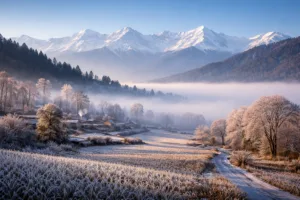
As Delhi shivered at 3.2°C this week—its coldest January morning in three years—residents bundled up against a cold that felt more characteristic of a Himalayan hill station than the national capital. This dramatic chill is part of a broader and unusual meteorological event gripping Northwest India: a weather inversion where the plains have become markedly colder than the mountains. With the Republic Day celebrations approaching, a complex interplay of western disturbances, dense fog, and sharp temperature drops is defining one of the most significant winter patterns in recent years.
The Meteorological Mechanism Behind the Chill
The current severe cold wave across North India results from a specific atmospheric setup. According to IMD Director General M. Mohapatra, clear night skies over the plains have allowed rapid radiative cooling, where the day’s heat escapes quickly into the atmosphere after sunset. In stark contrast, the Himalayan foothills are under a blanket of cloud cover associated with an active western disturbance. This cloud layer acts as insulation, trapping heat and preventing temperatures from plummeting as sharply.
The IMD has forecast that this pattern will intensify, with minimum temperatures expected to fall by 3–5°C over the plains of Northwest India, including Delhi, in the next 24 hours. Accompanying this drop is a prediction of dense to very dense fog during morning and night hours in isolated pockets over Punjab, Haryana, and Chandigarh from January 24 to 26. The agency has issued orange alerts for cold wave to severe cold wave conditions, warning of significant health risks.
Table: Recent Minimum Temperatures in North India (January 2026)
| Location | Minimum Temperature (°C) | Deviation from Normal | Observation |
| Safdarjung, Delhi | 3.2°C | 4.4°C below | Coldest Jan morning in 3 years |
| Gurugram | 0.6°C | Near record low | One of the lowest in nearly 5 decades |
| Amritsar, Punjab | 1.1°C | Significantly below | Cold wave conditions |
| Shimla, Himachal Pradesh | 8.8°C | Above freezing | Warmer than many plains cities |
Regional Impacts: From Disrupted Highways to Agricultural Advisories
The consequences of this severe weather are widespread and disruptive. In Jammu and Kashmir and Himachal Pradesh, heavy snowfall has led to people wading through waist-deep snow. This snowfall, while disruptive, is a vital source of nutrition for stone fruits and crucial for the region’s water resources after an exceptionally dry winter. The Jammu-Srinagar National Highway was shut down following heavy snowfall that disrupted traffic, and strong winds in Srinagar damaged several shikaras on Dal Lake.
Further south, the plains are grappling with dense fog and frost. Satellite imagery from NASA shows the cold air as a visible cover over the northern Gangetic plains. On the ground, frost has formed on crops, grasslands, and car windshields in and around areas like Gurugram. The IMD has issued specific agrometeorological advisories, asking farmers in Jammu and Kashmir, Himachal Pradesh, and Punjab to drain excess water from fields of wheat, mustard, and vegetables and to gently shake trees to remove accumulated snow from branches.
Republic Day Preparations Face Weather Woes
The approaching Republic Day has added a layer of urgency to the weather forecasts. The full dress rehearsal for the parade on Delhi’s Kartavya Path was delayed by rain and thunder. This rain on January 23 marked Delhi’s first precipitation of 2026, ending a long dry spell. Security personnel and parade participants carried out their duties in rain-soaked uniforms and boots, while spectators sought shelter under plastic sheets.
Looking ahead to January 26 itself, the IMD forecasts shallow to moderate fog for Delhi during the morning hours. While the immediate severe cold may moderate slightly by then, the conditions will still require significant logistical planning to ensure the smooth execution of the national event.
Health and Environmental Concerns Compound the Crisis
The cold wave coincides with another perennial winter challenge for North India: dangerously poor air quality. Calm winds and temperature inversions trap pollution close to the ground, worsening smog levels. On recent cold days, Delhi’s air quality deteriorated to the ‘very poor’ category, with an AQI of 337, and some areas like Anand Vihar recorded ‘severe’ levels with an AQI of 411. This combination of extreme cold and toxic air creates a serious public health hazard, particularly for vulnerable groups like the elderly, young children, and those with pre-existing respiratory conditions.
Weather officials have explicitly warned of health risks including hypothermia and respiratory illness. The IMD’s public advisory notes, “Do not ignore shivering. It is the first sign that the body is losing heat. Get indoors”.
The Forecast: A Brief Respite Followed by More Activity
The weather pattern is expected to be dynamic in the coming days. Following the current cold spell, a feeble western disturbance may provide slight relief by Thursday, potentially changing wind patterns and causing a modest rise in temperatures. However, this break appears short-lived.
The IMD predicts another intense western disturbance will affect Northwest India between January 26 and 28. This system is likely to bring widespread rainfall and snowfall over the Western Himalayan Region, with isolated heavy falls over Jammu & Kashmir and Himachal Pradesh on January 27, and light to moderate rain over the adjoining northwestern plains.
Table: Weather Timeline and Expected Conditions
| Date | Expected Weather Event | Primary Regions Affected |
| Jan 24-26 | Dense to Very Dense Fog | Punjab, Haryana, Chandigarh |
| Jan 24-26 | Cold Wave Conditions | Himachal Pradesh, Punjab, Haryana |
| Jan 26-28 | Widespread Rain/Snowfall | Western Himalayas (J&K, Himachal, Uttarakhand) |
| Jan 27 | Isolated Heavy Rainfall/Snowfall | Jammu & Kashmir, Himachal Pradesh |
| Republic Day (Jan 26) | Moderate Fog | Delhi, Northwest Plains |
Navigating the Cold: Adaptation and Preparedness
This winter’s unusual severity underscores the importance of adaptive measures. For residents, it means heeding health advisories, ensuring proper insulation at home, and limiting exposure during peak cold and pollution hours. For authorities, it involves managing transportation disruptions caused by fog and snow, providing shelters for the homeless, and issuing timely warnings to farmers and fisherfolk—the latter of whom have been advised against venturing into parts of the Bay of Bengal and Arabian Sea until January 28.
The current weather pattern—with its inversion of expected temperatures between plains and hills—serves as a potent reminder of the complex and often unpredictable nature of North India’s winter climate. As the region braces for Republic Day and the days beyond, close attention to meteorological updates and preparedness for rapidly changing conditions remain the best defense against the chill.
You must be logged in to post a comment.