
The Great Energy Pivot: How a 30-Day US Waiver Just Reshaped India’s Geopolitical Gamble
In a significant geopolitical reversal, the United States has granted India a 30-day waiver on sanctions to resume purchasing Russian oil, a move driven by surging global crude prices and supply disruptions following US and Israeli strikes on Iran that have effectively choked traffic through the Strait of Hormuz. With roughly half of India’s oil imports stranded or threatened by the conflict, the temporary reprieve allows New Delhi to access an estimated 140 million barrels of Russian crude currently idling in the Indian Ocean—offering an immediate logistical lifeline. While US Treasury Secretary Scott Bessent framed the decision as a temporary measure to counter Iranian aggression and urged India to eventually buy American oil, the waiver underscores the fragility of global energy chains and validates India’s pragmatic strategy of prioritizing energy security over geopolitical alignment, even as it leaves New Delhi racing against the clock to secure supplies before the 30-day window expires.
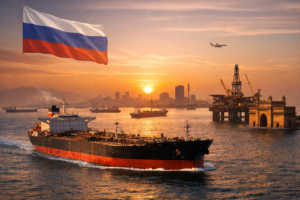
The Great Energy Pivot: How a 30-Day US Waiver Just Reshaped India’s Geopolitical Gamble
In the high-stakes casino of global geopolitics, few players have placed as many bets on as many tables as India. For the past two years, New Delhi has performed a precarious high-wire act, deepening its security ties with the West while gorging on discounted Russian oil that Western sanctions were designed to stop. It was a strategy that worked—until it didn’t.
For much of 2024, the United States tightened the screws. Alleging that India’s purchases were indirectly financing the Kremlin’s war machine, Washington imposed punitive tariffs and increased diplomatic pressure. Former President Donald Trump claimed New Delhi had agreed to stop buying Russian crude entirely. Indian refiners, caught between a rock and a hard place, began drastically cutting imports from Russia, scrambling to find alternative supplies from the Gulf.
Then, in a span of 48 hours, the script flipped.
Following US and Israeli retaliatory strikes on Iran—and Tehran’s subsequent threats to choke off the Strait of Hormuz—global energy markets went into convulsions. Oil prices surged to their highest levels since July 2024. Suddenly, the United States found itself facing a problem far more urgent than India’s import habits: a potential supply shock that could cripple the world’s third-largest oil importer and send inflation spiraling just as the global economy was finding its footing.
The result was a breathtaking reversal. In a move that left energy analysts and foreign policy experts scrambling to update their assessments, the US Treasury issued a temporary 30-day waiver, giving India the green light to resume buying Russian oil.
This isn’t just a story about barrels of crude. It is a story about the fragility of global supply chains, the limits of American hard power, and the validation of India’s controversial bet on strategic autonomy.
The Domino Effect: From Retaliation to Reprieve
To understand why Washington blinked, one must look at the map of the Middle East and the tanker traffic currently frozen in place.
When the US and Israel launched attacks on Iranian targets, the response from Tehran was not just military posturing; it was economic warfare by proxy. The Strait of Hormuz, a narrow chokepoint through which roughly a fifth of the world’s total oil production passes, effectively became a no-go zone for many commercial vessels. Insurance premiums for tankers skyrocketed, and shipowners began holding their vessels back.
The impact on India was immediate and severe. Roughly half of India’s 5 million barrels-per-day (b/d) import requirement flows through that strait.
“We are certain that it is extremely important that our ships are able to gain free and safe passage,” the Indian National Shipowners’ Association said this week, revealing that 38 Indian ships—many loaded with crude and LPG destined for Indian ports—were stuck waiting south of the Hormuz.
For India, this is an existential vulnerability. The country holds strategic reserves sufficient for only about 30 days of imports. A prolonged blockage wouldn’t just mean expensive fuel; it would mean rationing, industrial slowdowns, and political unrest.
Enter the Russian oil sitting in the Indian Ocean.
Kpler tanker tracking data reveals a floating bounty: an estimated 140 million barrels of Russian crude and condensate currently stranded at sea. These cargoes were largely rendered untouchable by the recent tightening of US sanctions, which targeted vessels and insurers involved in Russian trade. But with a waiver from the Treasury, those barrels—currently sitting relatively close to Indian shores—become the most logical, accessible, and affordable solution to a potential crisis.
Scott Bessent, the US Treasury secretary, framed the waiver as a temporary fix. “India is an essential partner of the United States, and we fully anticipate that New Delhi will ramp up purchases of US oil,” he stated, attempting to spin the reversal as a stop-gap measure to counter Iran’s “hostage-taking” of global energy.
But on the ground in Mumbai, the interpretation is far more pragmatic.
The View from Mumbai: “Trump Won’t Come and Give Us Oil”
Inside the corporate offices of India’s sprawling refining sector, there is little time for diplomatic niceties. The language spoken is the language of throughput, margins, and security of supply.
For the past few months, Indian refiners—including the country’s largest, Reliance Industries—have been playing a game of catch-up. When Russian imports were slashed, they turned to Kuwait, Qatar, Saudi Arabia, and the UAE. But Gulf crude, while reliable, is subject to the whims of the OPEC+ cartel and, as the current crisis shows, the physical risks of regional conflict.
“Trump will not come and give us oil. If India needs crude, it will look at all available options,” a senior executive from a major Indian refiner told the Financial Times. That sentiment captures the core of India’s energy doctrine: when survival is at stake, ideology takes a backseat.
The 30-day waiver is not just a diplomatic handout; it is a commercial lifeline. The “discount” on Russian Urals crude—the primary reason India became its biggest buyer after the 2022 invasion—had evaporated in recent months due to reduced purchases and tighter sanctions. But with Brent crude settling near $85 a barrel and US West Texas Intermediate hitting $81, the pressure is back on. Even if Russian crude no longer carries the massive $20-$30 per barrel discount of 2022, it remains competitively priced, especially when logistics are factored in.
Harshraj Aggarwal, an oil and gas analyst at Yes Securities in Mumbai, notes that India is perfectly positioned to vacuum up the stranded Russian barrels. “The crude already lies in floating storage tankers,” he points out. “The supply chain can be activated fairly quickly.”
This isn’t just about buying oil; it’s about securing a supply chain that doesn’t rely on transiting a war zone. Russian crude, coming from the west, offers a logistical alternative to the Hormuz bottleneck.
The Human Cost: Fuel, Food, and the Fragility of Normal Life
Away from the tanker routes and the analyst reports, this geopolitical tug-of-war has a direct impact on the 1.4 billion people living in India.
India is a price-sensitive market. A rise in global crude prices doesn’t just mean more expensive petrol for the urban middle class; it cascades through the entire economy. Diesel powers the trucks that move vegetables from farms to cities. Kerosene (still used in some rural pockets) is a cooking and lighting essential. The cost of fertilizers, plastics, and pharmaceuticals—all derived from petrochemicals—rises in tandem.
For much of the past year, the Indian government used a combination of tax cuts and subsidized pricing to shield consumers from global volatility. But that fiscal buffer has limits. If the Hormuz crisis persists and global prices remain high, the government faces a Hobson’s choice: pass the cost to consumers (risking inflation and political backlash) or absorb it (blowing a hole in the fiscal deficit).
In the bustling markets of Mumbai, the anxiety is already palpable. Wholesalers dealing in grains and spices know that a 10% rise in transport costs usually translates into a 3-4% rise in retail prices. For the millions living on daily wages, that margin is the difference between two meals and one.
The Art of the Deal: Trump’s Pivot and India’s Long Game
The political symbolism of this waiver is impossible to ignore.
Just weeks ago, the narrative in Washington was that India had been “brought to heel” on Russian oil. The punitive tariffs were framed as a victory for American pressure. Now, the US has not only dropped the tariffs but is actively blessing the very trade it sought to stop.
Ben Cahill, director for energy markets and policy at the University of Texas at Austin, argues that the sanctions relief is simply a recognition of reality. “Even without the US sanctions relief, Indian buyers would have looked at stranded, sanctioned barrels due to the run-up in prices caused by the Iran crisis,” he said. In other words, the US either let India buy the oil legally, or risked India buying it illegally (or through opaque shadow fleets).
For the Trump administration, which prides itself on deal-making, the math was simple: a temporary waiver that keeps India stable and aligned is better than a sanctions regime that pushes New Delhi further into Moscow’s orbit.
Yet, the situation also exposes the limits of that strategy. While Bessent framed the move as a precursor to India buying more American oil, the reality is that US crude is more expensive to ship to India than Middle Eastern or Russian crude. The call for India to “ramp up purchases of US oil” is likely to fall on deaf ears unless American producers can offer competitive pricing.
A 30-Day Clock Ticking on a Boiling Pot
The waiver is temporary—just 30 days. But the crisis it seeks to address has no expiration date.
Analysts warn that if the Israeli-Iranian conflict intensifies, or if the Houthi rebels in Yemen resume their aggressive targeting of shipping lanes, the “temporary” supply gap could become structural.
Sabri Hazarika, energy analyst at Emkay Global Financial Services in Mumbai, warns that India cannot afford to be complacent. “Availability of Russian oil will be a challenge if all Asian countries go after it,” he cautions. “The discounts may also turn into premium and freight costs would also be higher.”
This creates a fascinating dilemma for New Delhi. The waiver validates its policy of maintaining a diverse supply basket, but it also highlights its vulnerability. India is now racing against other Asian economies—China, most notably—to secure the same stranded Russian cargoes. If demand spikes, the discounts disappear.
Furthermore, the 30-day window puts India in a difficult position regarding its long-term infrastructure. “Given the limited strategic reserves that India holds, we are certain that it is extremely important that our ships are able to gain free and safe passage,” the Indian National Shipowners’ Association reiterated. This crisis has likely accelerated India’s plans to expand its strategic petroleum reserves, a costly but necessary insurance policy.
Conclusion: The New Rules of the Game
The easing of US sanctions on Russian oil to India is more than a headline; it is a declaration of the new rules of global engagement.
It proves that in the world of energy security, geography and logistics often trump geopolitics. It shows that a country like India, by steadfastly refusing to pick sides, can leverage crises to its advantage—emerging from a potential supply shock with a temporary license to secure the resources it needs.
For the United States, it is a humbling admission that isolating a major economy like Russia is impossible when the global market is interconnected and volatile. Washington may set the sanctions, but it cannot control the waves, the tankers, or the price signals that drive nations to trade.
As the 30-day clock starts ticking, India will be working furiously. It will fill its storage tanks, secure as many long-term contracts with Russian suppliers as possible, and pray for peace in the Middle East. But whether this reprieve turns into a long-term strategy or simply a brief pause before the next crisis depends entirely on whether the world’s great powers can find a way to de-escalate a conflict that is literally setting the seas on fire.
For now, the Indian refiner’s words ring true: when the country needs crude, it will look at all available options. And thanks to a sudden change of heart in Washington, Russian oil is once again on the menu.
You must be logged in to post a comment.