
The Goa Nightclub Fire: Beyond the Headlines, a Systemic Tragedy of Neglect
The devastating December 2025 fire at a Goa nightclub, which killed at least 25 people, was a preventable tragedy that exposed deep-seated systemic failures in India’s fire safety regime, stemming from illegal construction, a blatant lack of mandatory safety certifications, and severely compromised escape routes. This incident acted as a national catalyst, revealing widespread non-compliance in crowded venues across cities like Gurugram and Delhi, where narrow exits and flammable materials are common.
The tragedy underscores a chronic national crisis, where residential buildings account for most fire deaths, driven by electrical faults and a persistent awareness gap. Moving beyond reactive crackdowns, effective prevention requires uncompromising enforcement of regulations, streamlined compliance processes, investment in smart safety technology, and, crucially, cultivating a lasting public culture of safety to prioritize human life over negligence and profit.
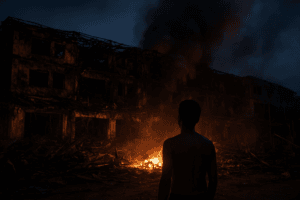
The Goa Nightclub Fire: Beyond the Headlines, a Systemic Tragedy of Neglect
The news from Goa on December 6th, 2025, began with a stark headline: at least 25 dead in a nightclub fire. For most, it was a distant tragedy. For Bhavana Joshi, it was the moment her world ended. On a holiday meant for music and laughter with her husband and three sisters, she found herself pushed to safety by her husband, Vinod, only to watch him turn back into the inferno to rescue her sisters. In fifteen minutes, a family of five was reduced to one. Her phone, clenched in her hand as she stood outside the smoldering ruins of the “Birch by Romeo Lane” nightclub, rang out endlessly into the night, calling a husband who would never answer again.
This story of profound personal loss is the human heart of a disaster that was, by all available evidence, entirely preventable. The Arpora nightclub fire has ripped open the façade of India’s entertainment industry, exposing a deadly cocktail of regulatory apathy, willful negligence, and systemic failure that puts thousands at risk every day.
What Went Wrong in Arpora: A Recipe for Catastrophe
The sequence of events that night reads like a checklist of safety violations. Preliminary investigations point to “electrical fireworks” used indoors as the ignition source. In a space packed with over 100 revelers for a “Bollywood Banger Night,” these pyrotechnics likely sparked a fire that quickly ignited the club’s temporary palm leaf decorations.
The situation then escalated with horrifying speed. The flames reached flammable substances, triggering a blast that engulfed the structure. Panic ensued, but escape routes were cruelly insufficient. Chief Minister Pramod Sawant confirmed the venue had only two gates. Furthermore, the club was situated on an island, with a narrow entrance and exit connected by a slender bridge, severely hampering both evacuation and firefighting efforts. Fire trucks were forced to park 400 meters away from the blaze.
The most devastating loss of life occurred in a desperate refuge that became a death trap. A group of individuals, including many staff members, fled to the underground kitchen. With smoke pouring in, 23 of the 25 people in that area died of suffocation. In total, 20 of the victims were staff members—individuals from states across India and Nepal, whose workplace became their tomb.
The post-tragedy revelations were damning. The Director of Fire and Emergency Services stated the venue lacked the mandatory No Objection Certificate (NOC) and had violated fire regulations. Shockingly, the club had been issued demolition notices by local authorities which were later stayed, and it had reportedly been built illegally on a salt pan. It was, in the Chief Minister’s own words, being run “illegally”.
A Nationwide Problem Exposed: From Goa to Gurugram
The Goa tragedy has acted as a national wake-up call, forcing authorities across India to confront the pervasive fire safety crisis in crowded venues.
- Immediate Repercussions in Goa: The state government swiftly issued an advisory under the Disaster Management Act, mandating strict compliance for all nightclubs, restaurants, and bars. The rules require valid fire NOCs, prominently displayed occupancy limits, unobstructed emergency exits, functional safety equipment, and regular staff training. Establishments were ordered to conduct an internal safety audit within seven days.
- Nationwide Compliance Checks: The ripple effect was immediate. In Gurugram, authorities identified over 300 bars, pubs, and nightclubs operating without complete mandatory permissions in popular nightlife hotspots like Sector 29 and Cyber Hub. Surprise inspections have been launched to verify safety documents, with officials emphasizing that their objective is “not to disrupt businesses, but to prevent tragedies”.
- Delhi’s “Recipe for Disaster”: In the national capital, the tragedy exposed long-ignored faults. Fire officials described a dangerous reality where narrow staircases, blocked exits, sub-standard wiring, and non-fire-retardant interior materials are common. A former Delhi Fire Services chief highlighted a critical challenge unique to nightclubs: high ambient noise and strobe lights can completely muffle traditional fire alarms, delaying recognition of an emergency.
The problem is systemic. As one industry representative noted, while a framework of regulations exists, compliance is hampered by “multiple NOCs from four different departments,” creating delays and confusion. The incentive to cut corners, often with the tacit approval of corrupt or complacent officials, overrides the imperative for safety.
The Broader Canvas: India’s Chronic Fire Safety Crisis
The Arpora fire is not an isolated incident but a symptom of a much larger national malaise. While specific national statistics for 2025 are still emerging, historical data and recent trends paint a grim picture.
Residential buildings account for a staggering share of fire-related deaths in India. Experts point to an “awareness gap” that persists despite recurring tragedies. Public concern spikes after a major incident but quickly dissipates, with many homeowners underestimating the risks within their own walls, particularly from outdated electrical systems straining under modern power loads.
The following table contrasts the common fire risks and required safety focus across different types of buildings in India, illustrating that a one-size-fits-all approach to fire safety is ineffective:
| Building Type | Common Fire Risks & Causes | Critical Safety Focus |
| Residential Buildings | Electrical short circuits (old wiring, overloading), kitchen accidents. | Prevention: Quality electrical components, circuit load management, smoke alarms. |
| Nightclubs & Pubs | Indoor pyrotechnics, overcrowding, blocked exits, flammable decor, poor visibility. | Evacuation: Multiple clear exits, occupancy limits, staff training, specialized alarms for loud environments. |
| Schools & Coaching Centers | Faulty wiring, locked/blocked exit doors, lack of fire drills. | Egress & Drills: Unobstructed staircases, regular evacuation practice, fire-safe construction materials. |
| Commercial/Industrial | Storage of flammable materials, electrical faults, lack of compartmentalization. | Containment & Response: Fire-rated doors, sprinkler systems, on-site trained response teams. |
A Path Forward: From Reactive Grief to Proactive Safety
Mourning the dead is necessary, but preventing the next tragedy is imperative. The solutions require a multi-pronged effort:
- Uncompromising Enforcement and Accountability: The Goa government’s post-tragedy advisory is a start, but its value lies in sustained action. The promise of “strict enforcement action, including closure… and prosecution” for non-compliance must be real. This includes holding not just business owners accountable, but also officials who sanction licenses for non-compliant structures.
- Simplifying and Streamlining Compliance: The industry’s plea for “time-bound approvals and single-window clearance” is valid. Onerous, multi-departmental processes incentivize bribery and shortcuts. A transparent, efficient system is a cornerstone of better compliance.
- Investing in Technology and Infrastructure: Beyond basic extinguishers and alarms, technology can be a game-changer. This includes IoT-enabled circuit breakers that can detect abnormalities before a fire starts, and emergency lighting and signage that can withstand extreme heat to guide people to safety. Fire station placement must also be optimized for modern urban traffic realities to improve response times.
- Cultivating a Culture of Safety: Ultimately, rules and technology are ineffective without a shift in mindset. This requires continuous public education—teaching fire safety in schools, encouraging routine home electrical audits, and making safety a primary concern for homebuyers and venue-goers alike. As one expert notes, fire resilience must be embedded into how spaces are “built, purchased, and maintained”.
The story of Bhavana Joshi’s family is a stark reminder that behind every statistic is a universe of shattered lives. The 25 lives lost in Goa—the staff from Jharkhand, Uttarakhand, and Nepal, the family from Delhi on holiday—were not just victims of a random accident. They were victims of a preventable systems failure. Honoring their memory requires more than ex-gratia payments and temporary crackdowns; it demands a fundamental and lasting national commitment to valuing human life over profit, convenience, and corruption. The alarm has sounded. The question is whether we will finally choose to listen.
You must be logged in to post a comment.