
The Geopolitical Chessboard: Why the OIC’s Dual Stance on Somaliland and Palestine Reveals a Broader Battle Over Sovereignty
The Organization of Islamic Cooperation’s (OIC) recent condemnation of Israel’s reported recognition of Somaliland and its simultaneous reaffirmation of Palestinian statehood represents a strategic, principled stance on sovereignty designed to navigate a complex geopolitical landscape. By forcefully rejecting Somaliland’s secession from Somalia as a violation of territorial integrity—a cornerstone principle for post-colonial stability in Africa and the Islamic world—while championing Palestine’s right to self-determination as a justified response to prolonged occupation, the OIC draws a critical moral and legal distinction between what it views as illegitimate fragmentation and legitimate decolonization.
This dual position, articulated in a single communique, serves as a defensive diplomatic maneuver against perceived double standards in international law, counters the expansion of adversarial influence (like Israel’s) in the volatile Horn of Africa and Red Sea region, and seeks to present a unified Islamic front on two deeply symbolic issues, ultimately highlighting the tension between rigid adherence to existing borders and the unresolved quest for justice in a shifting global order.
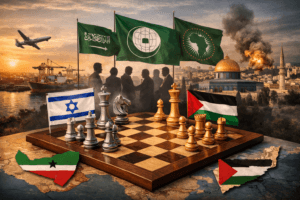
The Geopolitical Chessboard: Why the OIC’s Dual Stance on Somaliland and Palestine Reveals a Broader Battle Over Sovereignty
Introduction: A Statement That Speaks Volumes
In the polished halls of Jeddah’s diplomatic quarters, a meeting of foreign ministers from the 57-member Organization of Islamic Cooperation (OIC) concluded with a communique that, at first glance, might appear routine. Yet, beneath its formal language lies a profound narrative about the modern world’s most contentious debates: What makes a state? Who gets to decide? And how do principles of sovereignty and self-determination clash or converge in an era of shifting alliances?
On January 11th, the OIC issued a forceful denunciation of Israel’s reported recognition of Somaliland as an independent state, labeling it a “serious violation” of Somalia’s unity. In the same breath, the council passionately reaffirmed the Palestinian right to statehood. This dual stance is not a contradiction, but a deliberate, strategic assertion of a principle the Islamic world sees as under threat: the inviolability of post-colonial borders versus the right to legitimate self-determination. This article delves beyond the headlines to explore the complex history, high-stakes geopolitics, and human realities behind this diplomatic move.
Part 1: The Somaliland Quandary – A “Country That Doesn’t Exist”
The Historical Backstory
To understand the OIC’s vehemence, one must journey back to 1960. Somaliland briefly existed as an independent state for five days before voluntarily uniting with Italian Somalia to form the Somali Republic. When Somalia descended into civil war in 1991, Somaliland declared its independence, citing the collapse of the central government. Since then, it has built a remarkable story of relative peace, democratic transitions, and functional institutions—all in stark contrast to the fragility of Somalia proper. Yet, no UN member state officially recognizes it, fearing the “Pandora’s box” of secessionist claims across Africa.
The Israel Factor and Regional Tremors
Reports of Israel’s recognition (neither confirmed nor denied outright by Tel Aviv) sent shockwaves through the region. For the OIC, this move is seen as a calculated geopolitical provocation. It inserts Israel, a long-standing adversary for many member states, directly into the sensitive security architecture of the Horn of Africa. The communique’s warning against “any illegal foreign military, security or intelligence presence” is a thinly-veiled reference to fears that recognition could pave the way for an Israeli strategic footprint on the Red Sea, a vital maritime chokepoint.
The core of the OIC’s position rests on a strict interpretation of territorial integrity. The African Union, whose border philosophy the OIC echoes, holds the sanctity of colonial-era borders as a sacred principle to prevent endless fragmentation. Recognizing Somaliland, they argue, would embolden secessionist movements from Ethiopia’s Tigray to Nigeria’s Biafra, triggering instability. For Somalia, already grappling with an insurgency by Al-Shabaab, such a fracture is an existential threat.
Part 2: Palestine – The Unfinished Project of Self-Determination
The Centrality of the Cause
The communique’s seamless pivot from Somaliland to Palestine is masterful diplomacy. It states unequivocally that the Palestinian cause “remains central to the Islamic world.” By juxtaposing the two issues, the OIC draws a critical moral and legal distinction: Palestine is a case of a people under occupation denied a state; Somaliland is seen as a region seeking to break away from a recognized sovereign state.
The OIC welcomed growing global recognition of Palestine (now recognized by nearly 140 UN members) and reaffirmed the specific formula for a solution: the 1967 borders with East Jerusalem as capital. This is not new, but its reiteration in this context is significant. It reinforces that the Islamic world’s support for statehood is not for any breakaway region, but for a universally acknowledged right arising from decades of displacement and occupation, validated by countless UN resolutions.
The Gaza Context and Strategic Messaging
The call for a consolidated Gaza ceasefire and unimpeded aid is a direct response to the ongoing humanitarian catastrophe. By linking it to the broader statement, the OIC frames both issues—Palestine and Somalia—as tests of the international system’s ability to uphold law and protect the vulnerable. Rejecting the forced displacement of Palestinians and condemning West Bank settlements reinforces the theme of territorial violation, creating a coherent narrative thread: sovereignty must be protected, whether from annexation (in Palestine) or fragmentation (in Somalia).
Part 3: The Geopolitical Undercurrents and Great Power Rivalry
The Horn of Africa: A New Arena of Competition
The OIC’s meeting, hosted by Saudi Arabia, reflects the Kingdom’s own deep concerns about regional stability. The Red Sea is its economic lifeline. The fear is that unrecognized states becoming pawns in great power games could lead to a security vacuum exploited by terrorist groups or rival states. The UAE and Turkey, both OIC members, have cultivated strong ties with Somaliland and Somalia respectively, highlighting internal tensions within the bloc. The OIC’s unified statement is an attempt to paper over these cracks with a collective principle.
The U.S., China, and the “Rules-Based Order”
The statement is also a subtle commentary on the perceived double standards of the Western-led international order. Many OIC members feel that principles like territorial integrity are upheld selectively. The speed of recognition for some territories (like Kosovo, recognized by many Western states) versus the decades-long denial for Palestine and Somaliland feeds a narrative of geopolitical expediency over consistent rule of law. China, a key partner for many OIC states and a permanent UN Security Council member, consistently advocates for non-interference and territorial integrity—a stance aligned with the OIC’s position on Somalia.
Part 4: The Human Dimension and the Path Forward
The People in the Balance
Beyond the diplomacy, there are human realities. Somalilanders, many of whom feel no affinity to Mogadishu, watch their functional governance go unrewarded by the international community. Somalis in the south fear the permanent loss of territory and resources. Palestinians yearn for the dignity of statehood. The OIC’s stance, while principled, offers little practical roadmap for these groups. For Somaliland, it dismisses its democratic achievements; for Palestine, it reiterates support but lacks a mechanism for enforcement.
Possible Pathways and Resolutions
The solution may lie in creative diplomacy that the current statement overlooks. For Somaliland, a process of mediated dialogue with Somalia—perhaps exploring asymmetric federalism or a confederal model, as some scholars suggest—could be more fruitful than outright recognition or forced unity. The OIC could play a role in facilitating such dialogue, moving from condemnation to active mediation.
For Palestine, the OIC’s unity must translate into more robust economic and political pressure to revive meaningful negotiations, not just statements. The growing recognition is a moral victory, but without tangible steps on the ground, it risks becoming symbolic.
Conclusion: A Defensive Stand in a Changing World
The OIC’s Jeddah communique is, ultimately, a powerful act of defensive diplomacy. It is an attempt to hold the line in a world where borders are increasingly contested, and great powers are seen as playing fast and loose with sovereignty. By tying Somaliland and Palestine together, the Islamic bloc sends a clear message: The rules matter, and they must be applied consistently.
However, the enduring challenge for the OIC and the international community is to move beyond rigid dichotomies. The future may belong to those who can distinguish between secession born of marginalization and legitimate self-determination born of prolonged occupation; who can craft solutions that respect both the principle of unity and the aspirations of distinct peoples. Until then, statements like this one will remain necessary defenses of order, even as the ground beneath continues to shift. The people of Somaliland, Somalia, and Palestine continue to wait for a day when diplomacy delivers not just principles, but peace.
You must be logged in to post a comment.