
The Concert Economy: How India’s Youth Are Powering a Billion-Dollar Experience Revolution
India’s burgeoning youth demographic, characterized by rising disposable incomes and a cultural shift towards valuing experiences over possessions, is fueling a seismic boom in the country’s live entertainment sector, transforming concerts and festivals into a powerful economic engine. This “concert economy,” driven by affluent millennials and Gen Z, has attracted a surge of international artists touring multiple cities, demonstrated spillover effects generating billions for local hospitality and retail sectors, and revealed a democratization of fandom with explosive growth in tier-2 cities. While infrastructure constraints present a challenge, the synergy of demographic trends, digital accessibility, and premium spending on experiences positions live entertainment as a central pillar of India’s future consumer landscape, with significant ripple effects across tourism, employment, and urban development.
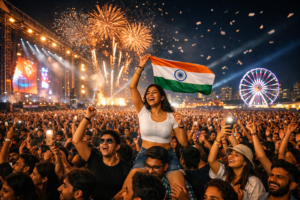
The Concert Economy: How India’s Youth Are Powering a Billion-Dollar Experience Revolution
The buzz of a crowd, the first chords of a favorite song, the collective surge of energy—this isn’t just a night out anymore in India. It’s the heartbeat of a burgeoning economic revolution. From Mumbai’s sprawling festival grounds to emerging hubs like Ahmedabad and Shillong, a generation of young, affluent Indians is rewriting the rules of leisure, turning live events into a powerful, multi-billion rupee engine of growth. This isn’t merely about entertainment; it’s about the rise of the “experience economy,” where disposable income is channeled into memory-making, and the money is following in record amounts.
The Demographic Powerhouse Behind the Boom
The numbers tell a compelling story. India is in the midst of a historic demographic sweet spot, with over 100 million people expected to join the working-age population between 2024 and 2030. This isn’t just a population bulge; it’s a wealthier, more connected, and experience-hungry cohort. With per capita income growth outpacing other major emerging markets, a significant segment of this youth is moving beyond spending on mere possessions. They are, as industry experts note, investing in “collective effervescence”—the shared, high-energy moments that define live concerts and festivals.
For professionals like Tanvi Shirgaonkar, the 29-year-old banking enthusiast counting down to Fujii Kaze’s Mumbai performance, live events are a non-negotiable part of her social and personal calendar. Attending events every two months and traveling abroad for specific acts, she represents a growing tribe for whom concerts are both emotional fulfillment and social currency—a key detail for “social media clout” in an digitally-native generation.
From Niche to Mainstream: The Tipping Point
The scale has shifted dramatically. Gone are the days when international artists made a lone stop in Mumbai or Delhi. The Coldplay effect, as analysts now term it, demonstrated the massive, organized demand and India’s capacity to host global-tier productions. Their Ahmedabad concerts did more than entertain; they generated an estimated ₹6.41 billion ($70.5 million) in economic value, illuminating the vast spillover effects into hospitality, retail, transportation, and tourism.
This success has catalyzed a chain reaction. Global stars like Travis Scott now routinely include multiple Indian cities on their tour maps. Events like Lollapalooza India have found a fervent audience, signaling the country’s arrival on the global live entertainment circuit. The government’s ambition to rank among the world’s top five live entertainment destinations by 2030 now seems less like a pipe dream and more like a viable target.
The “Fandom is Fluid” Phenomenon: Beyond the Metros
One of the most significant insights from this boom is the dissolution of the metro-centric model. Digital platforms like Spotify, YouTube, and BookMyShow have democratized access to music, creating passionate fanbases in tier-2 and tier-3 cities. Fandom, as BookMyShow’s Naman Pugalia observes, “knows really no definitions of tiers.”
The data underscores this: in 2025, live entertainment footfalls skyrocketed by 213% in Shillong, 188% in Guwahati, and 94% in Nashik. This regional surge is compelling organizers to look beyond traditional hubs, fostering a more inclusive and geographically diverse entertainment landscape. It’s also driving local economic micro-booms whenever a major act announces a date.
Premiumization and the Value of Experience
The boom isn’t just in volume; it’s in value. There’s a marked trend toward premiumization. Audiences are willing to pay a significant premium for VIP pits, exclusive viewing decks, and enhanced hospitality experiences. This shift indicates that for young Indians, quality of experience trumps cost. They aren’t just buying a ticket; they’re purchasing superior access, comfort, and memorability. This willingness to spend on upgraded experiences is a direct function of rising affluence and a shift in consumer priorities from ownership to access and enjoyment.
Infrastructure: The Growing Pains of Success
However, this rapid growth is straining existing infrastructure. A critical bottleneck is the lack of large-scale, purpose-built venues. India has fewer than ten venues capable of hosting over 10,000 attendees in major cities, and such facilities are nearly absent in smaller towns. This gap presents both a challenge and a monumental opportunity for investors and developers.
The audience’s expectations have evolved. Smooth entry and exit, advanced acoustics, better amenities, and world-class safety protocols are now demanded as standard. Bridging this infrastructure gap is essential for sustaining growth, improving artist and fan experience, and fully capturing the economic potential of the sector.
The Ripple Effect: More Than Just Tickets
The “concert economy” is a classic example of a multiplier effect in action. A single major event sets off a chain of economic activity:
- Travel & Hospitality: Hotels, airlines, and ride-sharing services see spikes in bookings.
- Local Commerce: Restaurants, bars, and retail shops in the vicinity experience a surge in customers.
- Job Creation: The need for event management, security, logistics, staging, and merchandising creates temporary and permanent employment.
- City Branding: Cities like Ahmedabad have been repositioned as vibrant cultural destinations on the global map.
The Road Ahead: 2026 and Beyond
As EY’s Raghav Anand predicts, 2026 is poised to be a breakout year. The convergence of demographic dividends, increasing affluence, digital penetration, and a cultural shift towards experiential spending creates a perfect storm. The live entertainment sector is set to move from the periphery to the core of India’s consumer economy.
For businesses, the implications are vast. It’s not just about event companies; it’s about brands seeking engagement, tourism boards crafting strategies, real estate developers envisioning new venues, and digital platforms creating seamless end-to-end experiences.
In conclusion, India’s youth are not just attending concerts; they are conducting a vast economic orchestra. Each ticket purchased is a vote for a new form of consumption, each festival attended a catalyst for local economies, and every shared moment online a beacon attracting the next global act. This is more than a trend—it’s a fundamental reshaping of leisure, community, and commerce, powered by a generation that values the memory of a live beat over the ownership of a static commodity. The stage is set, and the economy is listening.
You must be logged in to post a comment.