
The Assistive Technology Revolution: How India Is Engineering a More Inclusive Future
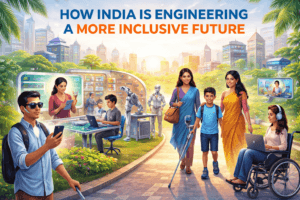
The Assistive Technology Revolution: How India Is Engineering a More Inclusive Future
For millions in India, the world remains a landscape of unseen barriers. A step without a ramp, a screen without a screen reader, a classroom without accommodation—these are not mere inconveniences, but systemic locks on potential. Yet, a profound shift is underway. We are not merely witnessing incremental improvements in disability aid; we are at the dawn of an assistive technology revolution, one being uniquely shaped by India’s challenges and innovations. This movement transcends charity; it’s about engineering a future where inclusion is baked into the very fabric of society through smart, scalable, and humane technology.
The Stark Divide: Potential Versus Accessibility
The statistics are both a call to action and a measure of the opportunity. With one of the world’s largest disability populations, India’s gap between need and access to assistive technology (AT) is vast. The global figure—2.5 billion needing one or more assistive products—is not just a number; it represents individuals for whom a single tool can mean the difference between dependency and autonomy, between isolation and participation.
The traditional narrative has focused on limitations. The new narrative, fueled by India’s tech ecosystem, asks: What if the limitation is not the person, but the tool? What if we could build technology that doesn’t just compensate, but empowers, predicts, and personalizes?
Beyond Gadgets: The Human-Centered Tech Wave
The core of this revolution is a move from generic devices to contextual, intelligent solutions. It’s the difference between a basic wheelchair and a smart, all-terrain mobility aid that navigates chaotic urban footpaths. Indian innovators are leveraging technologies not as ends in themselves, but as means to solve very specific, human problems.
- AI as a Sensory and Cognitive Bridge: For the visually impaired, AI-powered applications are evolving from simple text-to-speech to becoming real-time visual interpreters. Imagine smartphone apps that don’t just read a document, but describe a bustling market scene, identify currency notes, or recognize a friend’s face and convey their expression. This isn’t about replacing human assistance; it’s about granting real-time autonomy in daily interactions.
- Hyper-Personalized Learning: For neurodiverse individuals and those with learning disabilities, AI-driven platforms can adapt in real-time to a user’s unique cognitive patterns. These tools don’t force conformity to a standard education mold; they bend and adapt the content delivery to fit the learner, turning frustration into engagement.
- The Physical-Digital Hybrid: Smart prosthetics integrated with IoT sensors can provide feedback and adapt to motion, while VR-based rehabilitation turns painful, repetitive therapy into engaging, gamified exercises. These solutions address a critical gap: making sustained improvement accessible and even compelling.
The Innovation Engine: India’s Unique AT Ecosystem
What sets India apart is not just the proliferation of over 500 AT startups, but the ecosystem fostering them. This is a bottom-up innovation model born from necessity.
- Affordability as a First Principle: Unlike Silicon Valley moonshots, Indian AT innovation often starts with a ruthless focus on cost. Can we build a communicative device for non-verbal individuals using recycled components? Can an AI visual aid run on a low-cost smartphone? This constraint breeds genius, leading to “reverse innovation”—solutions so affordable and robust they gain global relevance.
- Context is King: An AT solution designed in a sterile lab often fails in the heat, dust, and chaos of Indian life. Indian startups bake contextual resilience into their design—offline functionality, vernacular language support, and durability for rugged use. This ensures technology doesn’t just exist but thrives in real-world conditions.
- The Ecosystem Scaffolding: The rise of AT Incubation Centres, disability-focused hackathons, and university courses is creating a virtuous cycle. It’s moving innovation from isolated passion projects to a structured pipeline. Sandbox environments allow for safe, iterative testing with users, ensuring products are co-created, not merely delivered.
Crossing the Chasm: The Triad of Challenges
Brilliant innovation in a lab means little without reaching the user. The triad of Affordability, Availability, and Awareness remains the formidable chasm to cross.
- Affordability: High costs are tackled through frugal engineering, but policy levers like subsidies, VAT exemptions, and inclusion in government health schemes are critical. Blended finance models, mixing grants with patient capital, can help startups scale without pricing out the very people they aim to serve.
- Availability: How does a revolutionary device reach a user in a tier-3 town? Digital AT marketplaces and integration with platforms like the Government e-Marketplace (GeM) are game-changers. “Inclusion Bays” in public spaces can serve as physical touchpoints for demonstration and acquisition, bridging the last-mile gap.
- Awareness: Stigma and lack of information are invisible barriers. Demystifying AT requires community-driven outreach, where users become ambassadors. Corporates have a major role here, not just as purchasers but as champions of inclusive culture, normalizing the use of AT in workplaces and public life.
The Corporate Imperative: Beyond CSR to Strategic Inclusion
The role of corporates and Global Capability Centers (GCCs) is evolving from peripheral CSR to core strategic and ethical imperative. True inclusion is a multiplier.
- Talent Pool Expansion: By actively hiring persons with disabilities and providing necessary AT, companies tap into a vast, often overlooked reservoir of talent, loyalty, and unique problem-solving perspectives.
- Driving Accessible Innovation: Funding AT research, partnering with startups, and mandating universal design in internal and external products makes business sense. It expands market reach and fosters brand loyalty among billions globally who value inclusivity.
- Building an Accessible Infrastructure: From ensuring workplace software is screen-reader compatible to designing accessible office spaces, corporations can create microcosms of the inclusive world we aim to build.
The Road to 2047: A Vision of Ubiquitous Inclusion
As India looks toward its Amritkaal 2047 vision, the goal is clear: to become the world’s most vibrant AT hub. This isn’t just about economic growth; it’s about defining a nation’s character. The path forward hinges on:
- Policy as a Catalyst: A robust National Strategic Framework for AT, focusing on Products, Provision, Personnel, and Policy, can align disparate efforts into a national mission.
- Data-Driven Empathy: Leveraging AI and data analytics to move from a one-size-fits-all approach to predictive, personalized accessibility models that anticipate needs before they become barriers.
- Mainstreaming Universal Design: The ultimate goal is to render dedicated AT less conspicuous. When every new building, app, vehicle, and public service is designed for the broadest spectrum of users from the outset, we move from integration to true inclusion.
The next decade will be defined not by whether we can create miraculous assistive tech, but by whether we can democratize its dignity. India, with its unique blend of desperate need, technical prowess, and innovative frugality, is poised to show the world that the future of inclusion isn’t a niche concern—it’s the bedrock of a truly advanced society. The revolution won’t be heard in a loud fanfare, but in the quiet, confident sound of a barrier falling, one intelligent, compassionate solution at a time.
You must be logged in to post a comment.