
The Assassination of Yasser Abu Shabab: The Collapse of Israel’s Gaza Proxy Strategy
The assassination of Yasser Abu Shabab, the leader of the Israeli-backed Popular Forces militia, marks a critical failure of Israel’s strategy to cultivate Palestinian proxies to counter Hamas in Gaza. Abu Shabab, a former criminal with no popular legitimacy, was killed not by Hamas but in a violent clash with a powerful local family, exposing the inherent weakness of building authority through external arms and coercion rather than organic local support. His death undermines Israel’s plan to create a sustainable alternative to Hamas governance, reveals the dangerous chaos unleashed by empowering fragmented armed clans, and leaves a vacuum that exacerbates instability in a devastated territory with no clear political horizon, demonstrating that proxy forces cannot manufacture the legitimacy required for long-term control.
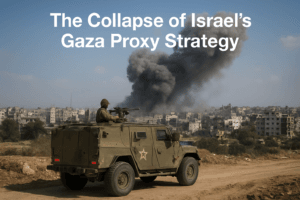
The Assassination of Yasser Abu Shabab: The Collapse of Israel’s Gaza Proxy Strategy
A former drug trafficker turned Israeli proxy, his violent death in a clan dispute underscores a grim reality: the strategy of arming local militias to fight Hamas has not only failed but has sown deeper chaos in a shattered territory.
On December 4, 2025, Yasser Abu Shabab, the leader of the Israeli-backed Popular Forces militia, died from wounds sustained in a violent clash in Rafah, Gaza. His death, stemming from a dispute with a powerful local family rather than a direct Hamas attack, exposes the fatal vulnerabilities of Israel’s controversial proxy warfare strategy. Abu Shabab’s journey from prison inmate to armed chieftain and his ultimate demise offer a stark case study in the perils of attempting to manufacture local leadership through external support, revealing the complex and often brutal internal dynamics of Palestinian society in Gaza.
The Rise of a Controversial Figure
Yasser Abu Shabab was not a traditional political or resistance leader. A member of the Bedouin Tarabin tribe in Rafah, his early life was steeped in criminality rather than nationalism. Before the war, he was deeply involved in drug trafficking and smuggling, activities that led to his arrest by Hamas authorities in 2015 and a staggering 25-year prison sentence.
His path to power began in the chaos of the conflict. In October 2023, he escaped from prison during an Israeli bombardment, a fortuitous event that granted him freedom amid societal collapse. He soon began organizing, capitalizing on the vacuum left by Hamas’s strained control and the desperate humanitarian situation. By May 2024, he and his followers were intercepting aid trucks entering Gaza, an act he framed as a necessary measure to provide security and prevent Hamas from seizing supplies.
Israel’s Strategic Gamble
Israel’s military and intelligence apparatus saw potential in figures like Abu Shabab. As former Israeli military intelligence officer Dr. Michael Milshtein noted, efforts to build a credible anti-Hamas coalition of community elders had failed, forcing Israel to turn to more contentious local actors. By early 2025, Israel began providing weapons, equipment, and tactical support to Abu Shabab’s group, which had rebranded itself as the “Popular Forces” or the “Anti-Terror Service”.
Prime Minister Benjamin Netanyahu publicly acknowledged this strategy in June 2025, defending the arming of anti-Hamas clans as one of the “various ways” Israel was fighting the militant group. The tactical model was clear: establish secured enclaves in areas like eastern Rafah, clear them of Hamas influence, and use proxy forces like the Popular Forces to distribute aid and maintain order, thereby severing the population’s dependency on Hamas. This approach was loosely inspired by the U.S. model with the Syrian Democratic Forces (SDF) against ISIS.
The Unraveling of a Proxy
Despite Israeli backing, Abu Shabab’s authority was always tenuous, built on a foundation of coercion and lack of popular legitimacy.
- Criminal Past and Lack of Ideology: For most Palestinians, Abu Shabab remained a convicted criminal and a collaborator. His alliance with Israel, accused of genocide by many in Gaza, was politically and morally disqualifying. His own Tarabin tribe publicly disowned him, stating they had “no objection to those around him liquidating him immediately”.
- Accusations of Aid Looting: While presenting himself as a humanitarian actor securing aid convoys, Abu Shabab and his forces were repeatedly accused of being the primary agents behind systematic looting. An internal United Nations memo identified him as “the main and most influential stakeholder behind systematic and massive looting”.
- Internal Rivalries and Violence: The Popular Forces operated in a landscape of powerful clans and families. Their method of asserting control—which included seizing hostages from local families—inevitably sparked violent backlash.
The Fatal Ambush
The immediate trigger for Abu Shabab’s death was a classic clan dispute. Reports indicate that his militia had taken a hostage from the powerful Abu Suneima family. When Abu Shabab refused to release the captive, the family launched a retaliatory assault on the Popular Forces’ base in Rafah on December 4, 2025. The clash resulted in heavy casualties on both sides. Abu Shabab was shot and critically wounded. He was evacuated to the Soroka Medical Center in Beersheba, Israel, but died shortly before arrival.
The conflicting narratives surrounding his death are telling. His militia claimed he was shot while intervening as a peacemaker in a family quarrel. Hamas, which had labeled him a collaborator and made at least two prior attempts on his life, quickly denied involvement but posted a gloating message on Telegram: “As we told you, ‘Israel won’t protect you'”. This highlighted his ultimate vulnerability: his foreign backing could not shield him from local enmities.
The Aftermath and Strategic Implications
The death of Yasser Abu Shabab is more than the elimination of a militia commander; it represents a significant blow to Israel’s post-war planning for Gaza.
- A Power Vacuum and Doubt: Abu Shabab’s deputy, Ghassan al-Duhaini, has assumed leadership of the Popular Forces. However, the group’s future is uncertain. Palestinian political analyst Dr. Reham Owda argues that Abu Shabab’s death “will fuel doubts among them about their ability to challenge Hamas”. Other nascent anti-Hamas militias now operate with the knowledge that Israeli support does not guarantee survival.
- Exposing the Flaws of Proxy Warfare: The episode validates long-standing criticisms of the proxy strategy. These armed groups, often rooted in criminality or narrow clan interests, lack broad popular appeal and cannot serve as a legitimate governing alternative. As the Al Jazeera opinion piece argues, Israel’s tactic follows a classic “divide and rule” colonial strategy, fostering internal violence to weaken collective resistance but ultimately creating unmanageable chaos.
- Historical Echoes and Future Lessons: Israel’s experiment with the Popular Forces bears uncomfortable resemblance to past failures, such as its support for the South Lebanon Army. These proxies often collapse when their sponsor’s direct support wanes, leaving behind a legacy of internal strife. The table below summarizes key historical precedents.
| Proxy Force | Sponsor | Conflict | Duration | Key Outcome / Lesson |
| South Lebanon Army (SLA) | Israel | Lebanese Civil War / South Lebanon conflict | 1978–2000 | Collapsed rapidly after Israeli withdrawal; underscored the fragility of proxies lacking organic local support. |
| Syrian Democratic Forces (SDF) | United States | Syrian Civil War vs. ISIS | 2015–Present | More successful in combat but faces ongoing political integration challenges; model cited for Gaza. |
| Popular Forces | Israel | Gaza War (2023-2025) | 2024–2025 | Leader assassinated in internal feud; failed to gain legitimacy or present a viable alternative to Hamas. |
A Precarious Future for Gaza
Abu Shabab’s violent end leaves Gaza at a dangerous crossroads. Israel’s declared objective of eradicating Hamas’s governing and military capabilities remains unmet, and its preferred alternative—a patchwork of armed, local proxies—has proven unstable and ineffective.
The territory is now caught between a resilient Hamas, which continues to operate from tunnels and shadow networks; the remnants of unpopular, externally-backed militias; and the overwhelming humanitarian needs of a displaced and starving population. The international community’s plans, such as the U.S.-backed proposal for a transitional multinational force, have stalled.
The assassination of Yasser Abu Shabab serves as a grim testament to a fundamental truth: lasting security and governance cannot be externally engineered through fragmented, armed groups. His story—from prison, to power, to a violent death in a family feud—illustrates how the desperate tactics of prolonged war can unleash forces that ultimately consume their own creators, leaving a people no closer to peace or stability. As Dr. Milshtein succinctly put it, “The writing was on the wall… it was obvious that it would end this way”.
You must be logged in to post a comment.