
The $1 Billion Shot: How India’s Copycat Drugs Could Change Who Gets Thin
The $1 Billion Shot: How India’s Copycat Drugs Could Change Who Gets Thin
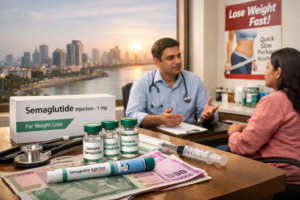
On a humid Thursday evening in Mumbai, Dr. Rahul Baxi’s clinic is quiet. But his WhatsApp is not. It pings with another message from a patient: a screenshot of a social media influencer showing off a dramatically slimmer frame, accompanied by the question, “Doctor, can I get that injection? I have a wedding to attend in two months.”
For the last year, Baxi, a diabetologist, has become accustomed to these requests. The “that” in question is a new generation of weight-loss drugs—GLP-1 receptor agonists like Ozempic and Wegovy. They have become a global phenomenon, a medical breakthrough that promises to tackle the root of obesity, not just its symptoms. But in India, these drugs have remained a luxury, a monthly expense that rivals the rent of a one-bedroom apartment in the suburbs.
That financial barrier is about to shatter.
This Friday, the patent on semaglutide—the active ingredient in these blockbuster drugs—expires in India. It is a moment the domestic pharmaceutical industry has been racing toward for years. By the end of the year, chemists across the country could be stocked with dozens of new, locally made versions of the drug, potentially selling for a fraction of the current price.
It is a classic Indian story: the global south democratizing a medical technology invented in the west. But as the country stands on the cusp of what investment banks are calling a “magic-pill moment,” a more complex picture is emerging. It is a story of immense opportunity, fraught with medical caution, and haunted by the ghosts of past pharmaceutical revolutions.
The Price Is Right: From Status Symbol to Staple
To understand the scale of this shift, consider the numbers. Currently, a month’s supply of the injectable Wegovy can cost an Indian patient upwards of 16,000 rupees (about $173). For a country where the average monthly urban per capita income hovers around $200, this places the drug firmly in the realm of the super-rich.
“It was a status symbol,” says Anjali Mehra, a 34-year-old marketing professional from Delhi who has been on the drug for six months. “My friends saw I was losing weight, and I had to be vague about how. If I told them the cost, they’d be shocked. It wasn’t a sustainable conversation.”
Anjali represents a tiny fraction of the 77 million Indians with type-2 diabetes and the hundreds of millions who are overweight. She is the early adopter. But the patent expiry will open the floodgates for the early majority.
Industry analysts expect prices to plummet to between 3,000 and 5,000 rupees ($36-$54) per month within a year—roughly the cost of a monthly gym membership or a few takeout dinners. At that price point, the market dynamics change entirely. Investment bank Jefferies has predicted the domestic market could balloon to $1 billion.
“This is the ‘shampoo-ification’ of a high-end medical treatment,” explains Sheetal Sapale of the pharmaceutical research firm Pharmarack. “You take a product that was in a fancy glass bottle in a luxury store and put it in a plastic pouch on a general store shelf. The volume explodes.”
Companies like Cipla, Sun Pharma, and Dr. Reddy’s are not just preparing to launch branded generics; they are preparing to fight a price war. In the Indian generics market, competition is not a polite chess game; it is a bare-knuckle brawl. When the diabetes drug sitagliptin went off-patent in 2022, nearly 100 versions flooded the market within a year. The same is expected here.
The Doctor’s Dilemma: A Powerful Tool Meets Human Nature
But for doctors like Baxi, the price drop is a double-edged sword. It is a powerful tool becoming more accessible, but tools can be misused.
“My job is about to get harder,” he admits, leaning back in his chair. “More access is good, but it means more people will see this as a magic wand. They want the result without the work.”
The “work” is the lifestyle change that doctors insist must accompany the drug. Baxi has a strict protocol. Before he even considers prescribing a GLP-1 drug, he mandates a consultation with a dietician. Patients must demonstrate a commitment to a high-protein, low-glycemic diet. He needs to see blood work, a thyroid profile, and a clear understanding of the potential side effects: the nausea, the gastrointestinal distress, the risk of gallstones or pancreatitis.
“The drug is a catalyst, not a solution,” he says. “If you eat a deep-fried samosa and take this shot, you’ll just feel violently ill. It’s a very expensive and unpleasant way to learn that lesson.”
His concern is rooted in the Indian palate and lifestyle. The country’s obesity epidemic is fueled by a diet rich in refined carbohydrates and sugars, coupled with increasingly sedentary urban lives. The “Indian pot belly,” once a sign of prosperity, is now a primary driver of metabolic disease. The fear among physicians is that cheaper drugs will allow people to ignore these foundational issues, creating a “bypass” mentality where the injection does the heavy lifting while bad habits persist.
Mumbai-based bariatric surgeon Dr. Muffazal Lakdawala shares this cautious optimism. He sees the potential for these drugs to revolutionize pre- and post-surgery care for his patients, helping them lose weight to reduce surgical risks. But he also worries about a different kind of side effect: poor quality.
“India is the pharmacy of the world, but we must remember that a generic drug is only as good as its manufacturing process,” he warns. “We cannot afford side effects arising from substandard copies. It will ruin the reputation of the molecule itself. Regulation must be airtight.”
The Shadow Market: Gyms, Beauty Parlours, and the “Quick Fix”
The most significant human cost of this impending affordability boom may be the expansion of an already troubling shadow market.
Stories of misuse are already circulating in medical circles. Dr. Bhaumik Kamdar, a chest physician in Mumbai, recently treated a patient with severe vomiting and dehydration. The patient, a young woman, had obtained a course of semaglutide from a “beauty and slimming centre” that promised she would drop two dress sizes before a destination wedding.
“She had no medical supervision, no baseline health check, no idea what she was injecting,” Kamdar says, shaking his head. “She just saw the Instagram ad and paid the money.”
As prices fall, these informal channels will only multiply. Gyms will pitch it as a performance enhancer. Dieticians with no medical license will offer it as part of “rapid transformation packages.” Online pharmacies, notorious for cursory consultations, will be able to offer it at a discount.
India’s drug regulator recently issued a stern advisory against direct-to-consumer advertising of these powerful prescription drugs, warning companies against promoting them with promises that downplay the need for diet and exercise. But policing the vast, informal Indian healthcare landscape is a herculean task.
This is the human paradox of the “magic pill.” For every patient like 50-year-old Sunil Varma, a diabetic from Pune who has struggled with his weight for decades and desperately needs medical intervention to prevent a cardiac event, there will be a 22-year-old college student looking for a shortcut to a summer body.
“I have patients who are genuinely suffering, whose knees are giving way under the strain, whose blood sugar is dangerously high,” Baxi says. “And I have patients who walk in and say, ‘I need to lose 10 kilos in three months for my daughter’s wedding.’ The drug works for both. But the ethical approach is completely different.”
The Global Ripple Effect: Beyond India’s Borders
The implications of India’s patent expiry do not stop at its borders. The country is the world’s largest supplier of generic medicines, exporting to over 200 countries. Indian companies supply 40% of the generics used in the US and a quarter of those in the UK.
Namit Joshi, from the Pharmaceuticals Export Promotion Council of India, sees a “humongous” opportunity. As obesity rates climb across the developed world, the demand for effective treatments is insatiable. The US market alone, he predicts, could scale to $10 billion within a few years.
This mirrors a historical precedent. Two decades ago, Indian pharmaceutical companies shocked the world by producing cocktail therapies for HIV/AIDS at a fraction of the Western cost, turning a death sentence for millions in Africa into a manageable chronic condition. It was India’s finest hour in global health.
The fight against obesity is different—it is not an infectious plague but a metabolic one—but the model is the same. Indian companies are poised to do for weight-loss what they did for antivirals: make them cheap enough for the masses.
However, as Lakdawala warns, the responsibility is immense. The world will be watching. If Indian generics are safe, effective, and affordable, they will reshape the global fight against obesity. If a flood of poor-quality products leads to a spate of adverse events, it could trigger a global backlash and stricter regulations that harm the entire industry.
The Long Game: A Lifetime on the Needle?
Perhaps the most daunting question, and one with deep human implications, is the duration of treatment. Current evidence strongly suggests that obesity is a chronic, relapsing disease. For many, stopping the drug means the appetite returns with a vengeance, and the weight piles back on.
“If you stop, the hunger is not just normal, it’s voracious,” Baxi explains. “The body fights to regain the fat it lost.”
This means millions of Indians may soon be contemplating a lifetime of injections. What does that mean for the psyche? For the family budget? For the national healthcare system, which will need to bear the long-term cost of managing patients on these drugs?
For now, the excitement outweighs the caution. The Indian pharmaceutical industry is gearing up for a gold rush. Doctors are updating their knowledge and preparing their talking points. And patients like Anjali Mehra are watching with interest.
“If it becomes cheaper, I’ll stay on it longer,” she says. “But I know I can’t rely on it forever. I have to learn to eat right on my own. The shot is just giving me a chance to reset.”
That is the ultimate hope: that India’s generic drug revolution doesn’t just make a population thinner, but healthier. That the “magic pill” becomes a bridge, not a destination. As the patents expire and the prices fall, the real test will be whether the country can balance its world-class manufacturing might with the wisdom to ensure its use is safe, supervised, and sustainable. The shot is about to get cheaper. The hard part—changing how India lives and eats—remains as expensive as ever.
You must be logged in to post a comment.