
Telangana’s Deepening Chill: Tracking the Cold Wave Across the State
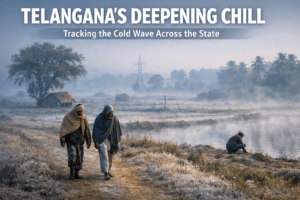
Telangana’s Deepening Chill: Tracking the Cold Wave Across the State
A significant temperature drop of 3-4°C is not just a weather statistic; it’s a tangible shift in the air, a call for warmer clothes, and a test of preparedness for a region bracing for its coldest nights of the season.
The winter chill has tightened its grip over Telangana, transforming the December landscape with a crisp, cold air that is sharper than many anticipated. What began as isolated reports of severe cold wave conditions in northern districts has escalated into a widespread weather event, prompting official alerts and affecting daily life across the state. The India Meteorological Department (IMD), which initially forecast a dip in minimum temperatures, has now issued a formal cold wave alert for six districts, signaling a deepening and more persistent chill.
This cold spell is characterized by a stark contrast between day and night. While afternoons remain relatively mild, the mercury plummets after sunset, especially in rural and isolated pockets. With dry weather expected to prevail for the next seven days and no cloud cover to trap heat, the state is experiencing the classic conditions for radiative cooling—where the earth’s heat escapes rapidly into the clear night sky. For residents, this means bundling up for morning commutes, protecting crops from frost, and adapting routines to the season’s most significant chill yet.
The Evolution of a Cold Wave: From Forecast to Alert
The current situation developed rapidly over a handful of days, showcasing how quickly winter conditions can intensify.
- The Initial Forecast (December 14-15): The IMD first noted severe cold wave conditions in isolated pockets of Adilabad district, with the area recording a low of 6.2°C—a substantial 6.6°C below normal. Concurrently, a broader forecast warned that minimum temperatures across Telangana were likely to remain 3 to 4 degrees Celsius below normal over the next two days. At this stage, however, no formal cold wave alert had been issued for any district in the state.
- The Situation Intensifies (December 16): Data from the Telangana Development Planning Society revealed the cold was spreading. Between December 14 and 15, seven districts recorded minimum temperatures of 10°C or below. The coldest spot was Sirpur in Kumaram Bheem Asifabad district, which recorded 7.6°C. Other notably cold locations included Kohir in Sangareddy (8.2°C) and Bheempoor in Adilabad (8.9°C).
- The Official Alert (December 17): Responding to the progressing conditions, the IMD upgraded its warnings. A cold wave alert was officially issued for six districts: Adilabad, Kumaram Bheem Asifabad, Mancherial, Sangareddy, Medak, and Kamareddy. By this time, the lowest temperature had dropped further, with Kohir in Sangareddy recording 7.4°C and Sirpur close behind at 7.9°C.
A State of Contrasts: Temperature Extremes Across Telangana
The cold wave does not blanket Telangana uniformly. Its impact creates a patchwork of temperatures, with northern and central interior districts bearing the brunt while urban areas and southern regions experience milder, though still below-normal, conditions.
The table below highlights the geographic disparities in temperature across the state during this cold spell.
| Location (District) | Minimum Temperature (°C) | Notes & Context |
| Kohir (Sangareddy) | 7.4 | State’s lowest recorded temperature on Dec 16-17. |
| Sirpur (Kumaram Bheem Asifabad) | 7.6 – 7.9 | Among the coldest spots, subject of cold wave alert. |
| Adilabad | 6.2 – 7.7 | Early epicenter of severe cold wave conditions. |
| Patancheru (Greater Hyderabad) | 9.0 – below 10 | Highlights sharp urban-rural divide within a metro region. |
| Hyderabad City | 12.4 – 13.8 | Significantly colder than normal but milder than outskirts. |
| Bhadrachalam / Khammam | ~16.0 | Examples of warmer southern districts. |
This geographic pattern is telling. The northern districts of Adilabad, Kumaram Bheem Asifabad, and Mancherial are consistently the coldest, which aligns with their interior continental location and distance from moderating water bodies. The Greater Hyderabad region exemplifies the urban heat island effect. While the city core recorded lows of 12-14°C, its immediate outskirts like Patancheru and Rajendranagar plunged to 9-10°C. This stark difference of 3-5 degrees over a short distance underscores how urbanization can create micro-climates, offering relative warmth in concrete-dominated centers.
Understanding the “Why”: Meteorological Drivers Behind the Chill
Several converging meteorological factors explain this sudden and sharp temperature drop:
- Clear Skies and Dry Air: The IMD has consistently forecast dry weather for the next three to seven days across the state. A complete absence of cloud cover and moisture allows the heat accumulated during the day to radiate back into the atmosphere unimpeded at night, leading to rapid cooling.
- Cold Northerly Winds: Winter in the Indian subcontinent is often driven by cold, dry winds blowing from the Himalayan region down into the peninsula. Telangana’s location makes it receptive to these northerly and north-easterly winds, which advect colder air into the region.
- Radiative Cooling on Calm Nights: The combination of dry air, clear skies, and typically light winds during winter nights creates ideal conditions for maximum radiative heat loss from the ground, allowing temperatures in low-lying and rural areas to fall significantly.
- Regional Pressure Patterns: As indicated in national forecasts, large-scale cold wave conditions are also affecting North Interior Karnataka, West Madhya Pradesh, and Chhattisgarh. Telangana is part of this broader synoptic pattern of a cold air mass settling over central India.
Life in the Chill: Impacts and Preparations
A drop of 3-4 degrees below normal is more than a number; it has tangible effects on public health, agriculture, and daily logistics.
For the general public, the IMD advisory urges people to wear warm clothing to guard against cold-related illnesses like hypothermia, especially for vulnerable populations including the elderly, children, and the homeless. The dense fog predicted in some parts of the country during this period also serves as a warning for Telangana; early morning mist or haze can reduce visibility, impacting road and potentially air travel.
The agricultural sector is particularly watchful. While rabi crops like wheat and pulses require a certain amount of chill, an extended severe cold wave or frost in isolated pockets can damage sensitive crops and horticulture. Farmers in alerted districts are likely taking measures to protect their produce.
The cold spell coincides with significant events in the state. The third and final phase of Gram Panchayat elections took place across Telangana, where cold morning temperatures could affect voter turnout. Furthermore, President Droupadi Murmu arrived in Hyderabad for a six-day winter sojourn, with official schedules likely considering the weather conditions.
Beyond the Headlines: Telangana’s Winter in Context
For a state known for its predominantly hot climate, a cold wave is a notable departure. It’s crucial to understand that a “cold wave” in Telangana is defined differently than in the northern plains. The IMD criteria consider both the absolute temperature and the departure from normal. For the plains, a cold wave is declared when the minimum temperature is 10°C or below and is 4.5°C to 6.4°C below the normal. The fact that several districts have met or approached these thresholds explains the escalation from a forecast to an official alert.
Looking at the national picture, Telangana is not alone. The IMD has warned of cold to severe cold wave conditions in multiple states, including West Madhya Pradesh, North Interior Odisha, Vidarbha, and Chhattisgarh. Meanwhile, North India is grappling with dense fog and significantly reduced visibility, affecting travel on a large scale. This synoptic view confirms that Telangana’s chill is part of a larger winter pattern settling over central and northern India.
Navigating the Cold Spell: Practical Outlook and Advice
The immediate forecast offers little respite from the dry chill. Hyderabad and surrounding areas are predicted to see a mainly clear sky with mist or haze likely during the morning and night hours. The maximum and minimum temperatures in the capital are expected to hover around 29-30°C and 14°C, respectively. However, the six districts under alert will continue to experience much colder nights.
For residents, practical preparation is key:
- Layer Up: Dress in multiple layers of warm clothing, covering extremities. The cold is most penetrating during the early morning and night hours.
- Secure Your Home: Check for drafts in windows and doors, especially in older buildings. Use heavy curtains at night to provide insulation.
- Protect Health: Stay hydrated with warm fluids, be mindful of the risks of indoor heaters, and check on neighbors who may be vulnerable.
- Travel with Care: If traveling early in the morning, especially to rural or northern districts, be prepared for poor visibility due to mist and allow extra time for your journey.
As the state moves through this period, the focus remains on resilience and adaptation. The cold wave alert is a critical tool for government agencies to mobilize resources and for citizens to make informed decisions. While the clear, sunny days of a Telangana winter are pleasant, the underlying message from the meteorologists is clear: the nights belong to the chill, and preparedness is the wisest response.
You must be logged in to post a comment.