
Tamil Nadu Weather Update: Decoding the Weekend Yellow Alert and Its Impact on 11 Districts
The Regional Meteorological Centre (RMC) has issued a yellow alert for eleven districts in Tamil Nadu, including Chennai, for Saturday, November 15, 2025, forecasting heavy rainfall due to an upper-air cyclonic circulation over the southwest Bay of Bengal. This system, which extends up to 4.5 km and is tilting southwestward, is drawing significant moisture inland, primarily targeting coastal and north-eastern districts such as Tiruvallur, Chengalpattu, Cuddalore, and Nagapattinam, as well as Puducherry and Karaikal.
While not a severe cyclone, the alert signals potential for isolated heavy rain that could cause waterlogging and travel disruptions, advising residents to stay aware and prepared amidst the typical weather patterns of the North-East Monsoon season.
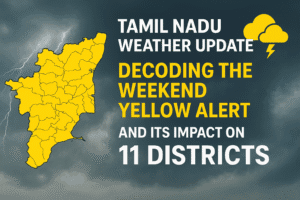
Tamil Nadu Weather Update: Decoding the Weekend Yellow Alert and Its Impact on 11 Districts
If you’re in Tamil Nadu, particularly along the coastal belt, you might want to keep your umbrellas handy and your travel plans flexible this weekend. The Regional Meteorological Centre (RMC) has cast a weather net over the region, issuing a yellow alert for 11 key districts for Saturday, November 15, 2025. This isn’t just a passing shower forecast; it’s a signal of changing atmospheric dynamics that could significantly influence the daily lives of millions.
But what does a “yellow alert” truly mean for you? Is this the precursor to a cyclonic storm? And why are these specific districts in the crosshairs? This article goes beyond the standard bulletin to unpack the science, the risks, and the practical steps you can take to navigate the impending weather.
What a Yellow Alert Really Means: Beyond the Jargon
Headlines often throw around terms like “yellow alert” or “orange alert” without fully explaining their implications. In the context of the India Meteorological Department (IMD), a yellow alert is the least severe of the color-coded weather warnings, but it is far from insignificant. It essentially advises residents to “Be Aware.”
For Saturday’s forecast, this translates to:
- Heavy Rain: Expect rainfall between 64.5 mm and 115.5 mm within a 24-hour period at isolated places.
- Localised Disruption: The key word is “isolated.” Not every street in Chennai will be flooded, but certain low-lying areas or those with poor drainage could experience waterlogging.
- Travel Delays: Commuters should anticipate slower traffic, potential delays on suburban rail routes, and difficult driving conditions on water-slicked roads.
- Precautionary, Not Panic: This is not a warning for a catastrophic event, but a call to stay updated with the latest forecasts and exercise caution in your daily activities.
The Districts Under the Weather Microscope
The RMC bulletin has been precise. The following 11 districts, along with the union territories of Puducherry and Karaikal, are the ones to watch:
- Tiruvallur
- Chennai (The state capital, always a focal point due to its density and infrastructure challenges)
- Kancheepuram
- Chengalpattu
- Villuppuram
- Kallakurichi
- Cuddalore
- Mayiladuthurai
- Nagapattinam
- Tiruvarur
- Thanjavur
A glance at the map reveals a clear pattern: this is a coastal and north-eastern Tamil Nadu event. These districts form the rice bowl of the state and are crisscrossed by rivers that drain into the Bay of Bengal. The weather system’s interaction with this coastline is the primary reason for the concentrated alert.
The Engine of the Rain: Unpacking the Cyclonic Circulation
The root cause of this weather activity lies over the Bay of Bengal, a known incubator for meteorological phenomena. The RMC has reported an upper-air cyclonic circulation that has shifted from the southwest Bay of Bengal to south Sri Lanka and the adjoining southwest Bay of Bengal.
Let’s break down what this technical jargon means in human terms:
- Cyclonic Circulation: Imagine a large, invisible spiral of winds in the atmosphere. Unlike a full-fledged cyclone, this is a broader, less organized system. However, it acts like a giant vacuum, sucking in moist air from the surrounding sea.
- Extends up to 4.5 km: This indicates the system’s vertical depth. A deeper system has more energy and moisture-holding capacity, increasing its potential to generate sustained rainfall.
- “Tilting southwestward with height”: This is a critical detail for weather enthusiasts. A tilted system is often more stable and can persist for a longer duration. It suggests that the circulation is being sheared by wind patterns, which, for now, is preventing it from consolidating into a more intense low-pressure area or depression. This is good news, as it lowers the chance of it escalating into a severe cyclonic storm.
As this “atmospheric mixer” churns, it pulls immense moisture from the warm Bay of Bengal and pushes it towards the Tamil Nadu coast. When this moisture-laden sea air hits the land, it rises, cools, and condenses into the rain clouds forecast for the weekend.
Chennai’s Weather Outlook: A Capital Under a Cloud
For Chennaiites, the forecast is a familiar November narrative. The city is likely to see a sky dominated by clouds with spells of heavy rain. The temperatures are expected to be moderate, with a high of around 32°C and a low hovering between 25-26°C.
The recent trend of above-normal maximum temperatures (2-4°C higher in many parts of the state) will likely be tempered by the cloud cover and precipitation. For a city that has grappled with both devastating floods and water shortages, every rainfall event is a double-edged sword—offering relief from the heat and replenishing water reservoirs, but also testing its urban drainage infrastructure to the limit.
A Tale of Two Forecasts: The Southern Ghats Narrative
While the yellow alert dominates the headlines for the north-east, the RMC has a separate forecast for the southern part of the state. On Friday, isolated heavy rain is likely over the Ghat areas of Tirunelveli, Theni, Tenkasi, Kanyakumari, and Thoothukudi.
This highlights the complex micro-climates of Tamil Nadu. The Western Ghats act as a barrier for the moisture-laden winds, forcing them to ascend and dump their rainfall on the windward side. This orographic effect is a different weather driver than the cyclonic circulation affecting the coast, showing how multiple systems can influence the state’s weather simultaneously.
Historical Context: November Rains in Tamil Nadu
November rainfall is not unusual for Tamil Nadu. This period marks the beginning of the North-East Monsoon season, also known as the Retreating Monsoon, which is the primary rainy season for the state. Unlike the Southwest Monsoon that drenches the western side of India, the North-East Monsoon picks up moisture from the Bay of Bengal and showers it over Tamil Nadu, Andhra Pradesh, and parts of Karnataka.
The current weather system is a classic example of an early North-East Monsoon “trigger.” Historically, some of the state’s most significant rainfall events, including the devastating Chennai floods of 2015, have occurred in November, underscoring the need for vigilance during this season.
Staying Safe and Prepared: A Practical Guide for Residents
A weather alert is only as good as the public’s response to it. Here’s how you can stay safe:
- Stay Informed: Bookmark the official RMC Chennai website and follow their updates. Avoid relying solely on social media rumors.
- Travel Smart: If you must travel, check for traffic advisories and local news for waterlogging reports. Avoid underpasses and known low-lying areas.
- At Home: Secure loose objects on balconies. Ensure storm drains near your property are clear of debris. Have an emergency kit with a torch, charged power banks, and essential medicines.
- On the Road: Drive slowly, use headlights, and maintain a safe distance from other vehicles. Never attempt to drive through flooded streets; just 30 cm of moving water can sweep a car away.
- For Fishermen: Heed the warnings issued by the authorities. Venturing into the sea during such alerts is extremely risky.
The Bigger Picture: Climate Patterns and a Warming World
While it is reductive to attribute a single weather event to climate change, scientists have noted a trend in the increasing variability and intensity of rainfall during monsoon seasons. Warmer sea surface temperatures in the Bay of Bengal can inject more moisture and energy into weather systems, potentially making heavy rainfall events more frequent and intense.
Understanding these forecasts in the context of a changing climate reinforces the importance of robust urban planning, efficient disaster management protocols, and informed public awareness.
The weekend’s yellow alert is a reminder of nature’s power and the intricate dance of atmospheric forces that govern our weather. By understanding the “why” behind the forecast and taking simple, prudent steps, the people of Tamil Nadu can weather the storm safely and responsibly.
You must be logged in to post a comment.