
Sunny Days, Chilly Nights: Decoding Delhi-NCR’s Winter Onset and How to Thrive in the Dip
Delhi-NCR is currently experiencing the classic pattern of its early winter, characterized by a stark contrast between pleasantly sunny days with temperatures around 26-27°C and sharply colder nights dipping as low as 9°C, driven by radiational cooling under clear skies.
However, this seasonal chill is compounded by a significant public health challenge as “very poor” air quality, with AQI levels exceeding 340, creates a toxic smog that traps pollutants close to the ground. This dangerous combination intensifies respiratory and cardiovascular risks, making it essential for residents, especially the vulnerable, to adapt by layering clothing, postponing morning exercise, wearing protective masks, and focusing on hydration and indoor air quality to navigate the season safely.
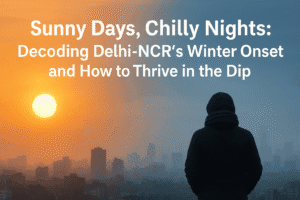
Sunny Days, Chilly Nights: Decoding Delhi-NCR’s Winter Onset and How to Thrive in the Dip
If you’re in Delhi-NCR, your daily wardrobe has likely become a puzzle. The morning sun beckons for light layers, while the evening air carries a biting chill that demands woolens. This is the quintessential character of North India’s early winter: a season of stark contrasts playing out between day and night. The recent dip to a low of 9.6°C, as forecast by the India Meteorological Department (IMD), is more than just a number on a thermometer; it’s a signal that the region is fully in the grip of the cold season, with a specific pattern set to dominate the week ahead.
Beyond the Forecast: A Tale of Two Temperatures
The IMD’s data paints a clear picture. While daytime temperatures are hovering around a comfortable 26-27°C, the nighttime mercury is taking a sharp plunge, settling between 9°C and 11°C for most of the week. This significant diurnal temperature range—the difference between the day’s high and night’s low—is a classic feature of the region’s dry, continental climate during winter.
But what’s driving this phenomenon?
- Radiational Cooling: With mainly clear skies predicted for the coming days, the sun’s energy heats the earth’s surface efficiently during the day. However, at night, without cloud cover to trap that heat, it escapes rapidly back into the atmosphere. This is why the coldest nights are almost always the clearest ones.
- The Fog Factor: The IMD’s forecast of “shallow to moderate fog” in the mornings is a key player. While not yet the dense, disruptive blanket of peak winter, this fog acts as an insulator at night, preventing some heat loss. However, as it dissipates after sunrise, it allows for the rapid cooling of the surface, reinforcing the cycle. The fog is also a visual harbinger of the declining air quality, which brings its own set of challenges.
The Unseen Intruder: Navigating the “Very Poor” Air Quality
While the cold is a tangible sensation, a more insidious companion accompanies it: toxic smog. With an average AQI of 341 (categorized as ‘Very Poor’), the air in Delhi-NCR is a serious public health concern. Readings from areas like Anand Vihar and Akshardham touching 381 highlight the pervasive nature of the problem.
This combination of cold air and pollution creates a dangerous synergy. During winter, a phenomenon called temperature inversion occurs, where a layer of warm air acts as a lid, trapping cooler air—and all the pollutants within it—close to the ground. This trapped cocktail of particulate matter (PM2.5 and PM10), nitrogen oxides, and other toxins poses significant risks, especially during morning walks and outdoor activities.
A Practical Guide to Staying Healthy and Comfortable
Simply knowing the forecast isn’t enough. The real value lies in adapting your daily routine to these conditions. Here’s a human-centric guide to navigating this weather:
- Master the Art of Layering:Ditch the single heavy jacket. Instead, adopt a layered approach:
- Base Layer: Opt for moisture-wicking full-sleeved thermals or cotton tops to keep your skin dry.
- Mid Layer: A light sweater, fleece, or hoodie provides insulation.
- Outer Layer: A windproof and water-resistant jacket is perfect for the chilly mornings and evenings. This allows you to shed layers comfortably as the day warms up.
- Rethink Your Morning Routine:That invigorating morning walk needs a tactical shift.
- Timing is Everything: Postpone your jog or walk until after sunrise, ideally after 9:00 AM. This allows the sun to burn off some of the fog and pollutants.
- Check the AQI: Before heading out, check a reliable AQI app. If it’s deep in the ‘Very Poor’ or ‘Severe’ zone, consider an indoor workout.
- Mask Up: Don’t retire your masks. A good N95 or N99 mask is crucial for protecting your lungs from particulate matter during outdoor commutes or exercise.
- Protect the Vulnerable:The elderly, young children, and those with pre-existing respiratory (asthma, bronchitis) or cardiovascular conditions are exceptionally susceptible. Ensure they:
- Minimize outdoor exposure during early mornings and late evenings.
- Keep indoor spaces well-ventilated when the outside AQI is slightly better, but use air purifiers if possible.
- Stay updated on flu and pneumonia vaccinations in consultation with their doctor.
- Boost Your Immunity from Within:
- Hydrate, Hydrate, Hydrate: The dry, cold air can be deceptively dehydrating. Drink plenty of warm water, herbal teas (like ginger or tulsi), and soups.
- Embrace Seasonal Nutrition: Incorporate winter staples like jaggery (gur), sesame seeds (til), nuts, and green leafy vegetables into your diet. These foods are traditionally known to generate warmth and boost immunity.
- Moisturize Your Body and Home: Combat dry skin with a good moisturizer and use a humidifier indoors to prevent respiratory irritation from dry air.
The Week Ahead: A Detailed Look
While the overarching theme is “sunny days and chilly nights,” subtle shifts are expected:
- Tuesday & Wednesday: The classic pattern is most pronounced. Expect clear, sunny days perfect for outdoor work, but brace for the sharp cold as soon as the sun sets. Shallow fog will be a morning feature.
- Thursday & Friday: A slight warming trend begins, with daytime temps nudging towards 28°C. However, nights remain firmly in the cool range, and fog may become more widespread.
- The Weekend & Beyond: Temperatures stabilize, but the morning fog could become more persistent. By Monday (Nov 24), the minimum temperature is forecast to drop again to 8-10°C, signaling a renewed intensification of the chill.
The Bigger Picture: Embracing the Seasonal Shift
This weather is not an anomaly; it’s Delhi-NCR’s annual transition into the heart of winter. Understanding the “why” behind the cold and the smog empowers us to make smarter decisions. It’s a time to enjoy the gentle warmth of the winter sun, savor seasonal foods, and take proactive steps to safeguard our health.
By dressing strategically, adjusting our schedules, and being mindful of the air we breathe, we can move beyond merely enduring the cold to truly thriving in it. The key is to respect the dip in the mercury and prepare accordingly, ensuring that the winter season is one of comfort and well-being.
You must be logged in to post a comment.