
Stranded in the Gulf: The Day Air India’s UAE Flights Were Halted—And What It Means for Travelers
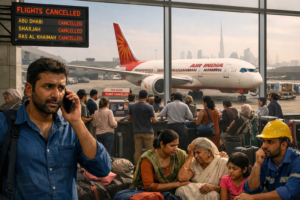
On March 15, 2026, Air India and Air India Express were forced to abruptly cancel nearly all flights to and from the UAE, including all services to Abu Dhabi, Sharjah, and Ras Al Khaimah, due to new directives from UAE airport authorities, leaving thousands of passengers stranded. The only exception was a single, limited round-trip flight on the Delhi–Dubai route operated by each airline. In response, the airlines offered affected passengers full refunds or free rebooking on future flights, while the Indian Embassy in Abu Dhabi issued a travel advisory urging passengers to verify their flight status due to constantly changing schedules. The disruption caused widespread chaos and emotional distress for travelers, many of whom were on urgent journeys, highlighting the fragility of one of the world’s busiest travel corridors and the importance of passenger rights and clear communication during such operational crises.
Stranded in the Gulf: The Day Air India’s UAE Flights Were Halted—And What It Means for Travelers
By a Senior Travel Correspondent Last updated: March 16, 2026
For thousands of Indian expatriates in the United Arab Emirates, Sunday, March 15, 2026, started like any other day. Families were packing last-minute suitcases after the spring break. Business travelers were checking in for flights to Delhi, Mumbai, or Kozhikode. But by mid-morning, a wave of confusion and anxiety swept through the terminals of Abu Dhabi, Sharjah, and Ras Al Khaimah airports.
Air India and its low-cost subsidiary, Air India Express, had pulled the plug on nearly all operations.
While the official statement cited “instructions from UAE airport authorities” and “new airport rules,” the reality on the ground was a chaotic scramble for information. This wasn’t just a routine cancellation; it was a near-complete shutdown of the two airlines’ networks across the Northern Emirates, leaving a trail of stranded passengers and raising urgent questions about the future of one of the world’s busiest aviation corridors.
This is the story of that day, the human impact behind the headlines, and a comprehensive guide for any traveler navigating the turbulent skies between India and the UAE.
The Anatomy of a Shutdown: More Than Just a Delay
The news broke late on Saturday night and early Sunday morning. The message from the airlines was stark: All Air India Express flights to and from Abu Dhabi (AUH), Ras Al Khaimah (RAK), and Sharjah (SHJ) were cancelled. The only lifeline left was a tenuous one—a single round trip on the Delhi–Dubai (DEL-DXB) sector operated by each airline.
To understand the magnitude of this, consider the numbers. The Delhi-Dubai corridor is one of the busiest international routes in the world, handling hundreds of thousands of passengers monthly. However, the cancellation of flights to Sharjah and Ras Al Khaimah is particularly devastating. Sharjah, in particular, is a critical hub for Air India Express, serving as a primary entry point for millions of workers and residents from the South Indian states of Kerala, Karnataka, and Tamil Nadu.
So, what happened? The official line points to “new airport rules.” While airlines and authorities often remain tight-lipped during such operational crises to prevent panic and misinformation, industry insiders suggest these “rules” can range from sudden infrastructure upgrades and security protocol overhauls to airspace congestion management or even staffing shortages on the ground. In the post-pandemic aviation landscape, where airports are often operating at or above capacity, a single technical glitch or a new safety directive from the General Civil Aviation Authority (GCAA) can cascade into a full-blown operational halt.
The Human Toll: Stranded, Confused, and Desperate
Behind the corporate jargon of “revised schedules” and “slot availability” are real people with urgent stories.
Take the case of Naseem Abdulrahman, a construction supervisor from Kannur, who was supposed to fly out of Sharjah on Sunday morning. His father had suffered a stroke back home, and this flight was his ticket to his family. “I got the text at 3 a.m.,” he said in a phone interview from his shared accommodation in Al Nahda. “The airline said it was cancelled, but the website just showed a loading error. I went to the airport anyway because I had no choice. The terminal was full of people like me—some had been there since midnight. No one from the ground staff could tell us when the next flight would be.”
Or the story of the Menon family, residents of Abu Dhabi for over a decade. They had planned a surprise anniversary trip for their grandparents to the Taj Mahal, flying via Delhi. “My grandmother was so excited, she hadn’t slept all night,” recounted Anjali Menon, a university student. “Now we’re just sitting at home, and she’s crying. We can’t afford to book last-minute flights on other airlines; they are three times the price.”
These are the untold narratives of such mass cancellations. It’s not just about logistics; it’s about missed funerals, delayed medical treatments, broken holiday promises, and the financial strain of being stranded in a foreign country where accommodation costs can quickly spiral out of control.
The Single Lifeline: The Delhi-Dubai Round Trip
Amidst the cancellations, the announcement of a single round trip on the Delhi-Dubai sector for both airlines offers a glimmer of hope, but it also highlights the limitations. “Subject to slot availability and prevailing conditions” is the crucial caveat.
For passengers stranded in Dubai, this flight is a potential escape route. However, for those stuck in Ras Al Khaimah or Sharjah, getting to Dubai Airport (DXB) is a challenge in itself. A taxi from Sharjah to Dubai can cost anywhere between AED 150 to AED 250, a significant sum for a blue-collar worker whose daily wage might be a fraction of that. Moreover, this single flight will likely be prioritized for those with the highest-priority needs or those who booked first, leaving thousands more in limbo.
Your Rights and Your Options: A Passenger’s Guide to Rebooking and Refunds
In times like these, information is your most powerful tool. The airlines have offered two primary pathways, but the execution is where things get tricky. Here is a detailed breakdown of how to navigate this crisis.
1. The Full Refund: Cutting Your Losses
If your trip is not urgent, or if you have already made alternative arrangements, opting for a refund is the cleanest solution.
- How to Claim: Do not rush to the airport. The airport is for departures, not for customer service, and going there will likely result in more frustration. Instead, visit the official Air India or Air India Express websites. Look for the “Manage Booking” or “Refund” section typically found on the homepage.
- The Fine Print: Since this is a cancellation initiated by the airline due to external factors, you are entitled to a full refund to the original payment method. You should not be charged any cancellation fees. Be patient; the sheer volume of refund requests can take weeks to process.
- Beware of Scams: You will receive emails and SMS messages regarding your refund. Ensure the links are directing you to the official domain (airindia.in or airindiaexpress.in). Scammers often prey on desperate travelers with phishing links promising fast refunds.
2. Rebooking for a Future Date: Flexibility is Key
For those who must eventually make the journey, rebooking is the best option.
- No Extra Charge: The airline has explicitly stated that rebooking is at “no extra charge.” This means you can shift your ticket to a later date without paying the fare difference.
- Waiting for Slots: The key challenge is that airlines cannot rebook you until they have a confirmed slot and schedule from the UAE authorities. You may have to wait a few days for the situation to normalize.
- Pro Tip: If you rebook, ask for a confirmed booking reference immediately. If the new date is too far out, ask to be placed on a “priority waitlist” for any earlier flights that may open up.
3. The “Involuntary Denied Boarding” Compensation
While not explicitly mentioned in the news report, it’s crucial for passengers to know their rights under international aviation conventions (like the Montreal Convention). If you were at the airport with a confirmed ticket and the flight was cancelled at the last minute without a viable alternative, you may be entitled to care and compensation, which can include meals, hotel accommodation, and communication costs. While “extraordinary circumstances” (like government-mandated airport rules) can exempt airlines from financial compensation, they are still responsible for your care.
The Diplomatic Angle: The Indian Embassy Steps In
The proactive involvement of the Indian Embassy in Abu Dhabi is a significant development. Their travel update serves a dual purpose.
First, it acts as a verification layer. When airlines send out cancellation notices, passengers often wonder if it’s a hoax. An official confirmation from an embassy validates the crisis and cuts through the rumor mill. Second, it provides a channel for escalation. If airlines are unresponsive, expats can now reach out to the embassy’s community welfare wing, which can then liaise with the airline’s headquarters or the UAE’s GCAA on behalf of the distressed nationals.
The embassy’s advice to “verify flight status” is not just a suggestion; it’s a necessity. With schedules being revised by the minute, showing up at the wrong airport at the wrong time will only compound the misery.
Looking Ahead: What Does This Mean for the India-UAE Corridor?
This incident, while disruptive, is likely a symptom of a larger growing pain. The India-UAE air corridor is one of the most robust in the world, fueled by a massive expatriate population, strong trade ties, and increasing tourism.
What we are seeing might be the result of:
- Infrastructure Overhaul: Airports in the UAE are constantly upgrading. A sudden decision to close a runway or a terminal for emergency maintenance could force this kind of schedule crunch.
- Security Protocol Changes: New security screening procedures or customs regulations can slow down the turnaround time for aircraft, forcing airlines to drastically cut the number of movements per day.
- Peak Season Pressure: Mid-March often sees a surge in travel as schools close for spring break. This passenger surge can expose any underlying fragility in the system.
For travelers, the key takeaway is the importance of flexibility. Booking the cheapest, non-flexible fare might save money upfront, but during events like these, it offers no safety net.
Conclusion: Patience in a Time of Chaos
As the sun sets on March 15, thousands of passengers remain in a state of flux, refreshing airline websites and waiting for calls from customer service. The cancellation of Air India and Air India Express flights to the UAE is a stark reminder that in the modern age of air travel, the margin for error is razor-thin.
For those affected, the path forward is clear, if not easy: stay digital (use the apps and websites, avoid the airport chaos), stay informed (follow the official handles of the airlines and the embassy), and stay patient. The backlog will take time to clear, but the airlines, bound by both regulation and reputation, will eventually get passengers to their destinations.
Until then, the skies between India and the UAE remain uncertain—a temporary storm in one of the world’s busiest flight paths.
You must be logged in to post a comment.