
Strait of Hormuz: Iran Opens Critical Maritime Chokepoint to India and Other Friendly Nations Amid West Asia Tensions
Iran has announced it will permit vessels from friendly nations—including India, China, Russia, Iraq, and Pakistan—to pass through the strategic Strait of Hormuz, a critical chokepoint for global energy supplies, amid heightened West Asia tensions. The decision, announced by Iranian Foreign Minister Abbas Araghchi and welcomed by India, follows a UN call to end disruptions that threaten energy and food security. India’s inclusion reflects its successful diplomatic balancing act with all regional parties; in response, New Delhi has set up seven empowered groups to mitigate economic fallout, manage supply chains, and bolster energy resilience. While the opening eases immediate risks for Indian shipping and energy imports, the underlying regional instability remains unresolved, underscoring the need for sustained diplomatic engagement and long-term strategic planning.
Strait of Hormuz: Iran Opens Critical Maritime Chokepoint to India and Other Friendly Nations Amid West Asia Tensions
In a significant diplomatic development that carries profound implications for global energy security and regional stability, Iran has officially announced that it will permit the passage of vessels through the strategic Strait of Hormuz for what it terms “friendly countries,” with India prominently featured on that list. The announcement, made by Iranian Foreign Minister Abbas Araghchi and shared by the Consulate General of Iran in Mumbai, specifically names China, Russia, India, Iraq, and Pakistan as nations whose vessels will be granted passage through one of the world’s most vital maritime corridors.
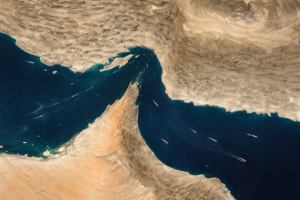
This decision arrives at a moment of heightened tension in West Asia, where the protracted conflict has already sent shockwaves through global supply chains, energy markets, and the broader international economic order. The Strait of Hormuz, a narrow waterway separating the Persian Gulf from the Gulf of Oman, serves as the sole maritime route for approximately one-fifth of the world’s petroleum consumption, making any disruption to its operations a matter of urgent international concern.
Understanding the Strategic Significance
The Strait of Hormuz is not merely another shipping lane—it represents the jugular vein of global energy infrastructure. At its narrowest point, the strait measures just 21 nautical miles across, with shipping lanes only two miles wide in each direction. Through this constricted passage, nearly 21 million barrels of oil pass daily, accounting for roughly 30 percent of all seaborne-traded crude oil and other petroleum liquids. For India, which imports approximately 85 percent of its crude oil requirements, the strait’s accessibility is not a matter of economic convenience but of national necessity.
The Iranian announcement comes on the heels of mounting international pressure, including a direct appeal from United Nations Secretary-General António Guterres, who earlier this week called for the reopening of the strait. In a stark warning about the cascading consequences of its continued disruption, Guterres noted that the “prolonged closure” was already “choking the movement of oil, gas, and fertilizer at a critical moment in the global planting season,” threatening food security alongside energy stability.
The Geopolitical Calculus Behind Iran’s Decision
Iran’s selective opening of the strait represents a carefully calibrated diplomatic maneuver that reveals much about the shifting alliances and fault lines in contemporary West Asian geopolitics. By explicitly designating India, China, Russia, Iraq, and Pakistan as “friendly nations” deserving of passage, Iran has drawn clear distinctions between nations it considers cooperative and those it views as hostile.
The Iranian mission in New York had previously announced on March 25 that “non-hostile vessels” would be permitted passage, provided they “neither participate in nor support acts of aggression against Iran and fully comply with the declared safety and security regulations.” This framing allows Iran to maintain its leverage over the strait while rewarding nations that have maintained diplomatic equilibrium or demonstrated explicit support for Tehran’s position in the ongoing conflict.
For India, inclusion on this list validates the careful diplomatic balancing act that New Delhi has maintained throughout the crisis. Prime Minister Narendra Modi’s government has engaged with all parties to the conflict—maintaining communication channels with Iran, Israel, the United States, and Gulf nations simultaneously. This approach, while criticized by some as insufficiently decisive, has now yielded tangible strategic dividends in the form of assured energy passage.
India’s Multilateral Response
The Iranian announcement coincides with what appears to be a coordinated Indian government response to the broader regional crisis. Documents from the past week reveal that Prime Minister Modi has personally engaged in high-level diplomacy, including a telephone conversation with US President Donald Trump where both leaders stressed the importance of keeping the Strait of Hormuz “open, secure, and accessible.”
More significantly, the Indian government has established seven empowered groups to address the potential long-term implications of the West Asia conflict. Drawing from the institutional framework developed during the COVID-19 pandemic, these groups bring together senior bureaucrats from the Prime Minister’s Office, Cabinet Secretariat, and various ministries to monitor and respond to disruptions across critical sectors.
The empowered groups are tasked with assessing risks to energy supplies and pricing, examining potential disruptions to trade and supply chains, ensuring domestic availability of essential commodities, and developing both short-term and long-term mitigation strategies. Their broad terms of reference reflect the Indian government’s assessment that the current crisis may not be temporary but could instead represent a prolonged period of regional instability with global economic consequences.
Speaking in Parliament, Prime Minister Modi characterized the situation as “worrisome” for India, noting that many ships carrying Indian seafarers had been stranded in the strait and warning that “serious consequences are inevitable” if the disruptions persist. His emphasis on “becoming increasingly self-reliant” as “the only option” suggests that even as India welcomes the Iranian announcement, New Delhi recognizes the fundamental vulnerability of its energy security architecture.
The Human Dimension
Behind the diplomatic maneuvering and strategic calculations lies a human story that often goes untold. The crisis has directly affected the lives of Indian seafarers working on vessels transiting the region. At one point, approximately 20 Indian-flagged vessels with around 540 Indian crew members were stranded or delayed in the western Persian Gulf region. While two Indian LPG vessels, Pine Gas and Jag Vasant, successfully crossed the strait earlier this week, the broader uncertainty has taken a toll on the maritime community.
For the families of these seafarers, the past weeks have been characterized by anxious waiting and incomplete information. The shipping industry, which employs hundreds of thousands of Indian nationals, has faced operational disruptions that extend beyond immediate safety concerns to questions about insurance coverage, crew rotation, and the long-term viability of certain shipping routes.
Economic Implications for India
The economic stakes for India are substantial and multifaceted. Beyond the immediate concern of crude oil supplies, India’s energy security extends to liquefied natural gas, which has become increasingly important as the country transitions toward cleaner energy sources. Fertilizer imports, critical for Indian agriculture, also transit the Strait of Hormuz, creating a direct link between regional stability and domestic food security.
The Indian government’s formation of empowered groups specifically addressing fertilizers, agricultural inputs, and essential commodities reflects an understanding that energy disruptions cascade through the economy in ways that are not always immediately apparent. Rising transportation costs, insurance premiums, and supply chain uncertainty all contribute to inflationary pressures that disproportionately affect vulnerable populations.
Prime Minister Modi’s appeal to state governments to ensure that benefits of welfare schemes reach workers and migrant communities on time acknowledges that economic shocks from the crisis may not be evenly distributed. The comparison to the COVID-19 response suggests that the government anticipates the need for coordinated federal and state action to mitigate hardship.
Regional Ramifications
Iran’s decision to selectively open the Strait of Hormuz reshapes the regional diplomatic landscape in ways that extend beyond immediate maritime passage. For Gulf Cooperation Council countries, which have historically relied on the strait for their own oil exports, Iran’s ability to control access to this waterway represents a persistent source of leverage and vulnerability.
Saudi Arabia and the United Arab Emirates, both major oil exporters, have watched the crisis unfold with particular concern. Their own shipping operations depend on the same narrow passage, and Iran’s willingness to differentiate between “friendly” and “hostile” nations introduces an element of selectivity that could have lasting implications for regional power dynamics.
The United States, which maintains a significant naval presence in the region and has historically committed to ensuring freedom of navigation through the strait, now faces a complex diplomatic situation. The Trump administration’s engagement with India on this issue, including direct communication between the US President and Prime Minister Modi, suggests that Washington views Indian diplomatic engagement as valuable in managing the crisis.
Looking Ahead
While the immediate crisis of blocked passage appears to have been resolved for Indian vessels, the underlying tensions that led to the strait’s closure remain unresolved. UN Secretary-General Guterres’s call to “end the war—immediately” reflects the international community’s recognition that managing symptoms of the conflict, such as maritime disruptions, cannot substitute for addressing its root causes.
For India, the experience of navigating this crisis has reinforced several lessons. First, the importance of maintaining diplomatic relationships across regional divides has been validated by Iran’s explicit inclusion of India among friendly nations. Second, the vulnerability of critical supply chains to geopolitical disruption has underscored the need for continued investment in strategic reserves, alternative sourcing arrangements, and domestic production capabilities.
The seven empowered groups established by the Indian government will likely continue their work well beyond the immediate resolution of the strait’s status, focusing on building resilience against future disruptions. Their recommendations could shape Indian policy across multiple sectors for years to come.
Conclusion
Iran’s decision to open the Strait of Hormuz to Indian vessels represents a positive development in a otherwise concerning regional situation. It reflects the strength of India’s diplomatic engagement and provides temporary relief to energy markets and shipping operations. However, the fundamental challenges that led to the crisis—the ongoing West Asia conflict, the weaponization of critical infrastructure, and the vulnerability of global supply chains to regional instability—remain unresolved.
For India, the coming months will likely require continued diplomatic engagement with all parties to the conflict, sustained investment in energy security infrastructure, and careful management of domestic economic pressures. The empowered groups established to address the crisis will need to transition from emergency response to long-term planning, identifying structural vulnerabilities that extend beyond the immediate situation.
The Strait of Hormuz will remain what it has always been: a narrow waterway through which the world’s energy supplies flow, and a strategic chokepoint where geopolitical tensions find concentrated expression. Iran’s selective opening of the strait offers a moment of respite, but the underlying dynamics that led to its closure remain very much in play. For India and other nations dependent on this maritime corridor, the challenge is not merely to secure passage today, but to build the resilience and diplomatic relationships that can weather whatever disruptions tomorrow may bring.
You must be logged in to post a comment.