
Storm Clouds Gather: Why Chandigarh, Punjab, and Haryana Are Bracing for a Weekend Wrath
A yellow alert has been issued for Chandigarh, Punjab, and Haryana for March 29–30 as a fresh western disturbance is set to end the current spell of above‑normal temperatures and dry weather, bringing thunderstorms, lightning, and gusty winds of 40–60 km/h. While March 27–28 will remain largely dry with partly cloudy skies, the stormy spell is expected to lower maximum temperatures from around 32°C to 28–29°C, posing risks to standing Rabi crops, traffic safety, and power infrastructure, prompting authorities to advise residents to secure outdoor items and stay updated on IMD warnings.
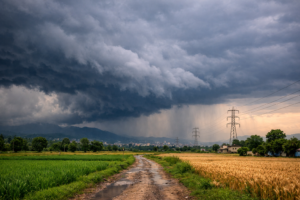
Storm Clouds Gather: Why Chandigarh, Punjab, and Haryana Are Bracing for a Weekend Wrath
The calm before the storm is a cliché for a reason—because it is one of nature’s most unsettling truths. For residents of Chandigarh, Punjab, and Haryana, the last few days have been the epitome of that deceptive peace. With the sun beating down from a largely cloudless sky, temperatures have crept two to four degrees above normal, lulling the region into a sense of early summer.
But if the India Meteorological Department’s (IMD) latest projections are anything to go by, the city of Chandigarh and its surrounding agrarian heartlands are about to swap sunscreen for umbrellas in a dramatic weather flip.
As of Thursday, the Tricity recorded a maximum of 32.4 degrees Celsius—a pleasant but unseasonably warm marker that saw many residents digging out their summer wardrobes a little earlier than usual. The humidity told a similar story, peaking at 75% in the morning before dropping to a dry 34% in the afternoon. It felt like summer was settling in. Yet, lurking behind this warmth is a powerful Western Disturbance, poised to barrel into the Himalayan region starting March 28, promising to rip the “dry” status out of the forecast and replace it with thunder, lightning, and winds that could knock the breath out of anyone caught off guard.
The Weekend Forecast: A Yellow Warning in the Garden City
The IMD’s Meteorological Centre in Chandigarh has issued a yellow alert for March 29 and 30. For the uninitiated, a yellow alert is not a signal to panic, but it is the meteorological equivalent of a raised eyebrow—a “pay attention” sign. It warns of severe weather that could cause disruption if preparedness is lacking.
According to the special bulletin released Thursday, the current dry spell is a ticking clock. Friday and Saturday (March 27-28) will act as the buffer days. Expect partly cloudy skies and maximum temperatures hovering around the 30-degree mark. It will be the kind of weather that tempts you to plan a picnic in the Rose Garden or a long drive to Sukhna Lake.
But Sunday is when the script flips entirely.
From March 29 onwards, the weather is expected to turn aggressive. The forecast predicts light to moderate rainfall, but the real story lies in the accompanying elements: thunderstorm, lightning, and gusty winds. These aren’t just gentle breezes; the IMD is predicting winds of 40-50 km/h, gusting up to 60 km/h. To put that in perspective, 60 km/h is enough to sway high-tension wires, uproot weakly anchored hoardings, and send loose rooftop sheets flying.
Who Feels the Heat (and the Rain)?
While Chandigarh, Mohali, and Panchkula are specifically under the Tricity warning, the disruption is regional. Punjab and Haryana are bracing for identical conditions. The data from Thursday showed just how warm it has been, setting the stage for a volatile clash of air masses.
Patiala logged the highest maximum in Punjab at a sweltering 34 degrees Celsius—4.3 degrees above normal. In Haryana, Nuh was even hotter, touching 35.6 degrees Celsius. When the ground is this warm and a fresh, moisture-laden Western Disturbance arrives, the result is a recipe for intense convective activity. Think of it as a pressure cooker: the heat has built up all week, and the disturbance is about to lift the lid.
Beyond the Forecast: What This Means for the Farmer and the Commuter
A yellow alert might seem routine in the grand scheme of weather events, but for the residents of the northern plains, this shift carries significant weight—especially at this specific time of the year.
For the farmers of Punjab and Haryana, who are currently watching their wheat and other Rabi crops mature, this weather is a double-edged sword. A sudden spell of rain and high winds in late March can be disastrous. “Lodging”—where the crop flattens due to heavy rain and wind—can drastically reduce yield. Moreover, the humidity brought on by the rain can increase the risk of fungal diseases if the weather remains damp post-storm. For those who haven’t yet harvested their early varieties, the weekend could be a nervous wait.
For the urban commuter, the gusty winds are often the biggest menace. The Tricity, known for its lush green canopy, is beautiful in the spring, but those same trees become hazards during high winds. Falling branches, uprooted saplings, and debris scattered across roads are common occurrences during such weather events. The IMD advisory, though not explicitly detailed in the initial bulletin, implicitly calls for caution: securing outdoor furniture, avoiding unnecessary travel during peak storm hours, and maintaining distance from dilapidated structures and electric poles.
The Temperature Drop: A Respite or a Shock?
There is a silver lining hidden in the gray clouds. While the heat has been building steadily, the storm will bring a tangible drop in mercury.
According to the five-day outlook, the maximum temperature in Chandigarh is expected to dip to 29 degrees Celsius on March 29 and further down to 28 degrees Celsius on March 30. That is a welcome relief from the 32.4-degree highs recorded earlier in the week. Minimum temperatures are also expected to settle in the comfortable range of 18 to 19 degrees Celsius.
However, this rapid drop can sometimes catch people off guard. The sudden shift from warm, humid air to cooler, windy conditions is a known trigger for respiratory issues. For parents with young children or elderly family members, this is the time to pull out the light shawls again and ensure that the air conditioning is turned off in favor of natural ventilation—carefully, of course, to avoid the dust and pollen that often precede such storms.
A Historical Context: The Western Disturbance Dance
To truly understand this forecast, one must look at the phenomenon driving it: the Western Disturbance. For those living in North India, this is a term as familiar as the monsoon. These are extratropical storms originating in the Mediterranean region that travel eastward, bringing moisture to the Himalayas and the northern plains.
During the winter, they bring chilling rain and snowfall to the hills. During the transition months of March and April, they act as the great equalizer. They break the monotony of rising temperatures, often causing dramatic weather swings that can see temperatures plummet by 5 to 10 degrees within 24 hours. This particular disturbance, set to influence the region from March 28, is expected to be “fresh” and vigorous, meaning its impact will be felt not just in the hills but deep into the plains of Punjab and Haryana.
How to Navigate the Yellow Alert Weekend
As the weekend approaches, preparation is key to ensuring that this weather event remains a spectacle rather than a crisis.
- Secure Your Surroundings:The gusty winds forecasted (up to 60 km/h) are no joke. If you live in an apartment, ensure that your balcony plants are secured or moved indoors. For those in independent houses, check for loose tiles or garden furniture that could become airborne.
- Stay Connected:The IMD updates are frequent. While the current alert is for Sunday and Monday, the intensity of the disturbance can shift. Keeping an eye on the radar or local news updates is advisable, especially if you have travel plans.
- Traffic and Visibility:Visibility drops significantly during thunderstorms and dust storms. The stretch between Chandigarh and Mohali, often busy with office commuters, could see snarls if the weather hits during peak hours. Driving with hazard lights and maintaining a safe distance is crucial.
- Power Backup:Gusty winds and lightning often lead to power outages. Ensuring that electronic devices are charged, inverters are functioning, and candles or emergency lights are accessible can save a lot of inconvenience.
The Long View: What Comes After the Storm?
The IMD’s current forecast primarily focuses on the March 29-30 window. Historically, after a strong Western Disturbance passes, the region experiences a few days of clear skies and a noticeable drop in night temperatures before the heat begins to build again.
For now, the residents of the Tricity and the broader region of Punjab and Haryana are standing at a climatic crossroads. The next 48 hours will likely be a tale of two seasons: the lazy, dry warmth of early summer, swiftly followed by the dramatic, roaring entrance of a spring storm.
As the mercury drops and the wind picks up, it serves as a reminder that in North India, the weather is rarely predictable. The yellow alert isn’t just a technical term; it’s a nudge to look out the window, appreciate the power of nature, and prepare not with fear, but with a sense of informed respect. Whether you are a farmer praying for the rain to spare the crop, a commuter hoping for a clear road, or simply a resident eager for the cool breeze, the weekend promises to be anything but ordinary.
So, keep the umbrella handy—but hold onto it tight. The storm is coming.
You must be logged in to post a comment.