
Stitching Community: How Calgary’s Booming Indian Boutiques Weave Tradition into the Urban Fabric
The growing demand for Indian traditional clothing in Calgary, particularly during festivals like Diwali, reflects the city’s expanding and diversifying population, driving both established local boutiques and new national chains to expand their presence to meet the needs of a community for whom culturally significant attire serves as a profound connection to heritage and celebration, while also increasingly attracting a broader clientele appreciative of the craftsmanship, thereby weaving cultural traditions directly into the city’s evolving social and economic fabric.
Stitching Community: How Calgary’s Booming Indian Boutiques Weave Tradition into the Urban Fabric
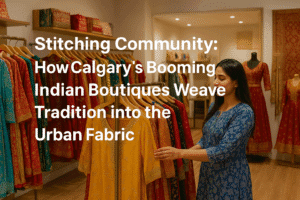
In the vibrant, unassuming plazas of Calgary’s northeast and southeast, a quiet retail revolution is underway. Behind glass doors, a symphony of color unfolds: sequins catch the light, silk saris whisper from their racks, and intricate embroidery tells stories of ancient craftsmanship. This is the world of Indian cultural-wear, and in the weeks leading up to Diwali, these boutiques are more than just stores—they are hubs of community, memory, and identity.
The growth of Calgary’s Indian clothing scene is a direct thread connecting to the city’s evolving demographic tapestry. It’s a story not just of sequins and sales, but of how a growing immigrant population is cultivating a piece of home in a new land, and in doing so, enriching the city’s cultural wardrobe for everyone.
More Than a Outfit: The Cultural Weight of a New Garment
For those outside the culture, the fervent hunt for a new outfit for Diwali might be likened to shopping for a Christmas party or a New Year’s Eve gala. But the analogy falls short. For many in the Indian diaspora, buying new clothes for Diwali is a profound tradition, deeply rooted in symbolism.
“When we were very young, we used to write in essays, ‘Diwali is the festival of lights. We get new clothes,’” recalls Aman Kaur, owner of the boutique Pallavi, with a warm, knowing smile. “Still the feeling is the same.”
This tradition symbolizes renewal, purity, and prosperity. Wearing new, often opulent, clothing is a way to honor the deities, celebrate the victory of light over darkness, and present one’s best self to the world. It’s an outward manifestation of inner joy.
Arpit Chitkara, a University of Calgary student and president of the Indian Students’ Association, articulates this sentiment perfectly. For him, donning a traditional kurta or sherwani is an emotional anchor. “Dressing up is a way we actually love to express ourselves,” he says. “It reflects the warmth of the event.” In the cold of a Calgary autumn, these vibrant fabrics become a wearable hearth, a connection to the warmth and family of home, thousands of miles away.
The Entrepreneurs Weaving the Dream: From Punjab to Calgary
The rising demand for these cultural touchstones has been met by a wave of entrepreneurial spirit. Aman Kaur is a testament to this journey. With over 26 years in the boutique business, she first honed her craft in Punjab, India, before transplanting her expertise to Calgary. Her store, Pallavi, named after her eldest daughter, is a legacy business in the making.
Kaur’s story mirrors that of her community. She started with one location in the southeast, a logical hub for the city’s established South Asian population. But as Calgary grew, so did the dispersal of its residents. Recognizing a need in the northeast, a area experiencing significant growth from new immigrants, Kaur expanded her business a year and a half ago. This wasn’t just a business decision; it was a community-oriented one. “It’s important to meet customers where they are,” she states.
Her success is built on a deep understanding of her clientele’s nuanced needs. Pallavi isn’t just a store for Diwali; it’s a year-round resource for life’s milestones. “This community is famous for, you know, dressing up and big fat weddings … participating wholeheartedly,” Kaur notes. From the grandeur of a bridal lehenga to the elegant simplicity of a shalwar kameez, her stores cater to the entire spectrum of celebration.
Furthermore, Kaur demonstrates remarkable cultural intelligence. She consciously stocks modest wear to serve Muslim women shopping for Eid, recognizing that the desire for beautiful, culturally-appropriate clothing spans faiths within the broader South Asian community. This inclusivity is a key ingredient in her longevity.
A Market Responds: National Brands Take Note of Calgary
The local demand has become so palpable that it’s attracting national attention. Just across the plaza from Pallavi’s northeast location, The Gupta Brothers, a retail chain with deep roots in Ontario, opened its doors earlier this year.
Gunjan Mishra, the store manager, explains the logic behind the westward expansion. “Many of the clients from Alberta used to call us at the Brampton location to get the things shipped,” she says. This persistent pull from the West signaled a clear market gap. The decision to open in Calgary was a direct response to the voices of the community itself, a powerful indicator of the city’s purchasing power and cultural thirst.
The arrival of a established player like The Gupta Brothers validates Calgary’s status as a major hub for the diaspora. It also raises the bar, offering consumers more choice and competition, which in turn fuels a more vibrant and diverse retail landscape. Decked out in festive decorations and offering Diwali discounts, their store represents the formalization and maturation of a market that was once served primarily by small, independent boutiques.
A Tapestry of Customers: Cultural Wear Finds a Universal Audience
A fascinating and perhaps unexpected dimension of this growth is the broadening customer base. While the core clientele remains the South Asian diaspora, both Kaur and Mishra report a growing interest from non-Indian Calgarians.
This isn’t about cultural appropriation, but rather cultural appreciation. The intricate beadwork, the flow of the fabrics, and the sheer artistry of garments like saris and lehengas have a universal aesthetic appeal. Non-Indian customers may purchase these items for multicultural weddings, cultural festivals, or even as unique statement pieces for formal events. They are drawn to the craftsmanship and the story woven into each thread.
This cross-cultural exchange enriches the entire city. It transforms these boutiques from ethnic enclaves into shared spaces of discovery. For a newcomer from India, the store is a comforting piece of home; for a born-and-raised Calgarian, it’s a gateway to understanding a new dimension of their city’s identity.
The Fabric of a Growing City
The bustling aisles of Pallavi and The Gupta Brothers, filled with customers like Arpit Chitkara searching for the perfect Diwali outfit, are a microcosm of modern Calgary. They tell a story of a city that is growing not just in population, but in cultural complexity.
The demand for sequins, saris, and sales is a tangible metric of demographic shift. It shows that as new communities put down roots, they bring their economies, their traditions, and their artistic sensibilities with them. They create businesses, serve unmet needs, and add new hues to the city’s cultural and economic portrait.
This Diwali, as the festival of lights illuminates homes across Calgary, the light will reflect off the sequins on countless new outfits. Each one represents more than just a purchase. It is a stitch in the ever-expanding quilt of a city learning to wear its diversity not just with tolerance, but with celebration. The growth of these boutiques proves that in Calgary, tradition is not just being preserved—it’s being actively tailored for a bright, shared future.
You must be logged in to post a comment.