
Spring Disruption: How a Double Dose of Western Disturbances is Reshaping North India’s Weather This Week
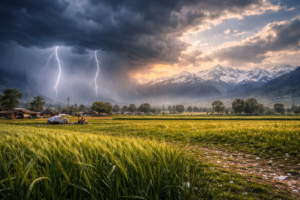
Spring Disruption: How a Double Dose of Western Disturbances is Reshaping North India’s Weather This Week
As the plains of North India began to swelter under the first real heat of the season, the India Meteorological Department (IMD) has issued a significant weather alert that promises to turn the tables dramatically. In a season marked by climatic volatility, a one-two punch of weather systems is set to lash the region, bringing not just relief but also a host of challenges for farmers, tourists, and urban residents alike.
While the national capital recorded temperatures hovering between 32 and 34 degrees Celsius over the weekend—a precursor to the scorching summer ahead—the atmospheric dynamics over the Western Himalayas are telling a different story. The IMD has forecast a fresh and potent Western Disturbance set to activate from April 2, following a pre-existing system that is already drenching the upper reaches. For residents from the snow-clad valleys of Kashmir to the bustling streets of Delhi, the first week of April is shaping up to be a period of dramatic meteorological contrasts.
A Tale of Two Systems: The Forecast Breakdown
The immediate forecast points to a volatile 48 hours. According to the Met department, March 29 and 30 will see a surge in convective activity. Northwest India is bracing for hailstorms, a phenomenon that farmers dread as it can decimate standing crops in a matter of minutes. Central India is not spared either, with predictions of similar hailstorms extending into March 31.
However, the headline event is the fresh Western Disturbance expected to knock on the region’s doors by April 2. Western Disturbances are extratropical storms originating in the Mediterranean region that carry moisture-rich winds toward the Indian subcontinent. While they are crucial for replenishing glaciers and groundwater in the north, a strong disturbance this late in the spring season is a double-edged sword.
The IMD predicts that this system will trigger a fresh spell of snowfall in the high-altitude regions of Jammu and Kashmir, Himachal Pradesh, and Uttarakhand. For the lower hills and the adjoining plains—including Punjab, Haryana, and parts of Western Uttar Pradesh—this will translate into scattered to fairly widespread rainfall accompanied by thunderstorm, lightning, and gusty winds.
The wet spell isn’t confined to the north. The IMD’s extended outlook suggests that Northeast India and adjoining eastern states will continue to experience significant rainfall throughout the week, with isolated heavy falls expected between March 30 and April 1.
The Human Angle: Beyond the Temperature Drop
For the average commuter in Delhi or Chandigarh, a sudden hailstorm or a spell of unseasonal rain might feel like a welcome break from the rising mercury. But for the agrarian economy that underpins the region, this weather pattern is a source of acute anxiety.
India is currently in the midst of the Rabi harvest season. Wheat, the staple winter crop, is ripening in fields across Punjab, Haryana, and Western Uttar Pradesh. Mustard, chickpea (chana), and lentils are also at critical stages of maturation. The IMD’s advisory is clear: farmers need to act swiftly.
In regions like Madhya Maharashtra, Marathwada, and Vidarbha, where the harvest of wheat, sorghum, safflower, and maize is underway, the Met department has urged farmers to move harvested produce to safe, covered storage immediately. The sudden onset of hailstorms could otherwise lead to significant post-harvest losses, diminishing the quality of grain and fetching lower prices in the mandis.
Similarly, in Uttarakhand, where farmers are harvesting mustard, rapeseed, lentil, and pea, the advice is the same: do not leave the produce exposed. For fruit growers, particularly those in the Himalayan foothills and the northern plains, the situation is even more precarious. The IMD has specifically recommended the use of hail nets or hail caps. These protective measures are vital for safeguarding fruits and vegetables from mechanical damage. A single hailstorm can bruise an entire orchard’s output, turning premium apples, citrus fruits, or vegetables into waste overnight.
The Spring Snow Conundrum
While the plains worry about hail, the hills are focused on the snow. The forecast of heavy snowfall over the Kashmir valley on March 30, followed by another spell from April 2, is a critical update for the tourism and horticulture sectors.
For the tourism industry, which was gearing up for the spring bloom in the valley (the famous almond blossoms and tulip gardens), this sudden return of winter conditions is a disruption. Tourists currently in Gulmarg or Pahalgam may find themselves stranded or facing road closures. However, for the long-term health of the region, this late-season snow is a blessing in disguise.
Hydrologists and environmentalists often highlight that spring snow is more valuable than winter snow. It has a higher water content and melts slower, ensuring that the streams, rivers, and groundwater tables are recharged well into the summer months. For a region that relies heavily on hydroelectric power and irrigation, this “white gold” is indispensable. Moreover, the snow cover helps maintain soil moisture for the upcoming Kharif sowing season.
A Look at the Extremes: Heat vs. Cold
The contrast in weather across the country is stark. While the IMD reported that Akola in Maharashtra sizzled at 41.2 degrees Celsius—the highest maximum temperature recorded in the last 24 hours—Najibabad in West Uttar Pradesh recorded a low of 15.6 degrees Celsius. This variance underscores the capricious nature of the transitional period between winter and summer.
In the national capital, the mercury has been steadily climbing. Over the past 24 hours, both minimum and maximum temperatures in Delhi have risen by 1 to 2 degrees Celsius. Yet, the impending Western Disturbance is likely to put a cap on that rise, bringing cloudy skies and the possibility of thundershowers that will temporarily cool the city. This yo-yo effect—shifting from heat to rain and back—is typical of April, but the intensity of the predicted hailstorms makes this particular weather event noteworthy.
Advisory for the Week Ahead
As the country moves through this volatile weather phase, the IMD’s advisories serve as a crucial guide for disaster preparedness and agricultural management:
- For Farmers: The window for harvesting mature crops is narrow. With hail predicted for Punjab, Haryana, Rajasthan, West Madhya Pradesh, and Chhattisgarh, immediate harvesting is advised. For horticulturists, hail protection nets are not just an option but a necessity to prevent economic loss.
- For Residents: The combination of gusty winds, lightning, and hail poses a risk of structural damage and power outages. Residents in affected areas are advised to secure loose objects, avoid sheltering under trees during thunderstorms, and stay updated on local warnings.
- For Travelers: Those planning road trips to the hills, particularly to Himachal Pradesh, Uttarakhand, or Jammu and Kashmir, should check road closure updates before departing. The fresh snowfall could lead to the closure of high-altitude passes like Rohtang or Zojila.
Conclusion: A Season of Extremes
The weather events of early April 2026 serve as a reminder of the intricate climate systems that govern the Indian subcontinent. The Western Disturbance, while often romanticized for the rain it brings to poets and the snow it brings to ski resorts, is a powerful force that requires respect and preparation.
For the farmers in the northern plains, these next few days will be a race against the clouds—a frantic effort to secure the fruits of a season’s labor before nature unleashes its fury. For the residents of the hills, it is a return to winter’s embrace, albeit one that promises water security for the months to come. And for urban dwellers, it is a brief, thunderous interlude in the steady march toward summer.
As the IMD continues to monitor these converging weather systems, the message is clear: vigilance is key. Whether it is protecting a wheat harvest in Punjab, safeguarding apple orchards in Shimla, or simply navigating a rain-soaked commute in Delhi, the forecast for the first week of April demands adaptation, preparedness, and a deep understanding of the land’s climatic rhythms.
You must be logged in to post a comment.