
Northwest India’s Weather Whiplash: From Dry Winter to Snow-Clad Hills and Foggy Plains
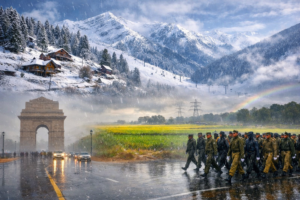
A powerful Western Disturbance has dramatically ended North India’s dry winter spell, delivering the season’s first heavy snowfall to Jammu & Kashmir, Himachal Pradesh, and Uttarakhand—with Gulmarg receiving up to two feet of snow—while bringing crucial rainfall to the plains of Punjab, Haryana, and Delhi, where it disrupted Republic Day parade rehearsals but improved air quality. In the system’s aftermath, the region is now experiencing a sharp 3–5°C temperature drop and bracing for dense fog in Punjab and Haryana from January 24-26, which threatens travel visibility; the weather presents a dual impact by providing essential moisture for winter crops and replenishing Himalayan snowpack, yet also causing transport gridlock, infrastructure damage, and safety risks, with a brief clearer period expected for Republic Day morning before another potential system approaches around January 27.
Northwest India’s Weather Whiplash: From Dry Winter to Snow-Clad Hills and Foggy Plains
A powerful Western Disturbance has dramatically ended North India’s prolonged dry spell, blanketing the Himalayas in snow, bringing crucial rain to the plains, and setting the stage for a cold, foggy run-up to Republic Day celebrations.
The Engine of Change: Understanding the Intense Western Disturbance
The dramatic shift in weather is driven by an intense Western Disturbance, a crucial winter weather system for the subcontinent. These systems originate over the Mediterranean Sea and travel thousands of kilometers eastward, carried by westerly winds. As they approach India via Pakistan, they ingest moisture from the Arabian Sea, transforming into potent systems that deliver cloud cover, rain to the northwestern plains, and vital snowfall to the Himalayan ranges.
This particular disturbance, active from January 22-23, was significant for its intensity and its role in breaking a prolonged dry winter spell. Its effects are now transitioning into a new phase of colder temperatures and dense fog, highlighting the complex, multi-stage impact of these meteorological events.
Immediate Impacts: A Region Transformed
The system’s arrival on January 23rd delivered a swift and visible transformation across North India.
In the Himalayas: A Long-Awaited Winter Blanket The Western Himalayan region received its first substantial snowfall of the season, ending a nearly three-month dry period that had caused concern among farmers and tourism-dependent communities.
- Himachal Pradesh: Popular destinations like Shimla and Manali witnessed their first snow, turning into “winter wonderlands”. Higher reaches in districts like Lahaul-Spiti, Kinnaur, and Chamba saw over a foot of snow.
- Jammu & Kashmir: Gulmarg recorded an impressive 20-24 inches of snow, while fresh snowfall led to the closure of the critical Srinagar-Jammu National Highway and the cancellation of all flights at Srinagar airport.
- Uttarakhand & Ladakh: Hill stations and the plains of Ladakh also received their season’s first snowfall.
In the Northwestern Plains: Rain Ends the Dry Spell Simultaneously, the plains experienced widespread rain, effectively ending a dry period.
- Delhi-NCR recorded its first rain of 2026, with amounts varying across the city—the Ridge area saw 17.4 mm. The rain disrupted the full dress rehearsal for the Republic Day parade on Kartavya Path, with soldiers marching in wet uniforms.
- Punjab & Haryana: Most districts in both states received light to moderate rain. In Punjab, Gurdaspur was the wettest (40.3 mm), significantly improving the state’s rain deficit from -87% to a surplus of +18% in just 24 hours.
The Aftermath: Falling Temperatures and Rising Fog
Following the passage of the rain and snow, the region is bracing for a sharp drop in temperatures and reduced visibility.
- Temperature Dip: The IMD forecasts a 3–5°C drop in minimum temperatures across northwest India, including Delhi, over the next 24-48 hours. Maximum daytime temperatures in the plains are also expected to remain subdued, between 13–17°C.
- Dense Fog Alert: From January 24-26, dense to very dense fog is predicted in isolated pockets of Punjab, Haryana, and Chandigarh. Dense fog may also affect parts of Himachal Pradesh, Rajasthan, and Madhya Pradesh. This poses a significant risk to road and air travel during the morning and night hours.
The following table summarizes the forecasted weather hazards and their expected timing:
| Region | Primary Hazard | Expected Timing | Key Impacts |
| Punjab, Haryana, Chandigarh | Dense to Very Dense Fog | Jan 24 – 26 (Morning/Night) | Severely reduced visibility disrupting road/air travel. |
| Delhi-NCR | Sharp Temperature Drop | Next 24-48 hours | Min. temps to fall by 3-5°C; cooler days expected. |
| Western Himalayas | Heavy Snowfall/Rain | Jan 27-28 (Fresh System) | Travel disruptions, avalanche risk in J&K, Himachal. |
| Northwest Plains | Isolated Hailstorms | During active WD phases | Damage to crops, vehicles, and weak structures. |
A Double-Edged Sword: Relief and Disruption
This weather event presents a classic case of mixed blessings, bringing essential relief alongside significant challenges.
Benefits and Relief:
- For Agriculture: The rain is a boon for the rabi (winter) crop season, providing essential soil moisture for wheat, mustard, and other crops in Punjab and Haryana. In the hills, snowfall is “nutrition” for fruit orchards, crucial for a good harvest.
- For Water Resources & Air Quality: The precipitation helps replenish Himalayan snowpack, a vital long-term water source for rivers. In Delhi, rain and strong winds improved air quality from “severe” to the “poor” range, leading to the lifting of certain pollution curbs.
- For Tourism: The snowfall has revived the winter tourism season in hill stations, bringing cheer and business after a bleak period.
Challenges and Disruptions:
- Transportation Gridlock: The Srinagar-Jammu National Highway was shut due to snow, and over 20 flights were canceled at Srinagar airport. In Himachal, around 700 roads were closed. The looming fog in the plains threatens further travel chaos.
- Infrastructure Strain: Strong winds damaged power infrastructure in Kashmir and affected nearly 4,800 transformers in Himachal, plunging many areas into darkness.
- Safety Risks: The IMD has issued avalanche warnings for mountainous districts of J&K. The combination of hail, lightning, and gusty winds also poses risks of localized damage.
Looking Ahead: Republic Day Weather and Another System
The weather in the coming days will be critical, especially for Republic Day (January 26) celebrations.
- Republic Day (Jan 26): Delhi is likely to see moderate fog during the morning hours, which could impact visibility for early-day events. A brief lull in precipitation is expected for the daytime.
- Fresh Western Disturbance (Jan 27-28): The IMD forecasts a new weather system to affect northwest India from January 27. This could bring widespread rain and snow to the Western Himalayas, with isolated heavy falls in Jammu & Kashmir and Himachal Pradesh on the 27th, and light to moderate rain to the adjoining plains.
For the public, staying informed through official IMD advisories is key. During fog, drivers should use fog lights and reduce speed. During thunderstorms, it’s safest to stay indoors, avoid sheltering under trees, and stay away from metal objects and power lines. The IMD has also advised farmers to drain excess water from fields and gently shake snow off tree branches to prevent damage.
This dramatic weather shift underscores the powerful role of Western Disturbances in shaping North India’s winter—delivering essential water, testing infrastructure and preparedness, and reminding everyone of nature’s commanding presence.
You must be logged in to post a comment.