
North India’s Winter Fury: The Science and Impact Behind the Unseasonal Deluge
A powerful western disturbance has unleashed severe unseasonal weather across North India, with January 28, 2026, seeing heavy rainfall, thunderstorms, hail, and strong winds from Delhi-NCR and Uttar Pradesh to Rajasthan and the Himalayan states, prompting IMD red alerts. This active system has now given way to dense fog and intensified cold wave conditions, disrupting travel and posing a significant threat to standing winter crops like wheat and gram due to hail damage. While the rains temporarily improved air quality, the respite is brief, as a fresh western disturbance is forecast to approach by January 30, likely triggering another round of wet and cold weather from February 1, extending the region’s period of meteorological turmoil.
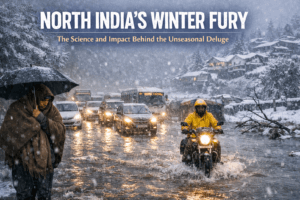
North India’s Winter Fury: The Science and Impact Behind the Unseasonal Deluge
As dawn broke over North India on the morning of January 28, 2026, residents from Delhi to Jaipur were met not with the usual blanket of winter fog, but with the rumble of thunder and the sharp crack of hailstones. A dramatic and unseasonable weather system has transformed the dry, cold winter landscape into one of torrential rain, fierce winds, and whirling ice. This is not a fleeting shower but a significant meteorological event driven by a powerful western disturbance, bringing with it a cascade of alerts, disruptions, and a stark reminder of winter’s dynamic power on the subcontinent.
The Unusual Trigger: A Powerful Western Disturbance
The primary architect of this widespread disruption is an intense western disturbance currently active over northwest India. These are not local storms but large-scale extratropical weather systems that originate far away in the Mediterranean region. Carrying moisture-laden winds, they travel eastward, and upon encountering the Himalayas, they unleash their payload.
This particular system has proven exceptionally potent. The India Meteorological Department (IMD) tracked its influence from January 26-28, forecasting its peak impact on January 27 and 28. Its effects stretched beyond the mountains, driving widespread rainfall, thunderstorms, and gusty winds across the plains of Punjab, Haryana, Delhi, Uttar Pradesh, and Rajasthan. In its wake, the system has left a complex weather scenario: initial rainfall is followed by heightened moisture in the air, which is now condensing into dense morning fog even as cold northerly winds usher in a pronounced cold wave.
A Region-by-Region Breakdown of Impact
The storm’s effects have been widespread but varied, creating a mosaic of challenges across North and Central India.
The National Capital Region (NCR) and Surrounding States bore the brunt of the storm’s fury. On January 27, Delhi and the NCR experienced moderate rainfall accompanied by intense thunderstorm activity and gusty winds reaching 30-40 kmph. By the 28th, while the rain had subsided, the region was gripped by cold wave conditions and dense fog. Neighboring Punjab and Haryana, which were under red and orange alerts just days prior for severe thunderstorms and hail, now face a similar fate of intense cold and low visibility.
The Himalayan Belt experienced the most severe transformation. Himachal Pradesh and Jammu & Kashmir were forecast for heavy rainfall and snowfall, with the IMD warning of hailstorms and winds reaching 40-60 kmph. The situation in Uttarakhand turned particularly hazardous, with fresh snowfall triggering an avalanche warning in high-altitude areas like Badrinath and Kedarnath, leading to school closures as a precaution.
Rajasthan and Madhya Pradesh witnessed a sharp climatic turn. Following thunderstorms and hail, Rajasthan is now in the grip of a severe cold wave, with temperatures dropping 3-4°C below normal and dense fog alerts issued for 11 districts. In Madhya Pradesh, sudden hailstorms in districts like Sehore and Gwalior have raised serious concerns for farmers, as the ice pellets threaten standing wheat and gram crops at a sensitive stage of growth.
Table: Temperature Shift in Select Rajasthan Cities (January 27)
| City | Maximum Temperature (°C) | Minimum Temperature (°C) |
| Jaipur | 21.9 | 13.0 |
| Udaipur | 27.0 | 12.9 |
| Jaisalmer | 20.6 | 8.9 |
| Bikaner | 20.4 | 10.1 |
The Human and Agricultural Toll
Beyond meteorological charts, this weather event has tangible, often severe, consequences for daily life.
- Travel Chaos: Dense fog has become a major hazard, significantly reducing visibility on roads and disrupting schedules for flights and railways across several states. The avalanche risk in Uttarakhand further threatens connectivity in the hills.
- Agricultural Distress: The unseasonal hailstorm is a farmer’s nightmare. Reports from Madhya Pradesh describe hailstones flattening fields of flowering wheat and gram, potentially leading to significant grain shedding and yield loss. This comes at a critical time in the crop cycle, where such damage can be economically devastating.
- A Silver Lining: Cleaner Air: One positive outcome of the turbulent weather has been a noticeable improvement in air quality. The rain and strong winds helped scatter pollutants, offering temporary respite from the persistent winter smog in places like Delhi-NCR.
Looking Ahead: A Prolonged Winter Grip
The current system may be weakening, but winter is not loosening its hold. The IMD forecasts that cold wave and dense fog conditions will persist in isolated pockets over Punjab, Haryana, Chandigarh, Delhi, and Himachal Pradesh until at least January 31. Furthermore, the weather cycle is set to repeat soon. A fresh western disturbance is expected to approach northwest India by the night of January 30, likely triggering another round of scattered rainfall and snowfall from February 1.
Table: Weather Outlook for Delhi-NCR (Jan 29 – Feb 2)
| Date | Expected Conditions |
| Jan 29-30 | Partly to generally cloudy with shallow/moderate morning fog. |
| Jan 31 | Cold conditions likely to intensify. |
| Feb 1-2 | Generally cloudy with a return of light rain, thunderstorms, and gusty winds. |
Navigating the Storm: Practical Advisories
In the face of these conditions, caution is paramount. The IMD and local authorities advise:
- Travel: Exercise extreme caution while driving in fog. Use fog lights, maintain safe distance, and check for delays or cancellations before embarking on long road, rail, or air journeys.
- Safety: Avoid open fields, tall trees, and metal structures during thunderstorms and lightning. Secure loose outdoor objects that could be tossed by strong winds.
- Health & Agriculture: The elderly and vulnerable should take precautions against the cold. Farmers are advised to consult local agricultural departments for guidance on mitigating crop damage from hail and rain.
This extraordinary winter weather phase underscores the complex and dynamic nature of North India’s climate. While western disturbances are a normal winter feature, their intensity and the resulting cocktail of storms, hail, fog, and cold waves create a multifaceted challenge. As one system departs and another gathers on the horizon, it serves as a potent reminder of nature’s force, demanding respect, preparedness, and resilience from all in its path.
You must be logged in to post a comment.