
North India’s Deep Freeze: A Public Health Crisis Unfolds as Temperatures Plunge to 4.2°C
North India’s Deep Freeze: A Public Health Crisis Unfolds as Temperatures Plunge to 4.2°C
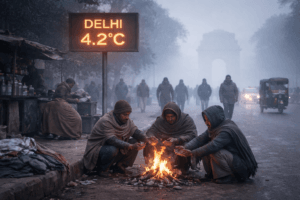
A shiver has seized Northern India, one so profound it has transcended weather reports to become a palpable public health emergency. As thermometers in Delhi registered a chilling 4.2 degrees Celsius on January 10, 2026—the coldest day in the capital in two years—the region has been plunged into a cold wave that is testing infrastructure, resilience, and most critically, the health of millions. This isn’t merely a spell of winter; it’s a systemic stressor exposing the vulnerabilities of populations and healthcare systems alike, with repercussions far more severe than the simple discomfort of a chilly morning.
The Anatomy of a Cold Wave: More Than Just Low Temperatures
A cold wave is defined not just by low temperatures, but by their deviation from the normal seasonal average, their duration, and their accompanied wind chill. Currently, states across Punjab, Haryana, and the National Capital Region are experiencing temperatures 5 to 7 degrees below normal. The India Meteorological Department (IMD) attributes this to dense, persistent fog layers limiting solar insulation and the flow of western disturbances that typically bring milder moisture. This meteorological perfect storm has settled in, with forecasts predicting its grip will hold for at least another 48-72 hours.
The immediate sensory experience—the biting air, the reduced visibility—is just the surface. The real impact is physiological, occurring silently within the human body, and it is here that the crisis takes root.
The Silent Strain: How Cold Attacks the Body
The human body’s response to extreme cold is a complex, often dangerous, survival mechanism. As Dr. Anita Sharma, a prominent Delhi-based cardiologist, explains, “Our bodies instinctively work to preserve core heat. This triggers vasoconstriction—the narrowing of blood vessels—especially in the extremities. For a healthy individual, this might just mean cold fingers and toes. But for someone with hypertension or atherosclerosis, this constriction forces blood through narrower pathways, dramatically spiking blood pressure and increasing the heart’s workload.”
This cardiovascular double-blow is a primary reason for the 20-30% spike in heart attacks and strokes reported by urban hospitals during such cold waves. The heart, already potentially compromised, must pump harder against greater resistance, a strain that can prove fatal.
Concurrently, the respiratory system comes under assault. Cold, dry air irritates the airways, causing them to constrict and inflame. For asthma and COPD patients, this can trigger severe attacks. Furthermore, people tend to congregate indoors in poorly ventilated spaces to conserve heat, creating ideal conditions for the spread of influenza, RSV, and other seasonal respiratory viruses. The cold itself may also dampen immune responses in the nasal passages, making infection more likely. Public health officials are urgently reiterating the importance of influenza and COVID-19 boosters, framing them not just as personal protection but as a civic duty to reduce the burden on strained hospitals.
Vulnerable Populations: A Spectrum of Risk
The risk is not distributed equally. This cold wave draws a stark map of vulnerability:
- The Elderly: Their diminished metabolic rate and often compromised ability to sense temperature changes make them acutely susceptible to hypothermia, which can set in insidiously indoors. Underlying age-related health conditions compound this risk.
- The Homeless and Outdoor Labourers: For the homeless population, street vendors, and construction workers, “staying indoors” is not an option. Their exposure is continuous, making them vulnerable to frostbite, severe hypothermia, and the cumulative health impacts.
- Individuals with Pre-existing Conditions: As noted, those with cardiovascular, respiratory, diabetic, and renal diseases face amplified threats. The cold can disrupt insulin sensitivity and complicate kidney function.
- Young Children: Their higher surface-area-to-body-mass ratio causes them to lose heat faster. Pediatric wards often see an influx of cases of bronchiolitis and pneumonia during such periods.
Beyond Health Advisories: The Ripple Effect on Society
The ramifications of this cold wave extend into the socio-economic fabric of daily life. The Health Department’s guidelines—layering clothing, limiting outdoor exposure, ensuring indoor heating—assume a level of resource access that is not universal.
- Energy and Equity: The surge in energy consumption for heaters and geysers highlights the energy-poverty divide. For low-income families, the choice may be between warmth and other essentials, forcing them to endure dangerous indoor temperatures.
- Disrupted Livelihoods: Delays and cancellations in public transport affect workers across sectors. The informal economy, reliant on daily wages, grinds to a halt for many, creating a secondary economic crisis.
- Agricultural Impact: While not the focus of urban headlines, the cold wave poses a significant threat to rabi crops like wheat and mustard in the surrounding states. A prolonged freeze can damage crops, with implications for food security and farmers’ incomes months down the line.
- A Shift in Consumption: The visible spike in sales of warm clothing, blankets, and hot food and beverages illustrates an adaptive micro-economy, but also underscores the additional financial burden placed on households.
A Forward Look: Building Resilience for Future Winters
This event is a stark reminder that climate vulnerability isn’t only about heatwaves and floods. Extreme cold events, while potentially less frequent in a warming world, can still be severe and debilitating. It calls for a nuanced, long-term public health strategy:
- Targeted Outreach: Proactive, door-to-door wellness checks for the elderly and vulnerable by community health workers.
- Expanded Shelter Capacity: Ensuring adequate, dignified, and heated night shelters for the homeless are non-negotiable.
- Public Awareness 2.0: Moving beyond generic advisories to specific, actionable messaging for different risk groups (e.g., “For hypertensive patients: Monitor your BP twice daily during this period.”).
- Infrastructure Hardening: Ensuring reliable power grids to handle heating demand and protecting water pipelines from freezing and bursting.
Conclusion: A Test of Collective Warmth
The cold wave over Northern India is a multidimensional challenge. It is a meteorological event, a public health crisis, an economic stress test, and a measure of societal compassion. While the temperatures are expected to moderate soon, the lessons must not evaporate with the rising mercury. Protecting the most vulnerable from the cold is not merely a seasonal advisory; it is a critical indicator of a robust and equitable public health infrastructure. As authorities urge vigilance and citizens bundle up, the enduring insight is that resilience to such extremes is built not just in heated homes, but in heated policy debates, warm community action, and the shared understanding that public health is ultimately warmed by the collective will to protect every member of society from the chilling brink.
You must be logged in to post a comment.