
North India Gripped by Winter’s Chill: Travel Chaos, Health Warnings, and the Fight for Clean Air
North India Gripped by Winter’s Chill: Travel Chaos, Health Warnings, and the Fight for Clean Air
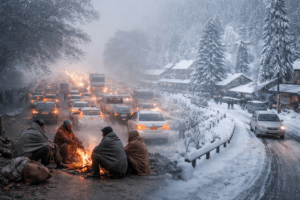
A stark winter reality has descended across North India, transforming the landscape into a tableau of fog-shrouded fields, frozen highways, and anxious travelers. As the India Meteorological Department (IMD) forecasts a dip in Delhi’s temperature to 8 degrees Celsius and predicts snowfall in the higher reaches of Kashmir and Himachal, the region grapples with the multifaceted consequences of a severe cold wave. This isn’t merely a weather report; it’s a snapshot of life grinding against the elements, where plummeting mercury disrupts millions of lives, from grounded flights to shuttered classrooms.
The Unseen Hand: How External Pollution Fuels Delhi’s Winter Haze
While Delhi residents bundle up against the cold, they are battling an invisible, more insidious enemy: toxic air. The city’s Air Quality Index (AQI) remained firmly in the ‘poor’ category (266), a familiar yet alarming winter fixture. However, a critical report from the Centre for Science and Environment (CSE) has reframed the discourse, revealing that in 2025, a staggering 65% of Delhi’s pollution originated from sources outside the city, primarily other NCR districts. This data shifts the blame from a purely local problem to a regional crisis.
The cold wave exacerbates this by creating stable atmospheric conditions that trap pollutants—a phenomenon known as winter inversion. The transported smoke from farm fires, industrial emissions from neighboring states, and dust combine with Delhi’s own vehicular and construction emissions, forming a persistent, health-hazardous smog. This underscores a painful truth: Delhi’s clean air efforts, however stringent, cannot succeed in isolation. The solution demands coordinated, year-round action across state borders, not just emergency measures when the capital chokes.
Travel in Turmoil: From Foggy Delays to Snowbound Halts
The ripple effect of the weather is perhaps most viscerally felt in the transportation sector, turning travel into a test of patience.
- The Fog Factor: IndiGo and other airlines have issued widespread advisories, warning of disruptions due to dense fog blanketing key airports. Reduced visibility has specifically impacted Bhopal and Udaipur, causing potential delays. The advisory extends to several other cities, including Hyderabad and Guwahati, highlighting the nationwide reach of the early morning fog. For passengers, this means uncertain waits, rescheduled plans, and the strain of navigating airports under unpredictable conditions.
- The Snow Blockade: In a more dramatic disruption, Leh Airport has suspended all flight operations due to heavy snowfall. This isn’t just a delay; it’s a complete halt, severing air links to the region. Airlines have attempted to manage the situation by completing boarding formalities in advance, aiming for a swift departure once clearance is granted. This scenario illustrates the raw power of nature over modern infrastructure, isolating communities and stranding travelers with no immediate recourse.
Life Adjusted: Cold Wave Protocols and Human Resilience
Beyond the headlines, the cold wave has triggered a series of grassroots administrative and personal responses.
- Educational Disruption: In Varanasi, authorities have taken the significant step of closing all schools up to Class 8 until January 6, prioritizing children’s health in the face of the severe cold. This decision, mirrored in other districts, disrupts the academic calendar but reflects a necessary caution against exposing young children to health risks like frostbite and respiratory illnesses.
- Health Alerts Amplified: The IMD’s cold day alert for Uttarakhand, Punjab, Haryana, Chandigarh, Bihar, and Madhya Pradesh is not a mere forecast; it’s a public health warning. A “cold day” is declared when the maximum temperature dips significantly below normal, creating dangerous conditions for prolonged outdoor exposure. These alerts push state machinery and citizens to heighten preparedness—running shelters, protecting vulnerable populations, and advising layers of clothing.
- The Himalayan Forecast: While causing travel woes in Leh, the predicted light rain and snowfall in Kashmir, Himachal, and Uttarakhand are a double-edged sword. For agriculture and water reservoirs, winter precipitation is vital. For tourists, it’s a magnet. Yet, for locals, it brings the challenges of blocked roads, power outages, and heightened isolation. The IMD’s parallel warning of ground frost in Uttarakhand further signals risks to crops and the need for protective measures in agriculture.
The Human Insight: Winter as a Great Unequalizer
This convergence of weather events reveals winter in North India as a great unequalizer. For some, it’s a picturesque season of cozy retreats and holiday snow. For millions of others, it’s a period of acute hardship:
- The Urban Poor: For Delhi’s homeless and those in uninsulated homes, a low of 8°C is a threat to survival. The poor air quality compounds this, attacking their respiratory systems with no escape.
- The Daily Wage Earner: Fog, snow, and cold disrupt construction and outdoor work, stripping daily wage laborers of their income precisely when they need more resources for warmth and healthcare.
- The Stranded Traveler: The businessperson missing a critical meeting, the family trying to reach a wedding, the tourist with a tight itinerary—all are held hostage by weather patterns, stressing the fragility of our interconnected schedules.
Navigating the Frozen Weeks Ahead
The IMD’s forecast suggests the cold wave will persist, meaning these challenges are not fleeting. The path forward requires layered responses:
- Regional, Not Just Local, Environmental Policy: The CSE’s pollution report must be a catalyst for enforceable, year-round regional compacts on emission control.
- Robust Travel Communication: Airlines and airports must continue proactive, real-time communication, as seen in the detailed social media advisories, to manage passenger expectations effectively.
- Community-Centric Cold Action Plans: Municipal efforts must go beyond issuing alerts to actively identifying and protecting the most vulnerable citizens through night shelters, health camps, and distribution of winter essentials.
In conclusion, the current weather narrative across North India is a complex web of natural phenomena and human systems in tension. It’s a story where a snowflake in Kashmir can delay a flight in Delhi, and smoke from a farm hundreds of kilometers away can fill a child’s lungs in the capital. As the region bundles up, the true test lies not just in enduring the cold, but in building a more resilient, coordinated, and equitable response to the profound challenges this season unfailingly unveils.
You must be logged in to post a comment.