
‘No Signs of Collapse’: Inside Iran’s Surprising Resilience as US and Israel Intensify Bombardment
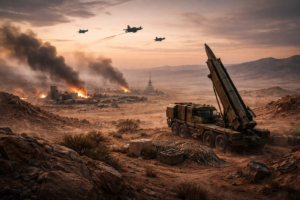
‘No Signs of Collapse’: Inside Iran’s Surprising Resilience as US and Israel Intensify Bombardment
TEL AVIV — The F-35 fighter jets streak across Iranian airspace with near-impunity, their advanced stealth technology rendering them invisible to air defense systems that once formed the crown jewels of the Islamic Republic’s military establishment. Below, precision-guided munitions carve craters into missile facilities, command centers, and suspected nuclear sites with surgical precision.
By any conventional measure, Iran should be reeling. More than 3,500 targets have been struck across the country in just four days—2,000 by American forces and 1,500 by Israeli aircraft. The bombardment represents one of the most intensive aerial campaigns since the 2003 invasion of Iraq, targeting infrastructure that took decades and billions of dollars to construct.
Yet according to Israeli security sources who spoke with the Israeli news site Walla this week, the Iranian government is exhibiting a resilience that has surprised even its adversaries.
“The Iranians have learnt,” a military source told Walla, speaking on condition of anonymity. “They are still functioning militarily at a level that is between moderate and weak, but they are functioning. There is confusion there, there are major difficulties, but there are no signs of collapse.”
It is a sobering assessment that cuts against the triumphalist rhetoric emanating from Washington and Jerusalem—and one that raises uncomfortable questions about what comes next in a conflict that shows few signs of reaching a decisive conclusion.
The Ghost of June 2025: How Iran Adapted to Defeat
To understand why Iran has not crumbled under the weight of American and Israeli bombs, one must look back to June 2025, when Israel and Iran fought their first direct war.
That conflict, which erupted after years of shadow warfare conducted through proxies and covert operations, caught the Islamic Revolutionary Guard Corps (IRGC) in a moment of transition. Israeli intelligence had spent years mapping Iranian air defenses, studying command-and-control networks, and identifying vulnerabilities in the Islamic Republic’s military apparatus.
When the first waves of Israeli aircraft crossed into Iranian airspace, they encountered a defense establishment still operating according to Cold War-era doctrines—centralized, hierarchical, and dependent on a fixed network of radar installations and missile batteries that proved highly vulnerable to electronic warfare and stealth aircraft.
“It was a revelation for them,” explains Dr. Mehdi Hosseini, a former Iranian diplomatic official who now researches strategic affairs at a European university, speaking via video connection. “The IRGC leadership realized that the way they had structured their defenses—everything tied to a central command, everything dependent on radar coverage that could be blinded—was obsolete. They understood that if they continued operating the same way, they would lose everything in the first 48 hours of any future conflict.”
What followed was an urgent, behind-the-scenes reorganization that Western intelligence agencies are still struggling to fully understand. Command authority was decentralized to regional commanders. Communication systems were hardened and diversified, with backup fiber-optic networks laid to reduce dependence on satellite and radio transmissions that could be jammed. Mobile missile launchers were dispersed across the country’s vast desert expanses, hidden in tunnels, warehouses, and civilian areas where targeting them would risk significant collateral damage.
“The June war was a painful lesson,” Hosseini says. “But painful lessons, when they are truly internalized, can be valuable. The Iranians learned that they could not win a symmetric war against American and Israeli technology. So they stopped trying to fight that kind of war.”
The Walla report’s characterization of Iranian military functioning as “between moderate and weak” reflects this new reality. Iran is no longer attempting to maintain the kind of rigid, top-down military structure that characterized its forces before June 2025. Instead, it has embraced a form of organized resilience—a military that can absorb devastating blows to its fixed infrastructure while preserving the ability to strike back in ways that inflict pain on its adversaries and their regional partners.
The Ballistic Missile Calculus: Why Iran Is Targeting the Gulf
Perhaps the most striking revelation in the Walla report concerns where Iranian firepower is landing. Since hostilities resumed on Saturday, Iran has launched approximately 200 ballistic missiles and 100 drones toward Israel—significant numbers, to be sure, but far below what the Islamic Republic is capable of launching.
By contrast, according to the Institute for National Security Studies (INSS), an Israeli think tank affiliated with Tel Aviv University, Iran has fired some 500 ballistic missiles and approximately 2,000 drones toward Gulf Arab states. The United Arab Emirates has been struck by 812 drones and 186 ballistic missiles, with significant barrages also directed at Bahrain, Qatar, Kuwait, Oman, and Saudi Arabia.
The disparity in targeting reflects a strategic calculation that goes to the heart of how this war is being fought—and who is truly bearing its costs.
“Tehran views Israel as its primary enemy,” the INSS report noted, “but concentrates most of its firepower on its closer neighbours.”
The explanation lies in geography and targeting accuracy. For Iran to strike Israel with precision, its missiles must traverse the airspace of multiple countries—Jordan, Saudi Arabia, Iraq—where American and Israeli air defenses are thickly layered. The ballistic missile interception systems deployed across the region, including Patriot batteries and the more advanced Arrow system, have demonstrated kill rates that make successful strikes against Israeli cities a low-probability proposition.
Gulf Arab states, by contrast, are closer to Iranian launch sites and, despite their sophisticated air defenses, present a more accessible target set. The message Tehran is sending to Riyadh, Abu Dhabi, and Manama is unmistakable: your decision to host American bases and coordinate with Israeli air defense systems has made you a target.
“It is a classic deterrence strategy,” says Colonel (Ret.) Yossi Kuperwasser, a former head of the research division in Israeli military intelligence. “Iran cannot defeat Israel militarily. But it can make life unbearable for the Gulf states, and through them, it can create political pressure on the United States and Israel to de-escalate. The question is whether that pressure will work.”
The human toll of this strategy is already evident. An 11-year-old Iranian child was killed in Kuwait by an Iranian missile strike, according to reports—a tragic irony that underscores the indiscriminate nature of the conflict. Iranian-made weapons, launched by Iranian forces, killing an Iranian child in a neighboring country that has been drawn into a war not of its making.
The Regime Change Paradox: What Washington and Jerusalem Say—and What They Do
Against this backdrop of military adaptation and regional spillover, American and Israeli officials have engaged in a confusing public debate about what they are actually trying to achieve.
On Saturday, President Donald Trump delivered a stark message to the Iranian people. “Bombs will be dropping everywhere,” he said. “When we are finished, take over your government. It will be yours to take.”
It was language reminiscent of the maximum pressure campaign that characterized Trump’s first term, when his administration withdrew from the nuclear deal and designated the IRGC a foreign terrorist organization. The implication was clear: the United States was not merely seeking to degrade Iranian military capabilities but to bring about the collapse of the regime itself.
Two days later, Israeli Prime Minister Benjamin Netanyahu echoed the sentiment in an interview with Fox News. “This is going to be a quick and decisive action,” he said, “and we’re going to create the conditions first for the Iranian people to get control of their destiny to form their own democratically elected government.”
Yet even as Trump and Netanyahu spoke of regime change, other voices in their administrations were striking a very different tone. Defense Secretary Pete Hegseth explicitly stated that the campaign was “not a so-called regime change war.” The contradiction reflects a deeper tension within the American-Israeli war effort—one that has significant implications for how the conflict unfolds.
“If this is truly a regime change operation, then the military requirements are enormous,” explains Dr. Sanam Vakil, director of the Middle East and North Africa programme at Chatham House. “You’re not just destroying military targets; you’re attempting to decapitate the leadership, create security vacuums, and empower opposition forces. That requires a scale of commitment—troops on the ground, sustained occupation, nation-building—that neither the United States nor Israel has shown any appetite for.”
The Walla report’s assessment that the Iranian government is “not close to collapse” suggests that, whatever the rhetoric emanating from political leaders, the military campaign as currently constituted is insufficient to achieve regime change. The IRGC’s chain of command remains intact. Succession plans are in place for eliminated commanders. The regime’s internal security apparatus continues to function, preventing the kind of popular uprising that Trump urged.
“Regime change is a political objective, not a military one,” Vakil says. “You can bomb a country back to the stone age and still not achieve regime change if the political conditions aren’t right. Look at Iraq in 1991—we devastated the Iraqi military, but Saddam Hussein remained in power for another twelve years.”
The Human Geography of Resilience
Beyond the strategic calculations and military adaptations lies a more fundamental reality that helps explain Iran’s resilience: the relationship between the Iranian state and Iranian society is far more complex than many in Washington and Jerusalem appreciate.
For decades, Iranian leaders have prepared their population for exactly this kind of conflict. Air raid drills are routine. Civil defense instructions are disseminated through state media. Neighborhood committees, organized by the Basij militia, maintain lists of residents and their skills—who can drive a truck, who has medical training, who owns a generator—that can be mobilized in an emergency.
This infrastructure of resilience was evident during the Iran-Iraq war of the 1980s, when Iranian cities endured years of missile attacks and aerial bombardment without collapsing. It was evident during the widespread protests of recent years, when the regime demonstrated its ability to weather mass demonstrations through a combination of coercion and tactical concessions. And it is evident today, as Iranian civilians go about their daily lives amid the thunder of explosions.
“There is a tendency in the West to see the Iranian regime as fragile, as isolated from its people, as one crack away from collapse,” says Hosseini, the former diplomatic official. “This reflects wishful thinking more than reality. Yes, there is enormous discontent in Iran—economic problems, social restrictions, political repression. But that discontent does not automatically translate into support for foreign-imposed regime change. Nationalism is a powerful force, and when foreign bombs are falling, even critics of the regime rally around the flag.”
The phenomenon is not unique to Iran. The 2003 invasion of Iraq was premised, in part, on the assumption that Iraqis would welcome American forces as liberators. That assumption proved catastrophically wrong. The 2011 intervention in Libya assumed that removing Gaddafi would unlock a democratic transition. Libya remains mired in chaos. The lesson—that outsiders rarely understand the internal dynamics of the countries they seek to transform—has been learned and forgotten multiple times over.
The Regional Reverberations
As the conflict grinds on, its effects are radiating outward in ways that complicate the strategic picture for all involved.
Gulf Arab states, already nervous about their proximity to Iranian missile batteries, are watching the campaign with a mixture of hope and dread. Hope that American and Israeli firepower will degrade a regional rival that has long sought to project power across the Gulf. Dread that the retaliation will fall disproportionately on them, as the targeting statistics already suggest it has.
The UAE, which normalized relations with Israel under the Abraham Accords and has positioned itself as a hub for regional commerce and tourism, finds itself in an especially vulnerable position. More than 800 Iranian drones and nearly 200 ballistic missiles have struck Emirati territory, forcing the closure of airspace, disrupting business operations, and raising fundamental questions about the security guarantees that underpinned the country’s post-Abraham Accords strategy.
“Saudi Arabia and the UAE made a calculation,” says a Gulf-based analyst who requested anonymity to discuss sensitive matters. “They believed that by aligning with the United States and Israel, they would gain security guarantees that would protect them from Iranian retaliation. That calculation is now being tested in real time. The question is whether the United States can deliver on its promises.”
The same question applies to Israel itself. For all its military superiority, Israel remains a small country with limited strategic depth. Its air defenses, while sophisticated, are not infinite. Its economy is already feeling the strain of prolonged conflict. Its international standing, already contested, faces renewed scrutiny as images of destruction in Iran circulate globally.
“The Israelis are discovering that military victory and strategic victory are not the same thing,” says Dr. Amal Saad, a lecturer in politics and international relations at Cardiff University who specializes in Iranian and Hezbollah strategy. “You can destroy 3,500 targets, you can eliminate commanders, you can degrade capabilities—and still find yourself in a prolonged conflict with no clear exit.”
What Comes Next
The Walla report, with its sober assessment of Iranian resilience, arrives at a moment when the trajectory of the conflict remains deeply uncertain. Will the United States and Israel escalate further, expanding their target sets and potentially introducing ground forces? Will Iran continue to absorb strikes while lashing out at Gulf states, or will it attempt a dramatic escalation designed to shift the strategic calculus? Will the Gulf states, battered by Iranian missiles, begin to pressure Washington for de-escalation?
None of these questions has a clear answer. What is clear is that the assumptions that underpinned the decision to go to war—that Iran’s military would quickly crumble, that the regime would face internal collapse, that regional partners would remain secure—have not been borne out by events.
“The Iranians have learnt,” the Israeli military source told Walla. It is a simple statement, but one that carries profound implications. In war, learning matters. Adaptation matters. Resilience matters. And right now, despite the devastation raining down on their country, the Iranians are demonstrating all three.
You must be logged in to post a comment.