
Nipah Virus Resurfaces in India: A Global Health Alert as Thailand Bolsters Defenses
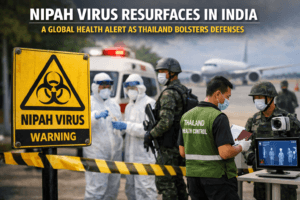
Nipah Virus Resurfaces in India: A Global Health Alert as Thailand Bolsters Defenses
A hospital in West Bengal becomes ground zero for a deadly virus with no cure, testing international pandemic preparedness once more.
India is racing to contain a dangerous Nipah virus outbreak in the state of West Bengal, with five confirmed cases sending ripples of concern across Asia and prompting neighboring Thailand to escalate its national surveillance to a high alert status. The outbreak, centered near Kolkata, has a chilling hallmark: three of the five infected individuals are healthcare workers—a doctor, a nurse, and a health worker—all linked to the same private hospital. This pattern of nosocomial, or hospital-based, transmission is a grim reminder of the virus’s ability to exploit human contact chains, turning medical facilities into amplifiers of disease.
In Bangkok, the Department of Disease Control (DDC) has activated a coordinated defense. “Thailand remains on high alert and is strengthening preventive measures by integrating surveillance and preparedness across all relevant sectors through the One Health approach,” the DDC stated. This strategy, which recognizes the interconnected health of people, animals, and the environment, is now the frontline protocol against a pathogen that lives in bats, jumps to humans via contaminated food or animals, and then spreads person-to-person.
Anatomy of an Outbreak: West Bengal, January 2026
The current cluster began in the town of Barasat, approximately 25 kilometers from Kolkata. The initial cases were two nurses from a private hospital who developed severe symptoms after caring for a patient. This index patient died before a Nipah diagnosis could be confirmed, but is considered the suspected source. Following them, a doctor, another nurse, and a health worker from the same facility tested positive.
As of January 23, nearly 100 close contacts have been quarantined and are under observation. The response has been swift and extensive; health official Narayan Swaroop Nigam reported that 180 people had been tested, with 20 high-risk contacts isolated. All tested negative initially but will be retested after a 21-day quarantine, respecting the virus’s notoriously variable incubation period.
The infected healthcare workers have been transferred to a specialized infectious diseases hospital in Kolkata. One female patient remains in very critical condition, while others, including a male nurse, are showing signs of improvement. The Indian government has deployed a national joint outbreak response team, and advisories have been issued to all states to enhance surveillance for acute encephalitis, especially in patients with travel history to West Bengal.
The Nipah Virus: A Persistent and Lethal Foe
Nipah virus is not a new enemy. First identified in 1999 during an outbreak that sickened pig farmers in Malaysia and Singapore, it has since established a worrying pattern of recurrence in South Asia.
- Origins and Transmission: The virus’s natural reservoir is the fruit bat (genus Pteropus), also known as the flying fox. Humans typically become infected through:
- Direct contact with infected bats or their excretions.
- Consuming food products contaminated by bats, such as raw date palm sap or fruit.
- Contact with infected animals, like pigs, that act as intermediate hosts.
- Human-to-human transmission through close contact with an infected person’s bodily fluids, such as saliva, urine, or respiratory droplets. This is what makes hospital settings particularly vulnerable.
- The Clinical Picture: From Fever to Fatal Encephalitis: The infection often begins deceptively with non-specific, flu-like symptoms: fever, headache, muscle pain, vomiting, and sore throat. This makes early detection extremely challenging. The disease can then progress rapidly in two severe directions:
- Acute respiratory infection, including severe cough and pneumonia.
- Fatal encephalitis—inflammation of the brain. This leads to neurological symptoms like dizziness, drowsiness, altered consciousness, seizures, and coma, which can develop within 24-48 hours.
The most alarming statistic is its lethality. The case fatality rate is estimated at 40% to 75%, varying with the quality of local healthcare and outbreak management. Survivors are not guaranteed a full return to health; approximately 20% suffer long-term neurological consequences such as seizure disorders and personality changes.
Nipah Virus Outbreaks: A Comparative History
| Location | Year | Key Characteristics | Source |
| Malaysia/Singapore | 1999 | First recognized outbreak; linked to pig farms; led to the culling of over 1 million pigs. | |
| Bangladesh/India | 2001-Present | Nearly annual outbreaks; primary route is consumption of date palm sap contaminated by bats; significant human-to-human transmission. | |
| West Bengal, India | 2001 & 2007 | Previous outbreaks in the same state preceding the current 2026 event. | |
| Kerala, India | 2018-2025 | Reported a total of nine outbreaks since 2018, showing a new, recurrent hotspot in southern India. | |
| West Bengal, India | 2026 (Current) | Healthcare-associated cluster; five confirmed cases including medical staff; nearly 100 contacts quarantined. |
The One Health Defense: Thailand’s Proactive Strategy
Thailand’s heightened alert is not merely reactive border screening. It is a systemic mobilization based on the One Health framework. This approach acknowledges that a virus emerging from bats in West Bengal is a threat that requires coordinated action from veterinarians, wildlife experts, environmental agencies, and human health departments.
While Thailand has not reported any Nipah cases, the presence of the Pteropus fruit bat within its borders means the ecological conditions for a potential spillover exist. The DDC’s integrated surveillance aims to detect any unusual patterns in animal or human health at the earliest possible moment.
For the public, the advice is clear and practical, focusing on prevention at the source:
- Avoid consuming raw date palm sap or any fruit that may have been contaminated by bats.
- Thoroughly wash and peel all fruits before eating. Any fruit with signs of bat bites should be discarded.
- Avoid contact with sick animals, particularly bats and pigs.
- Practice rigorous hand hygiene, especially when caring for sick individuals.
The Critical Gaps: Treatment, Vaccine, and Global Preparedness
The fight against Nipah is hampered by two critical absences: there is no licensed specific treatment and no vaccine for humans or animals. Patient care is “supportive,” meaning doctors can only manage symptoms—providing oxygen for respiratory distress, treating secondary infections, and using anti-seizure medications for encephalitis—while the body fights the virus.
This therapeutic void places immense importance on early detection and strict infection control to prevent spread. The World Health Organization (WHO) has classified Nipah as a priority disease in its Research and Development Blueprint, urging accelerated work on countermeasures. There is a glimmer of progress in the pipeline:
- m102.4: A monoclonal antibody that has been used on a compassionate basis and has completed Phase 1 clinical trials.
- Remdesivir: This broad-spectrum antiviral has shown protective efficacy in animal studies and is reportedly being used to treat patients in the current West Bengal outbreak.
A Test of Vigilance in an Interconnected World
The Nipah virus outbreak in West Bengal is a stark stress test for global health security. It demonstrates how a rare but deadly zoonotic pathogen can swiftly move from a bat reservoir into a human community and then exploit our healthcare systems to amplify its reach. The high fatality rate and lack of a cure elevate it from a local tragedy to a subject of international concern.
Thailand’s proactive, One Health-driven response model offers a template for regional preparedness. However, the ultimate solutions—a vaccine and effective antivirals—remain in the future. For now, the world’s best defenses are surveillance, swift containment, public awareness, and a deep respect for the complex ecological pathways that allow such viruses to cross from wildlife into human populations. The events in Kolkata are a reminder that in our interconnected world, an outbreak anywhere requires vigilance everywhere.
You must be logged in to post a comment.