
Navigating Tamil Nadu’s Misty Mornings and Sunny Days: Your Complete Weather Guide Until Mid-February
From February 9th through at least February 14th, Tamil Nadu is experiencing a characteristic late-winter weather pattern, where several northern and western districts—including Vellore, Salem, Erode, and the Nilgiris—are waking up to moderate morning fog and mist until February 12th, reducing visibility for early commuters. Despite these damp mornings, the state is under a persistent dry spell with no rainfall forecast, leading to gradually rising daytime temperatures that are expected to increase by 1-2 degrees Celsius and result in warmer afternoons. This stable yet dichotomous condition, caused by clear nights that foster fog formation and sunny days that build heat, prompts advisories for cautious travel during morning hours and for residents to stay hydrated and avoid peak afternoon sun exposure.
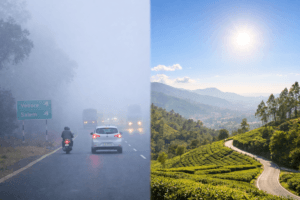
Navigating Tamil Nadu’s Misty Mornings and Sunny Days: Your Complete Weather Guide Until Mid-February
As the sun struggles to pierce through the thick, white veil enveloping the highways of Vellore and Salem, residents across Tamil Nadu are adapting to a familiar seasonal signature: the morning fog. According to the latest forecasts from the Regional Meteorological Centre (RMC), this pattern of misty dawns followed by increasingly warm, dry days is set to define the state’s weather narrative until at least February 14th. This isn’t just a simple weather report; it’s a snapshot of a transitional phase that impacts daily routines, travel safety, health, and even local agriculture.
The Fog Belt: Where and When to Expect Reduced Visibility
The phenomenon isn’t uniform across the state. A distinct “fog belt” is expected to persist over several interior and western districts until Wednesday, February 12th. This belt primarily encompasses the northern and western regions, where topography and cooler nighttime temperatures create ideal conditions for radiation fog.
Districts under the foggy spotlight include:
- Northern Arc: Ranipet, Vellore, Tirupattur, Krishnagiri, and Dharmapuri.
- Western Corridor: Salem, Erode, Dindigul, and the Nilgiris.
In these areas, moderate fog is predicted between 4:00 AM and 8:30 AM, potentially reducing visibility to a few hundred meters. This has tangible implications for the thousands who rely on early-morning travel. The Salem-Coimbatore Highway, stretches of National Highway 44 through Krishnagiri, and the ghat roads in the Nilgiris require particular caution. Motorists are advised to use low-beam headlights, maintain generous following distances, and avoid high speeds.
Even the coastal plains aren’t entirely spared. Chennai and its neighboring districts—Tiruvallur, Chengalpattu, and Kancheepuram— are likely to experience lighter, misty conditions at dawn. Here, the effect is less about dense fog and more about a hazy start, with the sun burning through the moisture relatively quickly, leading to partly cloudy skies.
The Persistent Dry Spell: Reading Between the Isotherms
While the mornings are damp with mist, the overarching story is one of pronounced dryness. The RMC has categorically ruled out any significant rainfall activity for Tamil Nadu, Puducherry, and Karaikal until the weekend of February 14th. This dry spell is driven by stable atmospheric conditions—a lack of any strong, moisture-laden weather systems like troughs or cyclonic circulations over the Bay of Bengal.
This absence of rain has a dual consequence. Firstly, it allows for clear night skies, which facilitate rapid terrestrial radiation. The ground loses heat quickly after sunset, cooling the air above it to its dew point and forming fog—explaining the juxtaposition of foggy mornings and dry days. Secondly, the uninterrupted daytime sunshine leads to a gradual but steady rise in maximum temperatures.
The Thermal Climb: Warmer Afternoons on the Horizon
Residents should prepare for a subtle but noticeable warming trend. Weather models indicate a gradual increase of 1 to 2 degrees Celsius in daytime temperatures across many interior districts by mid-week. While this may not sound drastic, its effects are cumulative.
- Urban Impact: In metropolitan areas like Chennai, Coimbatore, and Madurai, the urban heat island effect can amplify this rise. Concrete and asphalt store heat, making afternoons in city centers feel warmer than the official readings from airport observatories.
- Human Health: This combination of dry air and increasing heat elevates the risk of dehydration and heat fatigue, especially for vulnerable populations. Health officials consistently advise:
- Increased Hydration: Consuming water and electrolytes beyond thirst.
- Sun Avoidance: Limiting direct exposure between 11:00 AM and 3:00 PM.
- Protective Measures: Using umbrellas, hats, and breathable, light-colored clothing, particularly for outdoor workers, the elderly, and children.
Beyond the Forecast: The Human and Environmental Context
A truly valuable weather update moves beyond numbers to explore context. This persistent dry, warming phase is typical for Tamil Nadu in February, which often acts as a bridge between the cooler northeast monsoon aftermath and the scorching pre-summer period.
- Agricultural Pulse: For farmers, especially in regions where the northeast monsoon was deficient, this extended dry period necessitates careful water management for standing crops and horticulture. The morning fog provides minimal soil moisture but does offer some foliar relief to plants, reducing transpiration stress briefly.
- Water Resources: The dry spell underscores the importance of water conservation efforts in reservoirs and urban settings, as the next major rainfall season is months away.
- Daily Rhythm: The pattern dictates a new daily rhythm for many: cautious, slow commutes in the early hours, followed by adaptations to warmer afternoons. It influences everything from construction timelines to outdoor event planning.
The Week Ahead: A Consolidated Outlook
Here’s a succinct day-by-day guide for planning your week:
- Feb 10-12: Misty mornings peak. Dense fog in western/northern districts, light mist in coastal areas. Significant travel delays possible on highways before 9 AM. Warm, sunny afternoons.
- Feb 13-14: Fog likely begins to dissipate. Visibility conditions should slowly improve as nighttime temperatures see a minor fluctuation. The dry weather holds firm, with afternoon temperatures remaining above seasonal averages.
- Looking Beyond: The forecast suggests a continuation of stable, dry weather. Any significant change would require the development of a new weather system over the Bay, which is not currently on the horizon.
Frequently Asked Questions (FAQs)
Q: Is this late-season fog unusual? A: Not at all. February is historically prone to morning fog in interior Tamil Nadu due to clear skies and cool nights. It’s a standard climatic feature.
Q: Why is it so dry if there’s fog every morning? A: Fog is a result of local moisture (from soil, vegetation, water bodies) condensing near the ground. A lack of rainfall indicates an absence of large-scale atmospheric moisture or weather systems needed for precipitation.
Q: What’s the difference between mist and fog? A: It’s primarily about visibility. Mist reduces visibility to between 1 and 2 kilometers. Fog is denser, reducing visibility to below 1 kilometer. The western districts are expecting fog, while coastal areas will see mist.
Q: How should I drive safely in these conditions? A: Use low-beam headlights or fog lights (never high beams), reduce speed, increase following distance, listen for traffic you can’t see, and use windshield wipers and defrosters. If visibility drops extremely low, consider pulling over safely until it improves.
In essence, Tamil Nadu is navigating a classic late-winter weather phase. By understanding the “why” behind the fog and the heat, residents can move beyond merely checking the forecast to intelligently adapting their days—ensuring safety in the serene, white mornings and comfort under the steadily strengthening sun.
You must be logged in to post a comment.