
More Than Just a Title: How India’s U17 Women Conquered an U19 Tournament and Sent a Message to Asian Football
More Than Just a Title: How India’s U17 Women Conquered an U19 Tournament and Sent a Message to Asian Football
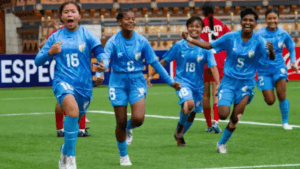
The final whistle at Pokhara Rangasala Stadium on February 7, 2026, didn’t just signal India’s 4-0 victory over Bangladesh in the SAFF U19 Women’s Championship final. It marked the culmination of a bold gambit, a statement of intent, and a masterclass in defying expectations. In a scenario where they were not just the underdogs but also the youngest team in the tournament by two years, India’s U17 Women’s National Team—the “Young Tigresses”—didn’t just participate; they dominated, lifting a trophy that, by age category, shouldn’t have been theirs to win.
The Context: A Calculated Risk with a Clear Vision
The decision by the All India Football Federation (AIFF) to send a U17 squad to an U19 regional championship was initially met with skepticism. After all, the physical and experiential gap between 17 and 19-year-olds in football can be cavernous. Critics wrote them off, viewing it as a potential confidence-shattering exercise ahead of the crucial AFC U17 Women’s Asian Cup later in the year.
However, this move was a stroke of strategic genius from a developmental perspective. The coaching staff, led by the unnamed tactician who prepared this squad, understood that true preparation isn’t about easy wins; it’s about being stretched, challenged, and forced to adapt. The SAFF U19 championship presented a perfect high-stakes, competitive environment where technical skill and tactical intelligence would be tested against physically more mature opponents. It was a laboratory to see if the team’s philosophy could hold up under pressure.
The Final: A Display of Tactical Maturity Beyond Years
The scoreline—a commanding 4-0—tells only part of the story. The true narrative was written in the manner of victory. From the first whistle, India didn’t just play; they imposed a system.
Possession with Purpose: Unlike many youth teams that rely on frantic energy, India played with a composed, metronomic rhythm. They dominated possession not for its own sake, but to control the game’s tempo. Players like midfield orchestrators Alva Devi Senjam and Pritika Barman were pivotal, constantly offering passing triangles and switching the play with an awareness that belied their age. They didn’t just pass the ball; they manipulated the Bangladeshi defensive structure, using width to stretch them and creating gaps through patient build-up.
The Intelligence of Movement: The first goal, scored by captain Julan Nongmaithem just before half-time, was a testament to this coached intelligence. It wasn’t a moment of individual brilliance but a structured team move. Alva’s cross found Pritika arriving unmarked at the far post—a well-rehearsed set-piece or pattern of play. Instead of shooting from a tight angle, Pritika displayed remarkable poise to cut the ball back across the goalmouth, where Julan finished clinically. This sequence highlighted a team thinking two steps ahead, a sign of maturity ingrained on the training ground.
Exploiting the High Press and Mental Errors: India’s later goals underscored a different kind of maturity: game intelligence. The penalty, won by the relentless Alva, resulted from pressing a hesitant goalkeeper—a direct reward for enforcing a high-intensity system. The third goal, a gift from a goalkeeper error pounced upon by the alert Pearl Fernandes, showed a squad switched on and ready to capitalize on any lapse. The fourth, finished calmly by substitute Anwita Raghuraman, was the product of continued attacking fluidity even when the game was won.
Key Players Who Stepped Up
While it was a complete team performance, certain individuals embodied the triumph:
- Munni (Goalkeeper): Awarded Best Goalkeeper of the Tournament, her clean sheet in the final was as much about her command of the area and distribution as it was about saves. Her decisive rush that forced Trishna Rani’s miss in the second half was a game-changing moment.
- Alva Devi Senjam: The engine of the team. Involved in at least two goals, her work rate, vision, and technical quality on the left flank made her unplayable. She was the primary link between midfield and attack.
- Julan Nongmaithem (Captain): Led by example. Her opening goal broke the tension and set the team on its way. As a leader, she ensured the team played without fear despite the age disparity.
- The Defensive Unit: Players like Thandamoni Baskey and Divyani Linda provided a disciplined, impenetrable base. They played with a focus that gave Bangladesh, a team that had beaten them 2-0 in the group stage, “little room to breathe.”
The Bigger Picture: What This Victory Truly Means
This win transcends a regional trophy. It is a multi-layered success story for Indian women’s football.
- A Blueprint for Development: The AIFF’s gamble paid off spectacularly. It proves that investing in technical and tactical coaching from a young age can compensate for physical disadvantages. This model of “playing up” could become a cornerstone of youth development, preparing players for higher levels of competition mentally and strategically.
- Massive Confidence Boost: Entering the AFC U17 Asian Cup, these Young Tigresses now know they can compete with and dismantle older, supposedly stronger teams. The psychological edge gained from such a dominant tournament win, including avenging their group-stage loss, is immeasurable.
- Depth and Future Promise: The fact that impact substitutes like Anwita Raghuraman could come on and contribute significantly points to a healthy squad depth. These players are not just the future of the U17 team; they are the core of the future U20 and senior national teams.
- A Cultural Shift: This victory challenges the old narrative of Indian teams being physically overmatched or tactically naive. It announces the arrival of a new generation: technically proficient, tactically astute, and psychologically resilient.
The Road Ahead: Asian Cup and Beyond
The SAFF U19 title is a milestone, not the destination. The real test awaits at the AFC U17 Women’s Asian Cup, where they will face the continent’s elite in their own age group. The lessons from Pokhara—the ability to handle pressure, execute a game plan against robust opponents, and maintain composure—will be invaluable.
The triumph in Nepal is a beacon. It shows that with the right preparation, philosophy, and fearlessness, Indian women’s football has the potential to not just participate in Asian football, but to compete and conquer. They weren’t just blanking Bangladesh on a cold February night; they were writing a new chapter, one where age is just a number, and the future is painted in the bold, confident strokes of the Young Tigresses.
You must be logged in to post a comment.