
Kashmir’s Winter Whimsy: A Tale of Rising Nights, Snowy Peaks, and the Valley’s Seasonal Rhythm
In early February 2026, Kashmir experienced a distinctive weather paradox characterized by a significant rise in nighttime temperatures across the valley—with Srinagar seeing a 5.5-degree Celsius increase and Pahalgam a 7-degree jump—followed by a sharp drop in daytime temperatures due to fresh snowfall in higher reaches like Gulmarg and Sonamarg. This pattern, driven by cloud cover and western disturbances, created the unusual sensation of milder nights but colder, overcast days. While Gulmarg remained the coldest recorded spot at -6.5°C, the fresh snow benefitted winter tourism and the region’s crucial water reserves. Occurring during the traditional ‘Chillai Khurd’ period—the 20-day “small cold” that follows Kashmir’s harshest winter—this event highlighted the valley’s nuanced seasonal rhythms, where microclimates and cultural weather lore intertwine, impacting agriculture, daily life, and the local economy in complex ways.
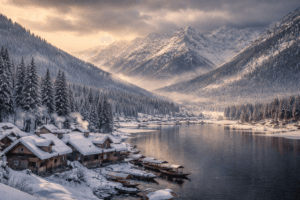
Kashmir’s Winter Whimsy: A Tale of Rising Nights, Snowy Peaks, and the Valley’s Seasonal Rhythm
An in-depth look at the recent temperature swing, its implications, and the enduring cultural tapestry of Kashmir’s winter.
Beneath a dense canopy of clouds, the Kashmir Valley presents a paradox. As dawn broke on February 7, 2026, residents awoke to a slight, unexpected warmth in the night air, only to brace for a day chilled not by the usual sharp cold, but by the soft, insulating silence of fresh snow in the high mountains. This recent meteorological event—a rise in minimum temperatures coupled with a dramatic drop in daytime highs—is more than just a weather bulletin. It is a chapter in the Valley’s enduring story with winter, a narrative woven with cultural lore, ecological nuance, and the quiet anticipation of its people.
The Temperature Flip: Decoding the Data
The numbers tell a compelling story of contrast. Over a single night, from February 5 to February 6, Srinagar, the summer capital, experienced a significant jump of 5.5 degrees Celsius in its minimum temperature, moving from a frosty -2.5°C to a relatively milder 3.0°C. This pattern echoed across the region:
- Pahalgam: A dramatic seven-degree rise, from -7.5°C to -0.5°C.
- Gulmarg: Despite the rise, it retained its title as the valley’s coldest spot at -6.5°C.
- Other stations like Qazigund, Kokernag, and Kupwara also recorded minimums hovering near or just above the freezing point.
This widespread nocturnal warming is typically influenced by cloud cover, which acts like a blanket, trapping the earth’s radiated heat. However, the twist in this tale emerged from the higher reaches. Fresh snowfall in Gulmarg, Sonamarg, and surrounding alpine areas, followed by a drizzle in the plains, reversed the script for daytime temperatures. The thick cloud cover that provided nighttime warmth also blocked the sun’s rays, while the precipitation itself had a cooling effect. This resulted in a day where the mercury struggled to climb, creating a peculiar sensation—a warmer night followed by a colder, grey day.
Beyond the Thermometer: The “Why” and The Impact
This weather pattern is a classic interplay of western disturbances—storm systems originating from the Mediterranean region—and the Valley’s unique topography. A disturbance likely brought in moisture-laden clouds, raising minimum temperatures initially. As it interacted with the Pir Panjal and Greater Himalayan ranges, the air was forced to rise, cool, and condense, leading to precipitation in the form of snow at higher altitudes.
The implications of this are tangible and layered:
- For Tourism and Economy:For Gulmarg, the fresh powder is a boon. As a premier ski resort, its economic heartbeat syncs with snowfall. The fresh cover extends the season, revitalizing ski instructors, hoteliers, gondola operators, and countless local businesses. InSonamarg, it paints a pristine picture, appealing to winter photographers and adventure tourists. Conversely, the chilly, overcast day in the plains might temporarily slow down casual sightseeing, illustrating how microclimates within the valley dictate different economic realities.
- For Agriculture and Horticulture:The apple growers of Kashmir watch such patterns closely. A stable snowpack in the mountains is a frozen reservoir, crucial for spring and summer irrigation. This snowfall, therefore, is a promising deposit into the valley’s water bank. However, volatile temperature swings can be a threat. A sharp rise in minimum temperatures, if sustained, can risk triggering premature bud-break in orchards, making them vulnerable to asubsequent frost—a danger that the current cloud cover may be mitigating.
- For Daily Life and Culture:This event occurred during a specific cultural calendar: the onset of‘Chillai Khurd’ (the small cold), the 20-day period that follows the harshest 40 days of ‘Chillai-Kalan’. Kashmiris traditionally categorize their winter into these three phases: * Chillai-Kalan (Dec 21 – Jan 31): The severe winter, where temperatures plunge and water bodies often freeze. * Chillai Khurd (Feb 1 – Feb 20): A slightly milder but still potent cold period, known for its unpredictability. * Chillai Bachha (Feb 21 – Mar 2): The “baby cold,” the last gasp of winter before spring’s hints appear.
The recent weather is a textbook example of Chillai Khurd’s capricious nature—a gentle night followed by a snow-chilled day, a reminder that winter is receding, but not gone.
Gulmarg: The Cold Heart of Kashmir’s Winter
Even with the general rise in minima, Gulmarg’s -6.5°C stands out. Situated at an altitude of 2,650 meters, its climate is inherently more extreme. The fresh snowfall reported there is its lifeblood. It transforms the meadows into a world-class alpine playground, supporting not just skiing but snowboarding, heli-skiing, and snowshoeing. This isn’t just about recreation; it’s about survival for a local economy that thrives on these winter months. The sight of the snow-covered Gondola against the stark peaks is more than a postcard; it’s a symbol of resilience and adaptation.
The Human Insight: Living with the Rhythm
To understand Kashmir’s weather is to listen to its people. An elder in a Srinagar mahalla might see the cloudy warmth as a precursor to snow—a folk wisdom borne of generations observing the skies. A houseboat owner on Dal Lake might use the reprieve from a hard freeze to make minor repairs. A farmer in Shopian views the mountain snow with relief, thinking of his apple blossoms still months away.
This recent fluctuation is a reminder of the valley’s delicate balance. In an era of global climate conversation, these local variations are the ground truth. The steady accumulation of snow in the high reaches is a positive sign for water security, but the warmer nights could be a data point in a longer-term trend that scientists watch closely.
Conclusion: The Valley’s Eternal Dialogue with Winter
The news headline of February 7, 2026, captures a single moment in Kashmir’s eternal dialogue with winter. It is a dialogue of warmth and cold, of rising and falling mercury, of snow that blankets the peaks and rain that drizzles on the plains. It speaks to the valley’s incredible geographical diversity, where a one-hour drive can take you from a chilly plain to a sub-zero ski slope.
This event is not an anomaly but an expression of rhythm. It underscores how life here moves to the cadence of seasons segmented by ancient wisdom—Chillai-Kalan, Khurd, Bachha. As the valley navigates the last leg of its winter journey, the recent snowfall in the heights is a promise: a promise of water for the coming harvests, of joy for the winter sports enthusiast, and of the enduring, beautiful hardship that shapes the character of this land and its people. The minimum temperature may rise, but the essence of a Kashmir winter—majestic, formidable, and breathtakingly beautiful—remains steadfast.
You must be logged in to post a comment.