
Jenin Killings and Gaza’s Shadow: A Pattern of Violence and the Struggle for Accountability
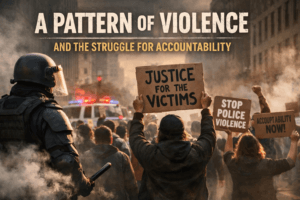
Jenin Killings and Gaza’s Shadow: A Pattern of Violence and the Struggle for Accountability
The recent killing of two Palestinian men in Jenin, captured on video and condemned internationally as an “apparent summary execution,” is not an isolated tragedy. It is a stark microcosm of a devastating and systemic reality: a relentless escalation of violence in the occupied West Bank occurring alongside a catastrophic war in Gaza that has reshaped the demographic and physical landscape of the Palestinian territories.
While international mediators struggle to salvage a fragile ceasefire in Gaza, events in cities like Jenin reveal that without addressing the root causes of violence and ensuring accountability, any peace plan remains on shaky ground.
The Jenin Incident: A Case Study in Impunity
On a Thursday in late November 2025, Israeli border police shot and killed two Palestinian men in Jenin. Footage of the incident, aired by a TV channel, showed the men—later identified as Al-Muntasir Billah Abdullah, 26, and Youssef Asasa, 37—attempting to surrender. Witnesses reported they had raised their shirts to show they were unarmed before being ordered back into a building and shot dead.
The United Nations Human Rights Office (OHCHR) was swift and unequivocal in its condemnation. Spokesperson Jeremy Laurence stated the office was “appalled at the brazen killing,” describing it as an “apparent summary execution”. He highlighted that an internal Israeli review was announced but was immediately undermined by statements from a senior Israeli government official seeking to “absolve Israeli security forces of responsibility”. This, Laurence argued, “rais[ed] serious concerns about the credibility of any future review”.
Human rights groups echoed this condemnation, framing the event within a broader, alarming pattern. Al-Haq, a Palestinian human rights organization, stated the killing “reflects Israel’s widespread and systematic policy of extrajudicial and wilful killings”. The incident also drew direct political endorsement within Israel; National Security Minister Itamar Ben-Gvir celebrated the act on social media, writing, “terrorists must die!”
Shai Parnes of the Israeli rights group B’Tselem summarized the pervasive climate, stating that Israelis enjoy “total impunity” for violence against Palestinians. He criticized Israel’s investigative mechanisms as a form of “whitewash,” designed to give perpetrators impunity while creating an illusion of accountability.
A Surging Tide of Violence in the West Bank
The Jenin killings are a data point in a sharp and tragic upward trend. According to verified UN data, between October 7, 2023, and late November 2025, Israeli forces and settlers killed 1,030 Palestinians in the occupied West Bank, including East Jerusalem. Among these victims were at least 223 children.
This surge in killings occurs alongside a parallel crisis of settler violence. The UN Office for the Coordination of Humanitarian Affairs (OCHA) reports over 1,600 settler attacks in 2025 alone, affecting more than 270 Palestinian communities. These attacks have injured over 1,000 Palestinians, with approximately 700 injured directly by settlers—a figure that has roughly doubled from the previous year.
Table: West Bank Casualties and Violence (Oct 7, 2023 – Nov 27, 2025)
| Metric | Number | Source |
| Palestinians killed by Israeli forces/settlers | 1,030 | UN OHCHR |
| Children among those killed | 223 | UN OHCHR |
| Settler attacks in 2025 (leading to casualties or damage) | >1,600 | UN OCHA |
| Palestinian communities affected by settler violence | >270 | UN OCHA |
The Overwhelming Shadow: Gaza’s Humanitarian Catastrophe
While violence simmers in the West Bank, the Gaza Strip endures a humanitarian catastrophe of a different magnitude, casting a long shadow over the entire region. The human cost is almost incomprehensible.
As of late 2025, health authorities in Gaza report over 70,000 Palestinians killed since the war began in October 2023. Scholarly analyses, including a study published in The Lancet, suggest the true toll from traumatic injuries alone likely exceeded 70,000 by October 2024, with a significant majority being women, children, and the elderly. When accounting for deaths from disease, malnutrition, and disrupted healthcare, some estimates project the total could be far higher.
The demographic breakdown is devastating. Children have paid a disproportionate price. In the first year of the war, they represented about 44% of identified fatalities. A survey by the Palestinian Center for Policy and Survey Research (PCPSR) found over 60% of Gazans have lost immediate family members. The physical and psychological injuries are equally vast, with Gaza now home to the most amputated children per capita in the world.
Table: Scale of Destruction in Gaza (as of late 2025)
| Aspect of Life | Impact | Source |
| Residential Buildings Damaged/Destroyed | 92% | UN OCHA (via) |
| Water & Sanitation Infrastructure Damaged | 89% | UN Experts (via) |
| Health Facilities Attacked | >790 documented incidents | WHO (via) |
| School-Aged Children Without Access to Education | ~658,000 | Al Jazeera Analysis |
| Population Facing Catastrophic Hunger (IPC Phase 5) | 641,000 people | IPC (via) |
The destruction of infrastructure is near-total, crippling every pillar of society. The healthcare system has been systematically targeted, with at least 125 health facilities damaged. The education system has “collapsed,” with 92% of schools requiring complete reconstruction. A famine has been officially declared—the first in the modern Middle East—orchestrated through military blockades on aid.
A Fragile Peace and the Test of Implementation
Against this backdrop of devastation, international efforts have focused on securing a sustainable peace. The Gaza peace plan, announced by U.S. President Donald Trump in September 2025 and endorsed by the UN Security Council, called for a ceasefire, hostage-prisoner exchanges, demilitarization, and a transitional government. A first-phase ceasefire took effect on October 10, 2025.
However, its implementation has been fraught. Key mediator countries—the U.S., Egypt, Qatar, and Turkey—have repeatedly expressed frustration. Following a meeting in Miami in December 2025, they issued a joint statement urging “restraint” and honoring commitments. Turkish Foreign Minister Hakan Fidan was blunt, stating that “ongoing violations by Israel… are making the process incredibly more difficult” and are “endangering the peace plan”.
The Gazan Government Media Office claims Israel has violated the ceasefire more than 730 times through aerial attacks, artillery fire, and shootings since October. These continued strikes, including one on a school sheltering displaced people that killed six, have raised the post-ceasefire death toll to around 400.
The fundamental challenge lies in the transition to the plan’s second phase, which involves establishing an interim Palestinian authority and a full Israeli withdrawal. With trust at a nadir, violence continuing, and a winter storm worsening conditions for displaced Gazans, the path forward remains incredibly fragile.
Conclusion: The Imperative for Accountability and Sustained Peace
The headlines from Palestinian newspapers on a Sunday in December 2025—reporting on two killings in Jenin and a death toll surpassing 70,000 in Gaza—are connected chapters of the same story. They speak to a reality where lethal force is used with minimal accountability and where military action has resulted in catastrophic civilian suffering on a historic scale.
As UN High Commissioner for Human Rights Volker Türk has insisted, ending this cycle requires “independent, prompt and effective investigations” and ensuring “those responsible for violations be held fully to account”. Without this fundamental step towards justice, and without a sincere commitment from all parties to uphold ceasefire agreements and address humanitarian needs, the violence in Jenin will repeat, the suffering in Gaza will deepen, and any vision for lasting peace will remain a distant prospect. The international community’s response to these parallel crises will be a defining test of its commitment to universal human rights and a rules-based international order.
You must be logged in to post a comment.