
Jaipur’s Deep Freeze: Unpacking the Prolonged Cold Spell and Practical Strategies for Residents
Jaipur remains entrenched in a severe and persistent cold spell, with temperatures holding steady at a minimum of around 7°C and a maximum near 18°C, intensified by dense morning fog that reduces visibility and deepens the chill. According to the IMD, this dry, stable pattern—driven by northwesterly cold winds and clear skies that promote rapid nighttime cooling—will persist for the coming week, with similar conditions affecting much of eastern Rajasthan. The cold wave disrupts daily life, posing significant health risks like respiratory issues, causing transportation delays, and stressing agriculture, prompting advisories for residents to use layered clothing, exercise extreme caution during foggy commutes, stay hydrated with warm fluids, and protect vulnerable populations until a change in the weather pattern brings relief.
Jaipur’s Deep Freeze: Unpacking the Prolonged Cold Spell and Practical Strategies for Residents
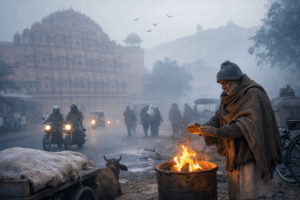
The iconic pink hues of Jaipur are currently framed by a stark, silvery haze. For days, the city has been locked in an unrelenting cold spell, a climatic grip that shows no immediate sign of loosening. As the sun struggles to pierce the dense morning fog, life in the Rajasthan capital adapts to a rhythm dictated by low mercury. This isn’t just a fleeting cold snap; it’s a sustained meteorological event with tangible effects on daily routines, health, and infrastructure. Let’s delve beyond the basic temperature readings to understand the nuances of this cold wave and how Jaipurites can navigate it intelligently.
The Current Snapshot: More Than Just Numbers
As of early January, Jaipur’s thermometers tell a consistent story. Minimum temperatures have settled around a brisk 7°C, with daytime maximums barely climbing to 18-19°C. While these figures might not seem extreme compared to plains in North India, the perceived chill is significantly intensified by key local factors.
The most prominent is the dense morning and night-time fog. This isn’t just a visual phenomenon; it’s a moisture-laden blanket that enhances the cold’s penetration. Fog prevents solar radiation from warming the ground efficiently during the day and accelerates radiative cooling at night. Furthermore, it drastically reduces visibility, often plunging to under 200 meters, making commutes hazardous and disrupting transportation schedules.
The India Meteorological Department (IMD) forecasts this pattern to hold firm for the coming week. With no western disturbance or rainfall system in sight, the region is under a stable, dry, and cold air mass. This absence of cloud cover, ironically, is a culprit—it allows daytime heat to escape rapidly into the atmosphere after sunset.
A Regional Perspective: The Cold Blanket Over Eastern Rajasthan
The cold is not isolated to Jaipur. It blankets much of eastern Rajasthan, creating a uniform zone of chilly conditions. Neighbouring districts report strikingly similar ranges:
- Bharatpur, Dholpur, Alwar, Dausa: 7°C – 18°C
- Sikar: 7°C – 19°C
- Ajmer & Bhilwara: 8°C – 19°C
This consistency points to a large-scale synoptic pattern. The Hadoti region, including Kota, shares the experience with lows of 8°C. Interestingly, the southern districts like Udaipur (8°C – 21°C) and Chittorgarh (8°C – 22°C) enjoy slightly warmer afternoons, likely due to their terrain and latitude, but their mornings are equally biting.
In contrast, the western desert districts—Barmer, Jaisalmer, Jodhpur, and Bikaner—present a different picture. Their daytime temperatures are noticeably higher, a characteristic of their arid, sandy landscape, which heats up faster. However, their nights remain profoundly cold, a classic desert climatic trait.
The “Why” Behind the Shiver: Meteorological Drivers
Several interconnected factors are fueling this prolonged cold spell:
- Continental Cold Air Influx: Northwesterly winds are transporting cold, dry air from the snow-clad Himalayas and the colder continental interiors into the plains of North and Northwest India, including Rajasthan.
- High Pressure System: A stable high-pressure area over the region suppresses vertical air movement, preventing cloud formation and leading to clear skies that facilitate rapid night-time cooling.
- Weak Solar Insolation: The sun’s angle is low in the winter sky, providing less intense warmth. The persistent fog further scatters and reflects the already weak sunlight, minimizing daytime heating.
- Calm Winds: The absence of strong wind prevents the mixing of air, allowing a cold layer to settle close to the ground, especially during nights and early mornings.
Beyond Discomfort: The Real-World Impact
This weather is more than an inconvenience. It has multi-faceted impacts:
- Health Hazards: There’s a sharp rise in cases of respiratory illnesses—asthma, bronchitis, and COPD exacerbations—aggravated by the cold, dry air and fog. Joint pains become more acute, and the risk of hypothermia, especially for the homeless and elderly, is a serious concern.
- Transportation Chaos: Flight schedules at Jaipur International Airport face delays and cancellations. Trains, particularly those arriving from the north, run late. Road travel becomes perilous, with increased risks of pile-ups on highways like the NH-48 due to near-zero visibility.
- Agricultural Stasis: While rabi crops like wheat and mustard require some cold, a prolonged dry chill without any winter rain ( mahawat ) can lead to moisture stress and stunted growth.
- Daily Life Disruption: Markets open later, outdoor physical activity and social gatherings diminish, and energy consumption for heating soars.
Navigating the Cold: Actionable Insights for Jaipur Residents
Merely knowing the temperature is not enough. Here’s how to adapt proactively:
- Layered Dressing is Key: Opt for multiple thin layers of clothing rather than one heavy piece. Start with moisture-wicking inners, add insulating layers like wool or fleece, and finish with a windproof jacket. Don’t forget a head covering, as significant body heat is lost through the head.
- Commute with Extreme Caution: If you must drive in fog, use low-beam headlights and fog lamps. Maintain a severe gap from the vehicle ahead. Public transport is often a safer bet during peak fog hours (5 AM to 9 AM).
- Health Fortification: Stay hydrated with warm fluids—herbal teas, soups, and warm water. Use humidifiers indoors to counter dry air. Ensure timely medication for those with chronic conditions. The elderly and infants should be especially guarded against direct exposure to the cold morning air.
- Home Preparedness: Seal drafts around windows and doors. Use heavy curtains at night. Traditional methods like bukharis (heaters) or modern room heaters should be used with strict ventilation rules to prevent carbon monoxide poisoning.
- Dietary Adjustments: Incorporate naturally warming foods like jaggery (gur), sesame seeds (til), nuts, and whole grains. A traditional diet of dal-baati or ghewar is not just cultural but aptly suited to provide energy and warmth.
A Look Back and a Look Ahead
While this cold spell feels intense, historical weather data for Jaipur shows that temperatures in early January have often dipped lower. However, the persistence of the chill and the dense fog frequency are what residents are noting. The IMD’s forecast of no significant change underscores the need for sustained vigilance.
In essence, Jaipur’s current weather is a lesson in resilience and adaptation. It reminds us of our relationship with natural cycles, even in an era of climate change where weather patterns are becoming more unpredictable. By understanding the science behind the cold, acknowledging its broader impacts, and implementing practical, wise measures, the people of Jaipur can not only endure this freeze but also safeguard their well-being until the warmer winds of spring finally arrive to melt away the haze.
You must be logged in to post a comment.