
Israeli Settlements at a Tipping Point: How Annexation by Stealth is Reshaping the West Bank
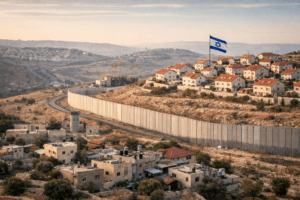
Israeli Settlements at a Tipping Point: How Annexation by Stealth is Reshaping the West Bank
Against the backdrop of a fragile Gaza ceasefire, Israel’s approval of 19 new West Bank settlements marks a dramatic acceleration in a long-term project that critics argue is rendering a two-state solution geographically impossible. This recent move, spearheaded by far-right ministers in Israel’s most right-wing government, has ignited international condemnation and sharp warnings from the United States, yet it continues unabated. To understand its significance, one must look beyond the headlines to a decades-long process of incremental annexation that is fundamentally redrawing the map of the occupied Palestinian territories.
The Latest Escalation: 19 Settlements and a Political Message
In a definitive act, Israel’s security cabinet has approved 19 new Jewish settlements in the occupied West Bank. Finance Minister Bezalel Smotrich, a settler himself, celebrated that this brings the total number of new settlements approved in just three years to a record 69. The expansion increases the total number of settlements and outposts by nearly 50% since the current government took office in 2022, from 141 to 210.
The decision is laden with symbolism and strategic intent. It includes the re-establishment of Ganim and Kadim, two settlements dismantled nearly 20 years ago as part of Israel’s 2005 disengagement plan. Furthermore, five of the newly approved “settlements” are existing outposts now receiving retroactive legalization—a tactic often used to normalize unauthorized construction. Smotrich was blunt about the goal, stating the move is about “blocking the establishment of a Palestinian state” and represents “correct and moral Zionism”.
The International Response: Condemnation and Warnings
The international reaction has been swift and critical. UN Secretary-General Antonio Guterres condemned Israel’s “relentless” expansion, stating it fuels tensions and “threatens the viability” of a Palestinian state. The United Kingdom called it a risk to the U.S.-brokered peace efforts.
Most notably, the move puts Israel at odds with its closest ally. U.S. President Donald Trump, while historically permissive on settlements, has drawn a clear red line at formal annexation. In October, he told Time magazine, “Israel would lose all of its support from the US if that happened”. This warning underscores the gravity with which the U.S. views unilateral steps that would foreclose a negotiated two-state solution.
Context: The Longest Occupation in Modern History
To grasp the full weight of the current expansion, one must understand that Israel’s military occupation of the West Bank, which began on June 7, 1967, is now the longest in modern history. What was initially presented as a temporary security measure has transformed into a deeply entrenched system of control.
The following timeline illustrates key phases in the consolidation of Israel’s control over the West Bank:
timeline
title Evolution of Israeli Control in the West Bank
section 1967-1970s
Six-Day War : Military occupation begins
First settlements established<br>as “temporary” security posts
section 1980s-1990s
1981 : Civil Administration created,<br>signaling long-term governance
Oslo Accords : Territory divided into Areas A, B, C<br>Palestinian Authority established
section 2000s-2010s
Second Intifada : Barrier construction begins
2016 : UNSC Resolution 2334 declares<br>settlements have “no legal validity”
section 2020s-Present
Current Government : Far-right ministers take key posts
Settlement Surge : 69 new settlements approved in 3 years
2024 : ICJ rules occupation illegal,<br>calls for its end
The territory is administered through a dual legal system. Israeli settlers, now numbering around 700,000 in the West Bank and East Jerusalem, live under Israeli civil law and vote in Israeli elections. In contrast, the approximately three million Palestinians in the same territory live under military law, without political rights in the state that controls their lives. Prominent human rights organizations, including Amnesty International, analyze this reality as part of an institutionalized system of apartheid intended to maintain Jewish Israeli domination. Israel vehemently rejects this characterization.
Settlements Under International Law: A Near-Unanimous Verdict
The international legal position on Israeli settlements is one of the clearest in modern diplomacy. They are widely considered illegal under international law.
- The Fourth Geneva Convention (Article 49) explicitly prohibits an occupying power from transferring parts of its civilian population into the territory it occupies.
- United Nations Security Council Resolution 2334 (2016) states settlements have “no legal validity” and constitute a “flagrant violation” of international law.
- The International Court of Justice (ICJ), in both a 2004 advisory opinion and a landmark 2024 ruling, affirmed that Israeli settlements are established in breach of international law.
Israel’s own legal experts foresaw this conflict. In a recently declassified 1967 memo, Theodor Meron, legal counsel to the Israeli Foreign Ministry, advised Prime Minister Levi Eshkol that “civilian settlement in the administered territories contravenes the explicit provisions of the Fourth Geneva Convention”. The government proceeded regardless.
Human Impact: Settler Violence and Displacement
The policy of expansion has a devastating human cost on the ground. Since the war in Gaza began in October 2023, violence in the West Bank has surged. Settler attacks, often carried out with impunity and sometimes under the protection of Israeli forces, have reached unprecedented levels.
- Record Violence: The UN recorded 264 settler attacks in October 2025 alone, the highest monthly number since it began systematic documentation in 2006. This averaged more than eight attacks per day.
- Lethal Consequences: From October 2023 to November 2025, Israeli forces and settlers killed at least 1,010 Palestinians in the West Bank, including 215 children.
- Economic Strangulation: Attacks frequently target livelihoods, especially during the olive harvest, burning orchards and destroying equipment. The UN reports that over 3,200 Palestinians have been displaced since 2023 due to settler violence and related access restrictions.
These attacks are not treated as random crimes by observers. Amnesty International states they are “part of a decades-long state-backed campaign to dispossess, displace and oppress Palestinians”.
The Future of a Palestinian State: A Geography of Fragmentation
The strategic placement of settlements and their supporting infrastructure is creating irreversible facts on the ground. They are not random enclaves but are often situated to bisect Palestinian population centers, disrupt territorial contiguity, and control vital resources.
A clear example is the E1 settlement plan east of Jerusalem, which aims to build over 3,000 homes. If completed, it would sever the northern and southern West Bank, cutting off East Jerusalem from the rest of the territory and dealing a fatal blow to the geography of a viable future state. Smotrich himself said the E1 plan would “bury the idea of a Palestinian state”.
Contrasting Realities: Life Under a Dual System
| Aspect of Life | For Israeli Settlers | For Palestinians in the West Bank |
| Legal System | Israeli civil law & courts | Israeli military law & courts |
| Political Rights | Vote in Israeli Knesset elections | No vote in Israeli elections |
| Movement | Access to Israeli-only highways | Subject to checkpoints, barriers, and the Separation Wall |
| Land & Home | Protected by state; construction encouraged | Constant threat of demolition, land confiscation, and settler violence |
| Resource Access | Prioritized for water and infrastructure | Often severely restricted |
Conclusion: Annexation Without Declaration
While the Israeli Prime Minister, Benjamin Netanyahu, states that formal annexation is not imminent, many analysts and human rights experts argue that de facto annexation is already a reality. Michael Sfard, a leading Israeli human rights lawyer, contends, “Israel has annexed the territory and is treating it as its sovereign territory… this is annexation, even if it hasn’t been declared”.
The massive settlement expansion, the application of Israeli civilian law to settlers, the massive investment in infrastructure, and the systemic displacement of Palestinians all point to a permanent, sovereign claim rather than a temporary military occupation. The international community, including the U.S., faces a critical test. Warnings, like those from President Trump, must be backed by tangible consequences to alter the trajectory of a conflict where the window for a just, two-state resolution is rapidly closing. The approval of 19 new settlements is not an isolated event but the latest, aggressive stroke in a long process of drawing a new map—one that leaves little room for Palestinian self-determination.
You must be logged in to post a comment.