
India’s Winter Siege: Decoding the Widespread Cold Wave and Its Multifaceted Impact
The India Meteorological Department (IMD) has issued a multi-day cold wave alert for December 10-14, affecting a wide swath of the country including Punjab, Haryana, Madhya Pradesh, Chhattisgarh, Odisha, Maharashtra, Telangana, and North Interior Karnataka, driven by a trough in westerlies and a strong subtropical jet stream.
Concurrent dense fog alerts for states like Assam, Manipur, and East Uttar Pradesh are expected to severely disrupt road, rail, and air travel due to low visibility, while the sharp temperature drop poses significant health risks, particularly to vulnerable populations. The cold spell is anticipated to gradually ease after December 13 with the influence of a feeble Western Disturbance, leading to a temperature rise of 2-4°C in the northwest plains.
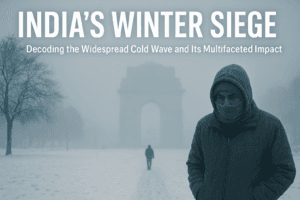
India’s Winter Siege: Decoding the Widespread Cold Wave and Its Multifaceted Impact
A significant cold wave, heralded by the India Meteorological Department (IMD), is tightening its grip across vast swathes of the country. From the frost-laden valleys of Kashmir to the interior plains of Karnataka, a sharp drop in temperatures is disrupting daily life, challenging transportation networks, and posing serious health risks. This widespread weather event is not an isolated chill but a coordinated climatic shift influenced by large-scale atmospheric patterns, marking a decisive turn into the winter season for millions of Indians.
The Geographical Spread: A State-by-State Analysis of Alerts
The IMD’s warnings are precise and varied, employing a color-coded alert system to communicate risk. The cold wave’s footprint is extensive, affecting regions unaccustomed to such severe winter conditions.
- North India is experiencing a pronounced chill. Punjab and Haryana are under the cold wave’s sway, with places like Rupnagar recording a minimum temperature of 3.6°C. Delhi is bracing for minimum temperatures between 6-9°C, accompanied by shallow morning fog. The IMD has forecast dense fog for East Uttar Pradesh from December 10-13, with an orange alert signaling more intense conditions.
- Central India is a core zone of this event. Madhya Pradesh, Chhattisgarh, and Odisha are under a prolonged cold wave alert from December 10-13. Vidarbha and Telangana are also on high alert, with districts like Adilabad and Komuram Bheem Asifabad in Telangana under an orange alert.
- West and Peninsular India are witnessing an unusual cold spell. Maharashtra, particularly Madhya Maharashtra and Marathwada, is expecting a gradual fall in minimum temperatures by 2-3°C. North Interior Karnataka, including districts like Belagavi and Kalaburagi, is under a yellow alert.
The following table summarizes the key alerts and their temporal spread across different regions:
| Region | States/Areas Affected | Alert Type & Key Hazards | Primary Dates (Dec 2025) | Major Impacts Expected |
| North India | Punjab, Haryana, Delhi, East Uttar Pradesh | Cold Wave (Yellow); Dense Fog (Orange in E-UP) | Cold: 10-12; Fog: 10-13 (E-UP) | Travel disruption, health risks from cold, low visibility |
| Central India | West Madhya Pradesh, Chhattisgarh, Odisha, Vidarbha | Cold Wave (Yellow) | 10-13 | Agricultural sensitivity, public health challenges |
| West & Peninsular | Madhya Maharashtra, Marathwada, North Interior Karnataka, Telangana | Cold Wave (Yellow; Orange in parts of Telangana) | 10-12 (Maharashtra, Karnataka, Telangana); 11-12 (Marathwada) | Disruption in areas less acclimatized to severe cold |
Beyond the Chill: Travel Grinds to a Halt Amidst Dense Fog
While the cold is pervasive, the most immediate and disruptive companion is dense fog. The IMD has issued warnings for persistent fog across northeastern and eastern states, severely hampering visibility.
- Critical Zones: Assam and Manipur are forecast to experience dense fog from December 10-14. Odisha, Himachal Pradesh, Nagaland, Manipur, Mizoram, Tripura, and Uttarakhand are also under yellow alerts for dense fog. On the morning of December 11, visibility dropped to as low as 200 meters in places like Imphal and Purnea.
- Transportation Crisis: This fog directly imperils all forms of travel. The IMD has specifically advised motorists to drive slowly, use low beams and fog lights, and avoid unnecessary travel during peak fog hours in the morning. Air travel is highly susceptible, with delays and cancellations likely at major airports in the northern and eastern regions. Railway schedules are also expected to see significant disruptions.
A Convergence of Weather Systems: The Science Behind the Siege
This widespread cold wave is not a random occurrence but the result of specific meteorological phenomena:
- Large-Scale Drivers: The IMD attributes the conditions to a trough in the westerlies and the influence of a strong subtropical westerly jet stream over East India.
- The Western Disturbance Factor: A “fresh feeble Western Disturbance” is predicted to influence the western Himalayan region from around December 13. While this may bring light rain or snowfall to the hills, its interaction with the prevailing cold air mass over the plains is a key factor being monitored by forecasters.
- Temperature Trajectory: The IMD forecasts a gradual fall in minimum temperatures by about 2°C over northwest India in the next two days, followed by a period of stability. A rise of 2-4°C is expected later in the week, potentially offering some respite. In Maharashtra, a similar fall of 2-3°C is expected before a rise.
Protecting Health and Life: Vulnerable Populations at Risk
The human cost of a cold wave is significant. The IMD and health experts explicitly warn that the elderly, young children, and those with pre-existing respiratory or cardiovascular conditions are particularly vulnerable.
- Compounded Health Threats: The cold air can exacerbate conditions like asthma, bronchitis, and pneumonia. The concurrent fog and stagnant air can also lead to a worsening of air quality, as seen in Kashmir, where an absence of precipitation has increased suspended particulate matter.
- Essential Advisory: Authorities advise people to limit early-morning outdoor activities, wear layered clothing, and ensure adequate heating in homes. Staying informed about weather updates and checking on vulnerable neighbors and family members becomes a community responsibility during such events.
The Himalayan Front: Snow, Closures, and Tradition
While the plains shiver, winter has firmly announced its arrival in the Himalayas. Kashmir recorded its first significant snowfall, with Shopian plunging to -4.2°C and Srinagar to -2.5°C. This has activated annual winter protocols:
- Strategic Road Closures: The Srinagar-Leh and Manali-Leh highways have become treacherous, with the latter officially closed for the winter—a routine but critical safety measure that will last until May or June.
- Cultural Adaptation: In the Valley, life adapts to the deep chill. Residents have returned to winter traditions: wearing the long, loose gowns called Pherans, carrying portable fire pots known as Kangris, and bracing for Chillai Kalan, the harshest 40-day winter period beginning December 21.
Looking Ahead: A Week of Caution and Adaptation
As India navigates this cold wave, the coming days demand caution and preparedness. The interplay between the retreating cold and the approaching Western Disturbance after December 13 will dictate the weather’s evolution. For now, the imperative is clear: heed official advisories, prioritize safety—especially in travel and health—and adapt to the rhythm of a winter that has declared its presence with unmistakable force. This event underscores the profound and varied impact of weather, linking the meteorological dance in the upper atmosphere to the daily realities of life on the ground, from bustling cities to tranquil, snow-dusted valleys.
You must be logged in to post a comment.