
India’s Weather Whiplash: From Hailstorms in the North to Scorching Heat in the South
A powerful western disturbance parked over northern Iran is driving heavy rain, hailstorms, thunderstorms, and gusty winds across northwest, northeast, and central India today, with the India Meteorological Department issuing warnings for large parts of the country, while simultaneously, Telangana is experiencing contrasting extremes as maximum temperatures have crossed 40°C for the second time this season—hitting 40.4°C in Aloor—prompting a yellow alert for 11 districts until March 31, with forecasts of light to moderate rain and thundershowers in Hyderabad and surrounding areas over the next 48 hours.
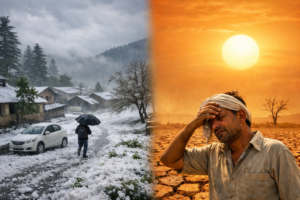
India’s Weather Whiplash: From Hailstorms in the North to Scorching Heat in the South
As a western disturbance unleashes chaos across northern India, Telangana grapples with a different kind of extreme—crossing the 40°C mark for the second time this season.
March 30, 2026, began not with the gentle whisper of spring but with the roar of thunder and the sharp crack of hailstones against rooftops across much of India. From the bustling streets of Delhi to the apple orchards of Kashmir, from Punjab’s wheat fields to the hills of the Northeast, the India Meteorological Department’s warnings painted a picture of a nation bracing for nature’s fury.
But here’s what makes this weather story remarkable: while millions across northern India reached for raincoats and stayed indoors to avoid hailstorms, hundreds of kilometers south in Telangana, residents were fanning themselves as mercury levels breached 40°C for the second time this season. India, it seems, is experiencing weather at its most schizophrenic.
The Western Disturbance: A Distant Storm with Local Impact
The culprit behind the wet and wild Monday across large swathes of India is what meteorologists call a western disturbance—a weather system that originates far beyond Indian borders. Currently parked as an upper-air cyclonic circulation over northern Iran and the adjoining Caspian Sea, this system has been steadily marching eastward, bringing with it the promise of heavy rain, thunderstorms, hailstorms, and gusty winds across northwest, northeast, and central India.
For those unfamiliar with the term, a western disturbance is essentially a Mediterranean-origin storm system that travels across Afghanistan and Pakistan before entering India. Think of it as a massive conveyor belt of moisture that, when it interacts with the Himalayan terrain and existing atmospheric conditions, can trigger dramatic weather events.
What makes today’s forecast particularly significant is the intensity of the warnings. The IMD isn’t just predicting light showers—they’ve issued alerts for heavy rain, meaning precipitation that can disrupt daily life, cause waterlogging in low-lying areas, and potentially lead to flash floods in vulnerable regions. The hailstorm warnings carry their own set of concerns: damage to standing crops, particularly the ripening wheat in Punjab and Haryana, and potential injuries to people and livestock caught unprepared.
A Region-by-Region Breakdown
Delhi and the National Capital Region: Residents woke up to a rain-soaked morning, with many parts of the capital recording substantial precipitation since early hours. The city’s typically chaotic traffic slowed to a crawl as commuters navigated waterlogged roads and reduced visibility. For Delhiites accustomed to dry, dusty springs, this March rain comes as both a relief—clearing the air of pollutants—and a disruption to the usual rhythm of life.
Kashmir and the Himalayan Region: The western disturbance has brought more than just rain to the Valley. Higher reaches have reported fresh snowfall, a phenomenon that, while not unusual for March, carries implications for both tourism and agriculture. Apple growers, who form the backbone of Kashmir’s economy, are watching these weather patterns with particular anxiety—hail can devastate orchards that are just beginning to bloom.
Punjab and Haryana: These agricultural heartlands face perhaps the most economically significant impact. Wheat is at a critical stage of maturation, and hailstorms can flatten crops and cause grain shedding. Farmers who invested heavily in inputs for the rabi season now find themselves at the mercy of skies that show no sign of mercy.
Central and Northeast India: The IMD’s warnings extend to these regions as well, indicating that this weather system is far from localized. From Madhya Pradesh to Assam, residents are being advised to stay indoors during peak thunderstorm hours and to secure loose objects that could become projectiles in strong winds.
A Tale of Two Indias
While northern India reaches for umbrellas and sweaters, Telangana is sweltering. The state recorded maximum temperatures exceeding 40°C on Friday, with Aloor in Nizamabad district hitting 40.4°C—the highest in the state. This isn’t just an isolated spike; it’s the second time this season that temperatures have crossed the 40-degree threshold, suggesting a pattern that concerns both meteorologists and public health officials.
Hyderabad, the state’s capital, recorded a high of 38.5°C, with surrounding districts like Medchal Malkajgiri and Rangareddy touching 39°C. The IMD has issued a yellow alert for 11 districts, warning of thunderstorms accompanied by lightning and gusty winds in areas including Adilabad, Kumaram Bheem Asifabad, Mancherial, and Nirmal.
The forecast for Hyderabad itself predicts light to moderate rain or thundershowers toward evening or night over the next 48 hours—a peculiar combination of heat during the day and potential storms after sunset that residents have learned to navigate.
The Human Dimension: How Indians Adapt
Weather extremes aren’t just data points on a meteorologist’s chart; they’re lived experiences that shape daily routines, economic decisions, and even emotional states. In Delhi, families who planned outdoor gatherings for Sunday evening found themselves rushing to bring in furniture and cancel plans. Street vendors, whose livelihoods depend on being outdoors, faced a day of lost income. The city’s vast network of domestic workers and delivery personnel navigated rain-soaked streets, their resilience on display in every careful step they took.
In Punjab’s farming communities, the mood is one of anxious vigilance. “Every farmer in my village is checking the sky every few minutes,” says Baldev Singh, a wheat farmer from Ludhiana district. “One hailstorm can destroy six months of work. We pray, and we prepare to run to the fields with tarpaulins if needed.”
Meanwhile, in Telangana, the heat brings its own challenges. Construction workers adjust their schedules, starting before dawn and finishing by early afternoon to avoid the worst of the sun. Schools in some districts have shortened their hours, and municipal corporations are increasing water supply to compensate for higher evaporation rates.
What the Forecast Means for the Coming Days
The IMD’s outlook suggests that this isn’t a one-day phenomenon. For Telangana, temperatures are expected to remain around normal for the next two days before a gradual rise of 2 to 3°C over the following four days. The yellow alert extends until March 31, meaning residents should remain prepared for sudden weather changes.
For northern India, the western disturbance is expected to continue influencing weather patterns for at least the next 24-48 hours. Residents in affected areas are advised to:
- Stay indoors during peak thunderstorm hours (typically late afternoon to evening)
- Avoid sheltering under trees during lightning storms
- Secure outdoor furniture, hoardings, and other objects that could be displaced by strong winds
- Keep emergency numbers handy for power outages or flooding situations
- Farmers should be prepared with protective covers for vulnerable crops
The Bigger Picture: Climate Extremes Become the New Normal
What’s striking about this weather event is how it fits into a larger pattern of extremes that India has been experiencing over the past decade. The juxtaposition of severe storms in one region and heatwave conditions in another within the same week is becoming increasingly common.
Climate scientists have been warning that rising global temperatures will lead to more frequent and intense weather extremes. Warmer air holds more moisture, leading to heavier rainfall events when conditions are right. It also means more energy in the atmosphere to fuel thunderstorms and hailstorms. At the same time, the same warming drives heatwaves that occur earlier in the season and last longer.
For India, a country where agriculture still employs nearly half the workforce and where infrastructure in many areas is ill-equipped to handle sudden weather shocks, these trends carry profound implications. Each hailstorm that damages crops, each heatwave that stresses power grids, each flood that displaces communities is a reminder that weather is no longer just a topic for small talk—it’s a critical factor in economic stability and human well-being.
Practical Advice for Travelers and Commuters
For those traveling across India today, the varied weather conditions require equally varied preparation. In northern India, flights may face delays due to thunderstorms, and train services could be affected by waterlogging on tracks. Road travel requires extra caution, particularly on highways where sudden rain can reduce visibility and make surfaces slippery.
Travelers heading to Telangana and other southern regions should prepare for heat, carrying water bottles, wearing light-colored cotton clothing, and avoiding prolonged sun exposure during peak hours. Those with pre-existing health conditions should be particularly mindful, as heat stress can exacerbate respiratory and cardiovascular issues.
Looking Ahead
As India navigates this Monday of meteorological extremes, the response offers a glimpse into the country’s growing capacity to handle weather-related challenges. The IMD’s early warnings allowed for preparation, and disaster management agencies at state and district levels have been activated. But the ultimate success of these systems will be measured not in warnings issued but in lives protected and livelihoods preserved.
For now, the advice from meteorologists is simple: stay informed, stay prepared, and respect the power of the skies. Whether you’re in Delhi seeking shelter from hailstones or in Hyderabad fanning yourself against 40-degree heat, this Monday serves as a reminder that in India, the weather is never just background noise—it’s a central character in the nation’s ongoing story.
You must be logged in to post a comment.