
India’s Weather Story: A Nation in Contrasts—Storms in the North, Snow in the Hills, and a Rising Summer Heat
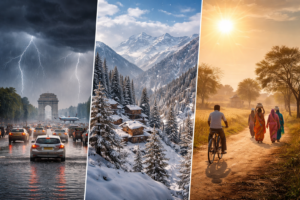
On March 20, 2026, India experienced a dramatic meteorological contrast as a western disturbance brought thunderstorms and flight diversions to Delhi NCR, fresh snowfall to the higher reaches of Jammu & Kashmir and Uttarakhand, and unseasonably cool conditions to Rajasthan, while central and western regions—including Uttar Pradesh, Ahmedabad, and Hyderabad—saw rapidly rising temperatures signaling an early summer onset; coastal cities like Mumbai and Chennai remained steady with warm, humid conditions, and Delhi’s air quality improved from “poor” to “moderate” thanks to rain and gusty winds. The volatile weather disrupted travel in the north, posed heat‑stress risks in the plains, and highlighted the growing unpredictability of India’s seasonal transitions.
India’s Weather Story: A Nation in Contrasts—Storms in the North, Snow in the Hills, and a Rising Summer Heat
As the calendar flips to the second half of March, India finds itself caught in a fascinating meteorological tug-of-war. Today, the country is painting a picture of dramatic contrasts—one that is becoming increasingly familiar in an era of unpredictable climate patterns. From the snow-dusted peaks of the Himalayas to the sweltering streets of Uttar Pradesh, and from the storm-lashed runways of Delhi to the steady, humid coasts of the south, the weather on March 20, 2026, tells a story of a nation in transition.
For the average Indian, this isn’t just a forecast; it’s a guide to daily life, travel, health, and even mood. Let’s break down what’s happening across the country, moving beyond the numbers to understand the real-world impact on your city, your commute, and your weekend plans.
The Great North Indian Disruption: Storms, Snow, and Flight Diversions
If there is one headline grabbing attention today, it’s the volatile weather over North India. A potent western disturbance—a storm system originating from the Mediterranean—is currently clashing with warm, moist winds from the plains. The result has been chaos, beauty, and relief all at once.
Delhi NCR: A City Shaken (and Cleaned) by Storms
For residents of the National Capital Region, March 20 began with a jolt. Sudden thunderstorms, accompanied by lightning and gusty winds reaching 30–40 km/h, swept through the city overnight. While these storms often bring a sense of dramatic urgency, they also brought tangible disruption.
The Indira Gandhi International Airport (IGI) became the epicenter of that disruption. With over 1,300 flight movements daily, even a brief window of severe weather can have a cascading effect. At least 22 flights were diverted, causing a ripple of delays that frustrated travelers. Major carriers like IndiGo, Air India, and SpiceJet quickly issued advisories, a stark reminder that in the age of modern air travel, Mother Nature still holds the final boarding pass.
But there is a silver lining to this gray cloud. Prior to the rain, Delhi was choking under an Air Quality Index (AQI) of 232, firmly in the “poor” category. The combination of rain and high-velocity winds has acted as a natural scrubber, with meteorologists predicting a shift to “moderate” air quality levels. For Delhiites accustomed to battling hazardous smog, this brief atmospheric cleansing offers a welcome—if temporary—respite.
The Himalayas: A Late-Season Winter Wonderland
Just a few hours north of the dusty plains, winter is refusing to loosen its grip. Higher reaches of Jammu & Kashmir and Uttarakhand are witnessing fresh snowfall, a boon for tourism and water reserves but a challenge for locals navigating sub-zero temperatures. Srinagar is experiencing a deep freeze, with minimum temperatures plunging to -3°C and daytime highs barely touching 4°C.
For travelers, this is a crucial “now or never” window to witness the lingering snow. However, authorities are urging caution as roads in the higher altitudes remain slippery and prone to closure. Lower altitudes are experiencing a mix of light rain and gusty winds, signaling that the instability in the Himalayan belt is likely to continue through the weekend.
The Great Divide: Summer Heat Begins Its Ascend
While the north shivers and storms, central and western India are already feeling the oppressive breath of summer. The most striking data point today comes from Uttar Pradesh, where cities like Lucknow are inching toward the 37°C mark. This rapid heating indicates an early onset of the summer season, which typically peaks in May and June.
The Heat Belt: Uttar Pradesh, Rajasthan, and Ahmedabad
In Lucknow, the mercury is rising rapidly, with a minimum of 22°C offering little nighttime relief. The city is transitioning from the pleasant spring weather of early March to the dry, harsh summer that defines the Gangetic plains.
Similarly, Ahmedabad is feeling the heat. With temperatures touching 36°C and strong winds (10–16 km/h) blowing, it feels less like a breeze and more like the blast from a hair dryer. The dry heat is a precursor to the more intense heatwaves expected in Gujarat over the coming weeks.
Rajasthan, interestingly, is the outlier in the heat narrative today. With a maximum of just 23°C in Jaipur, the state is enjoying a brief interlude of cooler conditions thanks to the same western disturbance that is battering Delhi. However, this is merely a pause. Officials warn that temperatures are expected to “rise sharply” in the coming days, as the desert state reverts to its typical scorching form.
The Coastal Constants: Mumbai, Chennai, and the South
Down south, the weather narrative is less about dramatic shifts and more about consistency.
Mumbai: The Steady Giant
Mumbai remains a picture of stability. With temperatures hovering between a minimum of 26°C and a maximum of 28°C, the financial capital is enjoying what many would consider “perfect” coastal weather. The steady sea breeze at 7–8 km/h keeps the humidity in check and prevents the mercury from spiking. There is no immediate rain threat, making it a great day for outdoor activities in the city.
Chennai: Warm, Humid, and Unchanged
Chennai continues its typical pattern of warmth and humidity. With a maximum of 33°C and a minimum of 26°C, the city feels sticky but not extreme. While no major rainfall is expected, the moisture-laden coastal winds keep humidity levels uncomfortably high. For residents, it’s a reminder to stay hydrated as summer deepens.
Karnataka and Hyderabad: A Mixed Bag
Bengaluru, often celebrated for its mild weather, is warming up. With temperatures reaching 34°C, the Garden City is feeling the heat, though it remains less intense than the northern plains. The state of Karnataka is seeing a split in conditions: dry, rising heat in the interiors and isolated showers along the coastal districts, thanks to moisture inflow from the Arabian Sea.
Hyderabad is also experiencing a dry heat, with temperatures climbing steadily toward peak summer levels. The light winds offer little relief, signaling that the city is entering its hottest phase of the year.
Why This Matters: Rising Temperatures and Urban Life
Beyond the daily commute and what to wear, the weather patterns observed today carry significant implications for urban planning, public health, and the economy.
The rising temperatures across central and northern India are not just a matter of comfort; they are a public health concern. Heat stress is a real and growing threat. As temperatures climb, we see a direct correlation with increased energy demand as air conditioners and coolers are switched on, straining the power grid. Water consumption spikes, putting pressure on already strained resources. For farmers, an early heatwave can affect crop yields, particularly for wheat, which is currently in its crucial ripening stage.
Furthermore, the volatility in the north—where storms and snowfall are happening simultaneously in close geographic proximity—underscores the complexity of modern weather forecasting. The “orange alert” issued for Delhi due to storm intensity is a reminder that in an era of climate change, the “normal” weather patterns we grew up with are becoming increasingly rare.
Practical Guide: Navigating March 20
For readers looking for actionable advice, here is how the weather might affect your day based on your region:
- For Travelers: If you are flying in or out of Delhi NCR today, check your flight status before heading to the airport. The cascading delays from last night’s diversions may still impact schedules. If you are heading to the hills (J&K, Uttarakhand), be prepared for road blockages due to snow and carry warm clothing even if you are coming from a hot region.
- For Health: Residents of Uttar Pradesh, Ahmedabad, and Hyderabad should avoid peak afternoon sun (12 PM – 4 PM) due to high heat. Stay hydrated. For those in Delhi, the AQI is improving, but if you have respiratory issues, it is still advisable to limit prolonged outdoor exertion until the air stabilizes to “satisfactory” levels.
- For Commuters: In Delhi NCR, watch out for waterlogging in low-lying areas due to the overnight rain. The gusty winds may also have uprooted trees or caused debris on roads. Drive cautiously.
- For Coastal Residents: Mumbaikars and Chennaites can expect a normal day, though the humidity in Chennai warrants light, breathable fabrics.
The Role of Sunrise and Sunset
In the midst of all the chaos of storms and heat, there is a quiet rhythm that governs our days: the sun. Today’s sunrise and sunset timings offer a practical anchor.
In Delhi, the sun rises at 6:27 AM and sets at 6:30 PM, offering a near-equal 12-hour day. Mumbai and Ahmedabad are experiencing similar daylight patterns. These timings are crucial for photographers, commuters, and those observing religious or cultural practices. As we move deeper into summer, the days will only get longer and hotter.
Conclusion: A Snapshot of a Dynamic Nation
The weather on March 20, 2026, is more than just a collection of data points. It is a snapshot of India’s vast geographical diversity and the increasing dynamism of its climate. We see a nation where one region is blanketed in snow, another is battered by thunderstorms, and a third is simmering in dry heat—all on the same day.
For the individual, it is a day to adapt. For the traveler, it is a day to check the forecast twice. And for the nation, it is a reminder of the complex, interwoven systems that shape our environment.
As we look ahead, the India Meteorological Department (IMD) suggests that the western disturbance will gradually move east, bringing some relief to the north but allowing the heat to build in the west and central regions. For now, whether you are reaching for an umbrella in Delhi, a snow shovel in Srinagar, or a glass of nimbu pani in Lucknow, today’s weather is a call to stay aware and stay safe.
You must be logged in to post a comment.