
India’s Unsettled Weather: Why the Rains Aren’t Done Yet and What It Means for You
India’s Unsettled Weather: Why the Rains Aren’t Done Yet and What It Means for You
The calendar may have officially ushered in spring, but the skies over northern India haven’t quite received the memo. Just when residents across Delhi-NCR, Punjab, Haryana, and Rajasthan began to hope for stable, sun-drenched days, the India Meteorological Department (IMD) has signaled a different reality: the rains are far from over.
A series of back-to-back western disturbances—those crucial weather systems that originate over the Mediterranean Sea and travel eastward—are lining up to keep the region on edge throughout the week. While none of these systems are expected to unleash the fury of a full-blown monsoon storm, their cumulative effect is something far more disruptive: unpredictability. For millions across north India, this week’s forecast isn’t just about carrying an umbrella; it’s about navigating a landscape of shifting temperatures, sudden cloudbursts, and the quiet but persistent threat to health and agriculture.
Here’s a deeper look at what’s happening in the atmosphere, why these seemingly “feeble” systems matter, and how residents can prepare for a week where the weather refuses to settle down.
The Anatomy of a “Feeble” Western Disturbance
To understand why the weather is acting up, we need to look at the mechanics of a western disturbance. Often described as the winter and early spring lifeline for north India, these storms are essentially extratropical cyclones that bring moisture-laden winds from the Arabian Sea. When they collide with the Himalayas, they unleash rain and snow.
This week, however, the dynamics are a bit different. The first disturbance, active as of Monday, March 23, is classified as “feeble.” According to meteorological assessments, this system is fragmented and lacks the strong upper-air cyclonic circulation needed to pull in vast amounts of moisture. As a result, nearly 60 to 70 percent of the geographical area in regions like Delhi-NCR, Haryana, Punjab, and north Rajasthan is likely to remain dry.
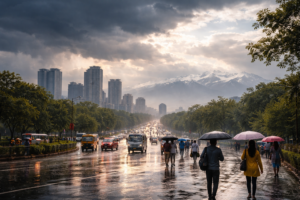
But “dry” doesn’t mean “clear.” The system is strong enough to pull down temperatures and drag in a thick layer of clouds. For residents of the National Capital Region, Monday was characterized by a peculiar kind of gloom—a gray ceiling that refused to lift, punctuated by isolated pockets of light to moderate rainfall that lasted from early morning until late evening. It’s the kind of weather that tricks the senses: warm enough to feel muggy, yet cool enough to warrant a light jacket.
In the higher reaches of Kashmir, Himachal Pradesh, and Uttarakhand, this same system is taking a wintry form. Light snowfall is expected in these regions. While the intensity remains low, the impact on tourism and local transport in high-altitude areas could be notable, especially as roads in places like Gulmarg or the Rohtang Pass become slick and visibility drops.
The Whiplash Effect: Warm, Cold, Wet, Dry
Perhaps the most challenging aspect of this week’s forecast isn’t the rain itself, but the rapid cycling between weather patterns. After Monday’s gloomy start, a brief window of respite is expected between March 24 and 25. The skies will clear, the sun will assert itself, and temperatures will climb. For a day or two, it will feel like spring has finally arrived.
But just as people start to relax, another weak western disturbance is projected to arrive around March 26. Once again, clouds will roll in. Once again, isolated showers will dot the landscape. This pattern of “one step forward, two steps back” is a classic signature of the transition period between winter and summer. However, the frequency of these disturbances—arriving in quick succession—means the ground doesn’t get a chance to dry out completely, and the air doesn’t have time to stabilize.
This creates what meteorologists call a “whiplash” effect. One day, the mercury might touch 30 degrees Celsius, making it feel like summer is around the corner. The next morning, a layer of clouds and a nip in the air might send people scrambling for warm clothes. For the human body, especially for children, the elderly, and those with pre-existing respiratory conditions, this rapid oscillation is far more taxing than a consistent cold or hot spell.
The Health Toll: More Than Just a Cold
While the headlines focus on rainfall percentages and cloud cover, the ground-level reality for families across north India is often a spike in seasonal illnesses. Medical practitioners in Delhi-NCR and surrounding states typically see a noticeable uptick in cases of upper respiratory infections during these volatile weather weeks.
The combination of cooler mornings and evenings, fluctuating humidity levels, and the tendency for people to alternate between heavy clothing and light clothing creates the perfect breeding ground for viral infections. Common cold, flu, and even cases of allergic bronchitis tend to rise during such periods. The northerly winds that often accompany these disturbances bring a chill that catches people off-guard, especially if they haven’t put away their winter bedding just yet.
Moreover, the sporadic rainfall creates pockets of stagnant water, which, even in March, can become breeding grounds for mosquitoes if the temperatures remain mild. While the risk of vector-borne diseases is lower than during the monsoon, it’s not absent. Residents are advised to remain cautious, particularly during the early morning and late evening hours when temperatures dip, and to avoid sudden exposure to cold drafts after being in warm indoor environments.
A Silent Threat to Agriculture
For the farming communities in Punjab, Haryana, and western Uttar Pradesh, this extended period of unsettled weather carries implications that go beyond comfort. March is a critical time for the rabi (winter) crop, particularly wheat. As the grains mature and fill, they require warm, dry conditions. The presence of persistent cloud cover reduces solar radiation, which can slow down the ripening process.
More concerning is the threat of moisture. While the predicted rainfall is light and isolated, repeated spells of moisture during this stage can increase the risk of diseases like rust and blight in wheat. Additionally, sudden hailstorms—though not the primary forecast this week—remain a perennial anxiety for fruit growers in Himachal Pradesh and Uttarakhand, where apple orchards are currently in their delicate flowering stage. A sudden temperature drop or a burst of hail can devastate an entire season’s yield in a matter of minutes.
The IMD has noted that while these disturbances are mild, their cumulative nature means that farmers should keep a close watch on local advisories. Harvesting schedules might need to be adjusted slightly to avoid exposing ripe crops to unexpected showers.
The Urban Chaos: What a “Dry” 70% Means for the City
There is a specific kind of frustration that comes with forecasts predicting that 70% of a region will remain dry. For the urban commuter in Delhi or Chandigarh, it creates a dilemma: Do I carry an umbrella or not? Do I risk taking the two-wheeler or opt for the metro?
The reality of these “scattered” systems is that they are notoriously uneven. One neighborhood in South Delhi might see a sudden, sharp downpour that clogs traffic for an hour, while just a few kilometers away in Noida or Gurugram, the sun might be peeking through the clouds. This micro-variability makes planning difficult.
Furthermore, the combination of light rain and the accumulated dust and grime on roads often leads to slippery conditions, increasing the risk of minor accidents. The Municipal Corporations in NCR have to remain on alert for waterlogging in low-lying areas, even from moderate rainfall, given that the pre-monsoon cleaning of drains is often not yet fully completed by March.
What to Expect in the Himalayan Region
For those living in or traveling to the Himalayan regions, the outlook requires a different kind of preparation. The light snowfall forecast for parts of Jammu & Kashmir, Himachal Pradesh, and Uttarakhand is unlikely to cause major road blockades, but it will make the higher reaches colder.
This is a period where the weather can shift from sunny to snowy in less than an hour. Tourists who are heading to hill stations should be prepared for road closures due to slush and should carry adequate warm clothing, as temperatures will drop significantly once the western disturbance settles in. The “Chillai-Kalan” (the 40-day harshest winter period) may be over, but the tail end of March often brings a final reminder of winter in the mountains.
Looking Ahead: The Longer View
While the next seven days promise unsettled weather, it’s important to put this into the context of the larger climatic trend. The frequency of western disturbances during the spring transition is not unusual, but the consistency with which they are arriving this year is noteworthy.
Meteorologists are watching these patterns closely because they influence the onset of the summer heat. If these disturbances persist well into April, they could delay the typical rise in temperatures that marks the beginning of the hot season in north India. For a region that often braces for scorching heatwaves in May and June, a prolonged spring with intermittent rain is often seen as a mixed blessing: it keeps the heat at bay but brings its own set of logistical and health challenges.
Practical Tips for Navigating the Week
Given the forecast of repeated shifts in weather, here are a few practical measures residents across north India might consider:
- Layer Up: Instead of heavy winter wear or full summer clothing, opt for layers. A light jacket or sweater that can be removed during the warmer afternoons and worn during cooler mornings and evenings is ideal.
- Stay Hydrated, But Wisely: The fluctuating humidity can lead to dehydration even when it’s not intensely hot. However, avoid iced drinks during sudden cold spells, as the temperature contrast can trigger throat irritation.
- Keep Medications Handy: If you are prone to allergies or asthma, ensure your medications are up to date. The combination of pollen (which rises in spring) and dampness can be a trigger.
- Drive Carefully: Watch out for sudden showers that can make roads slick. Maintain a safe distance from other vehicles, especially on highways and in areas where road maintenance is poor.
- Agricultural Precautions: Farmers should keep harvested produce covered and monitor field conditions for moisture-related diseases. Delay irrigation if rainfall is expected in the coming days.
- Stay Informed: With the weather changing every 24 to 48 hours, relying on a forecast from the beginning of the week isn’t enough. Keep an eye on daily updates from the IMD or reliable weather apps.
Conclusion: The Art of Adapting to Unsettled Skies
As India continues its transition from the crisp winter of the past months to the unforgiving heat of the summer, the weather is behaving like a restless traveler—unable to settle, always on the move. The back-to-back western disturbances scheduled for this week are a reminder that in this part of the world, weather is rarely static.
For the average citizen, the takeaway is clear: don’t put away the umbrella just yet, and don’t be too hasty to pack up the light sweaters. The rains may not be intense, but they are persistent. The temperatures may not plummet, but they will fluctuate. And in this season of transition, the key to navigating the week lies not in bracing for a single storm, but in adapting to a dynamic, ever-changing environment.
As the second disturbance gathers momentum later this week, one thing is certain: India’s weather is keeping everyone on their toes. Whether you’re a farmer watching your crop, a commuter watching the clouds, or a parent watching for sniffles in your children, the next few days demand patience, preparedness, and a willingness to adapt to whatever the skies decide to bring.
You must be logged in to post a comment.