
India’s Secondhand Revolution: How a New Generation is Redefining Fashion Beyond the West
India’s Secondhand Revolution: How a New Generation is Redefining Fashion Beyond the West
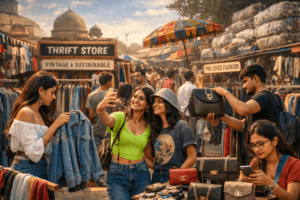
The fashion map is being redrawn. In India’s bustling markets and on its dynamic social media feeds, a quiet revolution is underway, driven by a generation that sees conspicuous consumption as a relic of the past. What began as an economic necessity or a niche hobby has exploded into a mainstream cultural movement, fundamentally reshaping what value, style, and sustainability mean to millions. This is not just about buying old clothes; it’s about a profound shift in collective consciousness, where pre-owned is not a compromise but a smarter, more stylish, and more responsible choice.
Fueled by Gen Z and millennials, India’s secondhand apparel market is part of a global boom projected to grow from $67.40 billion in 2025 to nearly $154.59 billion by 2032. But in India, this trend carries unique cultural weight. It signals a move away from simply following Western trends toward a more self-assured, localized fashion identity. This movement is stitching together a new future for fashion—one where the cycle of consumption is circular, conscious, and distinctly Indian.
The Drivers of a Cultural Reset
The secondhand boom is a direct response to multiple converging forces. For a generation navigating economic uncertainty and a post-pandemic world, the math is compelling. As a 20-year-old student thrift seller, Ananya, puts it: “It’s not about being cheap; it’s about being smart. I’d rather spend ₹400 on a jacket lasting five years than ₹3000 on one that won’t survive the next wash”. This pragmatic calculation is paired with a powerful environmental awakening. With growing awareness of fast fashion’s toll—from water pollution to textile mountains in landfills—young consumers are seeking alternatives. A striking 84% of Indian Gen Z consumers say they are willing to pay a premium for eco-friendly products.
Beyond economics and ethics, there is a deep hunger for authenticity and individuality. In a world saturated with identical, mass-produced “limited editions,” a vintage 2000s t-shirt or a well-crafted older piece tells a story. “Old Zara is built different,” notes a Mumbai reseller. “People don’t realize the older stuff survives. The new ones? You blink and they sort of unravel”. This appreciation for enduring quality over fleeting trends is a hallmark of the shift.
The Faces of the Movement: From Campus Swaps to Curated Luxury
The secondhand ecosystem in India is diverse, populated by distinct communities, each with its own motivations.
| Consumer Archetype | Primary Motivation | Preferred Channels & Behaviors |
| The Value-Conscious Student | Affordability, community, sustainable practice | Campus WhatsApp swap groups, local flea markets (e.g., Delhi’s Janpath), peer-to-peer trading. |
| The Conscious Professional | Quality, durability, reducing environmental footprint | Online curated thrift stores (e.g., Bomb Thrift), platforms like Refash, seeking “archive” vintage pieces. |
| The Style Hunter & Curator | Unique self-expression, aesthetic discovery, trendsetting | Scouring physical hubs (e.g., Mumbai’s Fashion Street), running Instagram boutiques, upcycling finds. |
| The Aspirational Luxury Buyer | Access to premium brands, investment value, sustainable luxury | Authenticated resale platforms (e.g., Cliched), offline luxury consignment boutiques, focusing on handbags and jewelry. |
From the micro-circular economies of university WhatsApp groups—where a dorm clean-up becomes someone’s Diwali outfit—to sophisticated Instagram boutiques with aesthetic grids, the movement is democratizing fashion. It’s also moving up the value chain. India’s secondhand luxury goods market, valued at $751 million in 2025, is projected to reach $1.7 billion by 2034, led by demand for handbags and jewelry from women in metropolitan areas. This shows that secondhand is not just for bargain hunters but for discerning shoppers seeking value and prestige.
Innovation and Infrastructure: Building a Circular System
The demand for resale and rental is actively reshaping the fashion industry’s supply side. Rental platforms like Flyrobe and Stage3, which cater to weddings and occasions, now prioritize durability and easy maintenance over delicate, single-use fabrics. This commercial need is driving tangible fabric innovation:
- Performance Fabrics: Durable polyester crepes, four-way stretch Lycra blends, and wrinkle-resistant materials are becoming standard to withstand dozens of wears and cleans.
- Quality Over Quantity: The business model itself enforces quality. As industry experts note, a single rented garment, worn multiple times, can prevent up to nine new purchases, making longevity a core design criterion.
- Tech-Enabled Trust: For luxury resale, the proliferation of digital platforms with advanced authentication technologies is crucial. They build the trust necessary for consumers to invest in high-value pre-owned items, expanding access beyond major cities.
The Unseen Cost: Panipat’s Story
However, the narrative of virtuous circularity has a darker, often overlooked chapter in the industrial recycling hub of Panipat, Haryana. Dubbed the “graveyard of rags,” Panipat processes over half a million tons of used clothing annually from Western donation bins, shredding and re-spinning them into yarn and blankets sold globally.
Here, the human and environmental cost of dealing with the world’s textile waste is stark:
- Health Hazards: Workers breathe in toxic dust and fibers, with many developing chronic respiratory illnesses by their 30s. Flimsy masks offer little protection.
- Environmental Damage: Wastewater from dyeing units flows untreated into local water sources, contaminating drinking water and farmland.
- Economic Vulnerability: Workers operate without contracts, insurance, or safety nets. Geopolitical shocks, like recent U.S. tariffs on Indian textile exports, lead to immediate layoffs and heightened child labor as families struggle.
Panipat exposes the paradox of “circular fashion” when the burdens are borne by the most vulnerable. As one factory director stated, “People call it circular fashion… But on the ground, it is families breathing dust, children working in sheds, and rivers running black with dye”. This reality presents a critical challenge: for the secondhand economy to be truly ethical and sustainable, the entire lifecycle—including end-of-life processing—must be fair and regulated.
The Future: A New Indian Fashion Paradigm
India’s secondhand movement is more than a trend; it’s a fundamental rewiring of the fashion psyche. It aligns with a broader “anchor mindset” identified by trend forecasters, where consumers in uncertain times seek grounding through nostalgia, craft, and meaningful consumption.
The future of Indian fashion will likely be hybrid and holistic:
- Mainstream Integration: Secondhand and rental will become standard options across all price points, from everyday wear to occasion luxe.
- Hyper-Local Meets Global: The thrill of the hunt in Sarojini Nagar will coexist with seamless apps for authenticated luxury, all fueled by a desire for unique style over uniform newness.
- The Quality Imperative: As both rental businesses and conscious consumers demand durability, the market for poorly made fast fashion will shrink, pushing the entire industry toward higher-quality production.
- The Ethical Reckoning: The story of Panipat will force a necessary conversation. True sustainability must encompass fair labor, safe working conditions, and environmental justice in recycling hubs, not just the front-end act of reselling.
The next era of Indian fashion won’t be built on what’s newest, but on what’s still worth wearing. In choosing pre-loved, India’s youth are not just curating closets—they are consciously stepping out of the passive cycle of consumption and weaving a more intentional, culturally-grounded, and responsible identity. This is India’s slow-burn retail awakening: a patient, discerning revolution happening one treasured find at a time.
You must be logged in to post a comment.